Origins
Where does it come from?
The breed was developed in Styria, in south-eastern Austria, from 1870. Carl Peitinger, an industrialist from this region, crossed a Hanoverian Scenthound bitch with a rough-haired Istrian hound in order to combine the hunting qualities of these two breeds and to obtain a weather-resistant coat. The Brachet de Styrie à poil dur was officially recognised in Austria in 1889, then definitively recognised by the Fédération Cynologique Internationale on 31 August 1954.
Appearance
What does it look like?
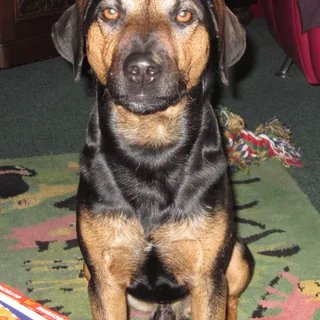
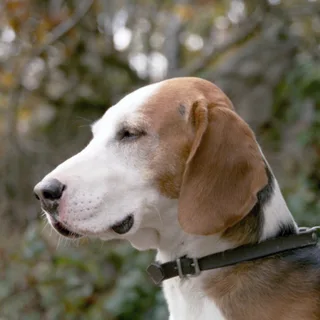
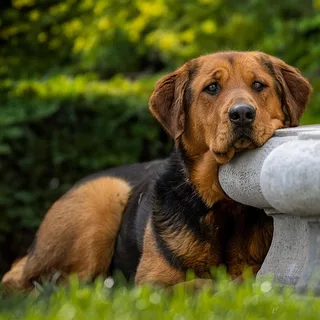
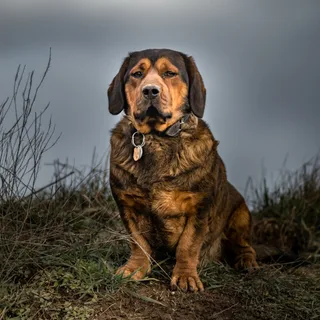
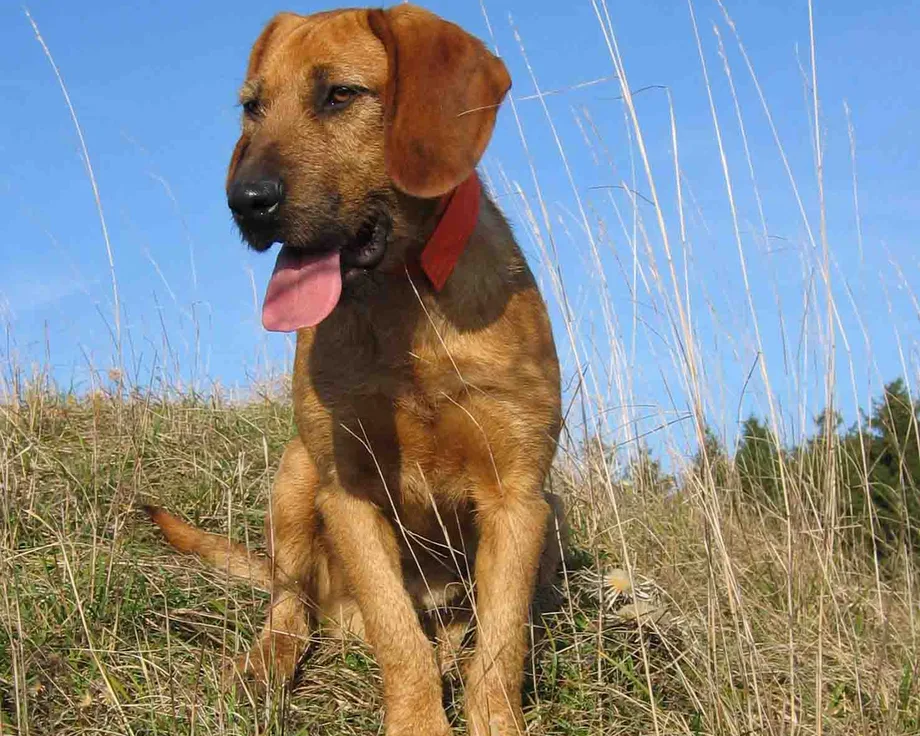
Medium-sized hunting dog, the Brachet de Styrie à poil dur has a balanced silhouette, well proportioned, muscular and agile. Its neck is strong, its back straight and broad, its loin moderately raised and its chest broad and well let down. The skull is slightly domed, the stop pronounced, the nose black and the muzzle robust and straight. Its jaws are scissor articulated. Its large ears lie flat against the cheeks and its brown eyes give it a stern expression without being aggressive. Its tail, thick at the base and of medium length, is carried in a slight sickle. Its red or pale yellow coat is hard, harsh, shorter on the head and forms a moustache; a white star may be present on the forechest.
Temperament
Temperament and personality
When hunting, this scenthound proves enthusiastic, determined and very hardy. He is at ease both in driving game while giving voice and in carrying out a blood tracking search in mountainous terrain. At home, he is very attached to his master and wary of strangers. He can live well with other dogs when he has been accustomed to it, but his pronounced hunting instinct calls for caution with small animals.
Living together
Living with children and other pets
The Brachet de Styrie à poil dur remains above all a hunting dog. It needs long outings, running and regular activities to maintain its balance. Two long daily outings are recommended. It can adapt to a companion role if its needs are respected and if it benefits from consistent handling from a young age. Apartment living suits it poorly and it is aimed more at an experienced owner, ideally active or a hunter.
Training
Training and socialization
Its assertive temperament requires early, firm, consistent training without brutality. Careful socialization is necessary, especially toward other dogs and other animals. Recall must be worked on very early and maintained regularly in order to better control its chasing instinct and to limit incidents during outings.
Budget
Price and budget for the Styrian Coarse-haired Hound
The purchase price varies depending on the kennel, the bloodline, the pedigree, the dog's age and its possible intended use for hunting. The rarity of the breed outside its country of origin can also reduce the available supply.
See cost breakdownHealth
Health at a glance
Rustic and resilient, the Styrian Rough-haired Hound generally enjoys robust health. Its hard, harsh coat provides good protection against bad weather. No particular predisposition to any disease is reported for the breed, without this exempting it from regular veterinary follow-up.
Prevention and things to watch forNutrition
Feeding your pet well
The diet must cover the needs of a medium-sized dog, hardy and often very active, while taking into account its age, its weight, its body condition and the intensity of its work. The ration must be reassessed when its activity level changes.
Our feeding adviceDid you know?
Fun facts and popularity
The breed also bears the names Steirische Rauhhaarbracke and Styrian Coarse-haired Hound. It owes its creation to Carl Peitinger, who was looking for a scenthound capable of working effectively in the terrain of Styria while withstanding bad weather thanks to a protective coat.