Origins
Where does it come from?
The Tyrolean Hound is a very old breed descended from Celtic scenthounds. It was among the favourite hunting dogs of Emperor Maximilian I at the beginning of the 16th century. The first purebred breeding began around 1860 in the Austrian Tyrol. A first standard was drawn up in 1896, then the breed was officially recognized twelve years later. In 1944, the small-sized variety was removed from the standard. The Fédération Cynologique Internationale definitively recognized the breed on 8 October 1954.
Appearance
What does it look like?
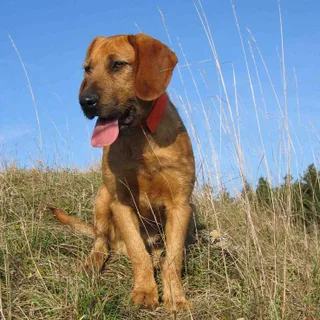
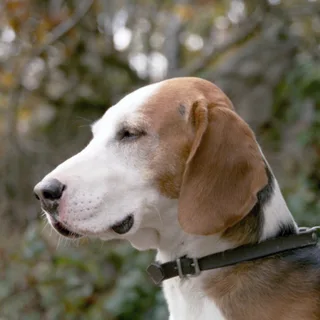
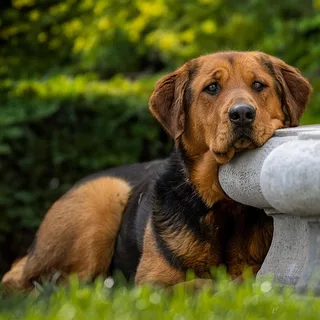
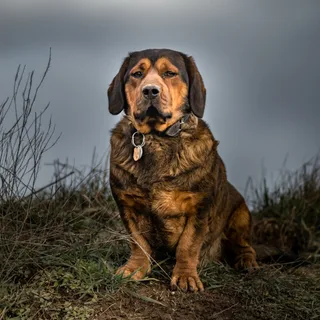
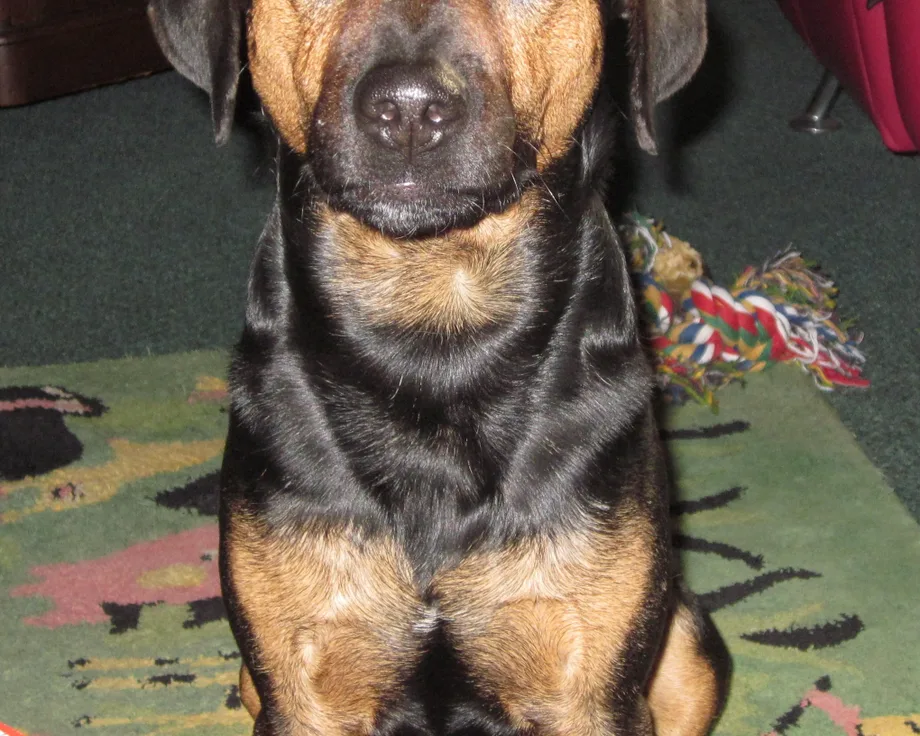
Of medium size and of strong build, the Tyrolean Hound has well-developed musculature and a harmonious silhouette, slightly longer than tall. Its head is long, with a broad, lean and slightly domed skull, a pronounced stop, a black nose and a straight muzzle. Its eyes are rather large and dark brown. Its back is straight and fairly broad, its chest well let down and its croup long, slightly sloping. Its tail, long and set on high, is ideally carried brush-like when the dog is working. Its short coat is double, dense and provided with an undercoat. The coat can be fawn, black and tan or tricolour.
Temperament
Temperament and personality
A passionate, hardy and independent hunting dog, the Tyrolean Hound has a very keen sense of smell and a remarkable sense of direction. Its temperament is balanced, even if docility is not its main asset. At home, it shows itself attached to its owner and to its family. Its natural vigilance also allows it to be a decent guard dog.
Living together
Living with children and other pets
Selected for driving hare and fox as well as for blood tracking, the Tyrolean Hound needs long, frequent outings and activities that engage its sense of smell. It is not suited to an exclusively sedentary life. A rural environment suits it particularly well, but life in the city remains possible if its exercise needs are fully met. Cohabitation with other animals must be prepared with care due to its hunting instinct.
Training
Training and socialization
Training must be firm, consistent and early, without a power struggle. Recall must be worked on from the youngest age, as this scenthound can show independence when a trail holds its attention. Short, regular and motivating sessions help to reinforce the basic rules and cooperation.
Budget
Price and budget for the Tyrolean Hound
The purchase price varies depending on the kennel, the lineage, compliance with the standard, health guarantees and the dog's intended use.
See cost breakdownHealth
Health at a glance
The Tyrolean Hound generally enjoys robust health. Sturdy and resilient, it has no particular reported predisposition. Its double coat provides good protection against cold and bad weather.
Prevention and things to watch forNutrition
Feeding your pet well
Its diet must cover the needs of an active scenthound while remaining adjusted to its age, its weight, its body condition and the intensity of its outings.
Our feeding adviceDid you know?
Fun facts and popularity
The Brachet Tyrolien is also known under the names Austrian Brachet, Tyrolean Scenthound and Tiroler Bracke. The small-sized variety was removed from its standard in 1944.