Origins
Where does it come from?
The Alpine Basset belongs to a very ancient breed whose ancestors, already similar in appearance, accompanied hunters as early as Antiquity. In the 1880s, it was notably the favorite hunting dog of Crown Prince Rudolf of Habsburg, who took it along on hunts in Turkey and Egypt. First called the Alpine Basset of the Erzgebirge, it was recognized in Austria as the third breed of bloodhound, specialized in blood tracking, in 1932. Its current name was adopted in 1975 and the Fédération Cynologique Internationale recognized it definitively in 1991. Since that date, the breed has been classified in group 6 among scent hounds, blood tracking dogs and related breeds.
Appearance
What does it look like?
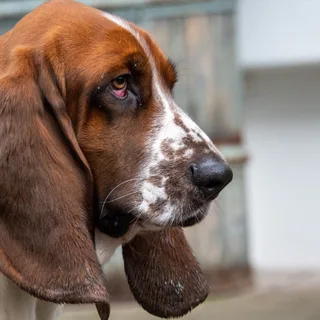
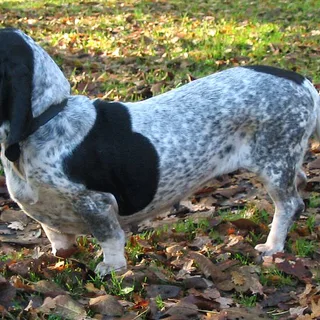
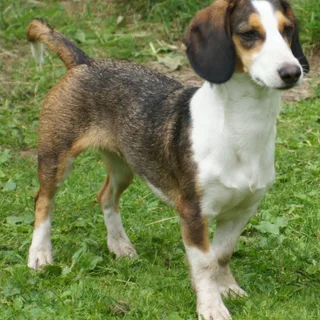
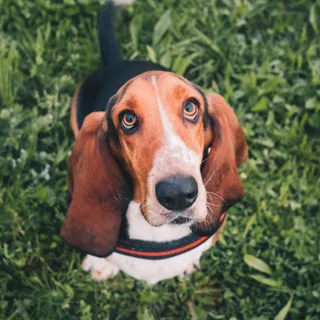
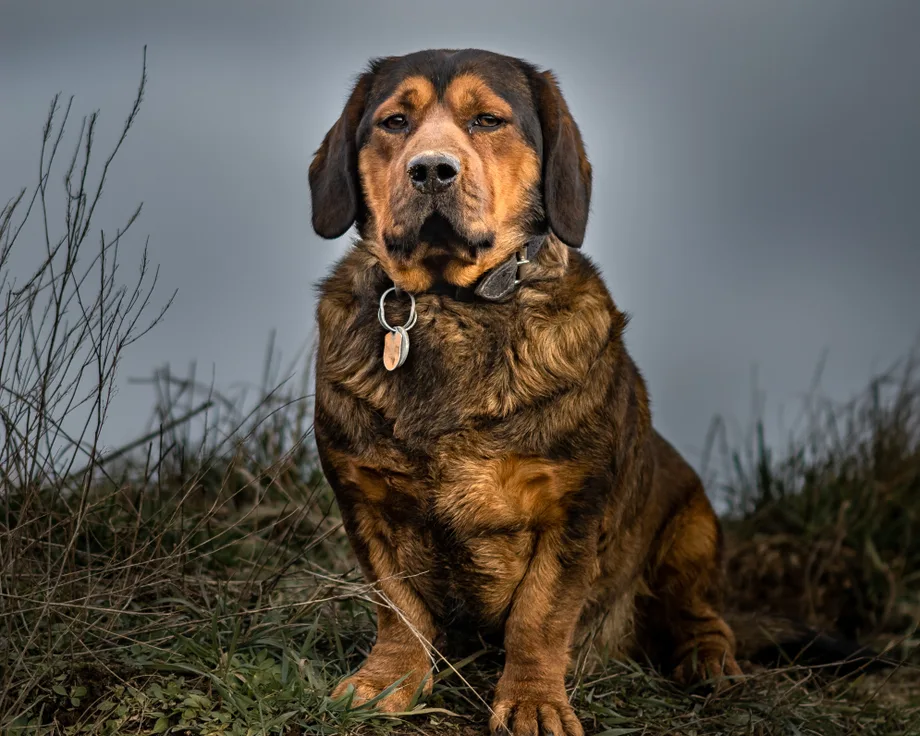
The Basset des Alpes is a dog of solid build, low on legs, endowed with firm musculature and a developed bone structure. Its body, whose length clearly exceeds the height at the withers, has a straight back, a short and broad loin as well as a deep and well let-down chest. Its head with a slightly domed skull has a pronounced stop, a black nose and a strong muzzle. The eyes are dark brown, while the ears, set high, broad and pendulous, end in a rounded tip. The short coat, very dense and lying close, is accompanied by a thick undercoat. The coat is dark fawn to red, possibly with black overlay, or black with red-brown markings. The tail, thick at the base and set high, reaches almost to the ground.
Temperament
Temperament and personality
Alert, friendly and self-confident, the Alpine Basset stands out for its courage and endurance. Its hunting instinct is highly developed, notably for tracking and blood trailing. Despite a certain independence at work, it can become a pleasant family companion and show attentiveness to children. Its confidence and vigilance also allow it to take on a watchdog role, without making it a dog exclusively devoted to protection.
Living together
Living with children and other pets
This active dog needs to be stimulated physically and mentally every day. Brief hygienic outings are not enough for him: he enjoys long walks, tracking and activities in the countryside or in the forest. A house with a well-fenced garden is his preferred living environment. City life or apartment living remains possible only if his owner offers him long and frequent outings. His chasing instinct requires securing walks and working seriously on recall.
Training
Training and socialization
Training must start early and combine firmness, consistency and gentleness. Intelligent but sometimes independent, the Basset des Alpes learns well when sessions are short, regular and motivating. Recall, leash walking and giving up a trail must be worked on as a priority. Early socialization with people, dogs and other animals helps to channel its hunter temperament and to promote balanced interactions.
Budget
Price and budget for the Alpine Dachsbracke
The purchase price depends on the quality of the breeding, the pedigree, the tests carried out on the breeding dogs, the bloodline and the puppy’s intended purpose. As this breed is not very widespread, availability can also influence the purchase conditions.
See cost breakdownHealth
Health at a glance
The Alpine Basset is considered robust and hardy, with no major pathological predisposition clearly established in the breed reference. As with any dog with an elongated body and drooping ears, regular monitoring of weight, back, joints and ear canals nevertheless remains prudent.
Prevention and things to watch forNutrition
Feeding your pet well
The Alpine Basset needs a complete diet adapted to its age, its weight and its sustained activity. The energy density must support work or long outings without causing weight gain during less active periods.
Our feeding adviceDid you know?
Fun facts and popularity
Crown Prince Rudolf of Habsburg particularly appreciated this dog and took it with him on his hunting expeditions to Turkey and Egypt in the 1880s. The breed is also known by its German name, Alpenländische Dachsbracke. Its elongated body and short limbs allow it to move effectively over difficult Alpine terrain while following a trail with tenacity.