Origins
Where does it come from?
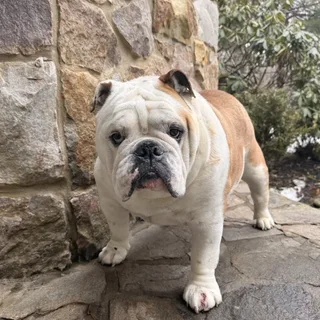
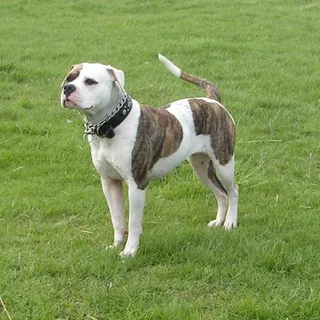
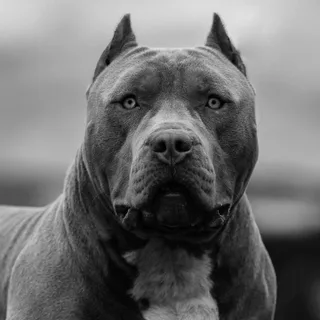
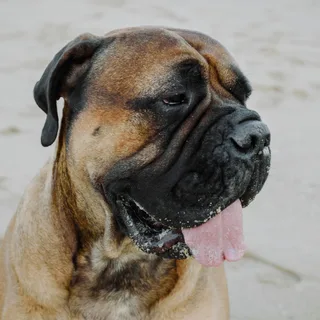
The Olde English Bulldogge was created in the United States starting in 1971 by David Leavitt, in Pennsylvania. His goal was to recreate a bulldog close to those of 18th- and 19th-century England, healthier, more athletic and with better breathing than the modern English Bulldog. The program combined the English Bulldog, the Bullmastiff, the American Pit Bull Terrier and the American Bulldog. The breed has been recognized by the United Kennel Club since 2014, but not by the FCI. In Europe, related lines are developed under other names, such as the Continental Bulldog in Switzerland.
Appearance
What does it look like?
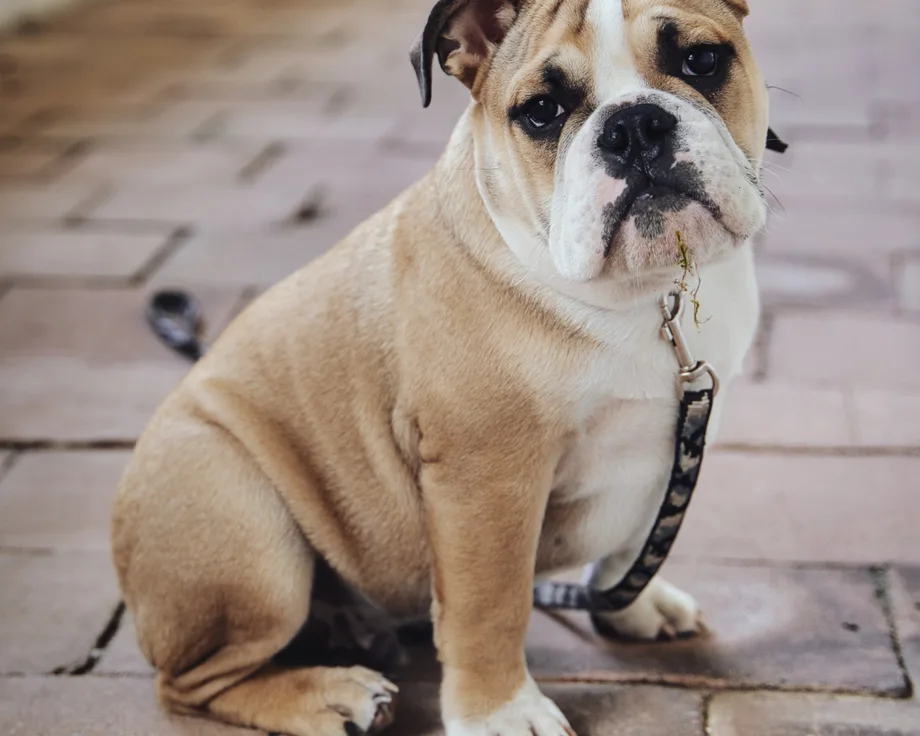
The Olde English Bulldogge is a medium-sized, powerful and muscular molossoid, measuring 43 to 51 cm for approximately 23 to 36 kg. Its head is broad with a short but well-defined muzzle, longer than that of the English Bulldog, which allows it to breathe better. The chest is broad, the limbs strong and straight. The coat is short, dense and smooth; the most common colors are brindle, fawn, red, black or white, with or without white markings.
Temperament
Temperament and personality
Confident, stable and very attached to its family, the Olde English Bulldogge is an affectionate dog that retains a good protective instinct. It is generally patient with the children in the household. Reserved but not aggressive towards strangers, it can, however, be dominant with dogs of the same sex if it has not been socialized early.
Living together
Living with children and animals
More enduring than the English Bulldog, he enjoys daily walks and games, without being an intensive sporting dog. He likes the comfort of home and the company of those close to him. A garden is a plus, but he can live in an apartment if he gets out enough.
Training
Training and socialization
Stubborn at times, the Olde English Bulldogge requires consistent, firm and caring training from the moment it arrives. Positive methods and short sessions work better than coercion. Socialization with other dogs must begin very early to avoid tensions in adulthood.
Budget
Olde English Bulldogge price & budget
The price depends on the breeding, health tests (hips, elbows) and the origin of the bloodlines, often imported from the United States or Eastern Europe.
View cost breakdownHealth
Health at a glance
Designed to be healthier than the English Bulldog, the Olde English Bulldogge generally breathes better and gives birth naturally more often. Nevertheless, it remains prone to certain molosser conditions: dysplasia, skin and eyelid problems.
Prevention & watch pointsDiet
Feed it well
Muscular and fairly active dog, it needs a diet rich in quality protein, without excess calories.
Our feeding adviceDid you know?
Anecdotes and popularity
The breed's name uses the old spelling “Olde” and “Bulldogge” to recall the bulldogs of yesteryear. Its creator used a breeding program inspired by that used for cattle, with precise monitoring of matings.