Origins
Where does it come from?
The American Bully was developed in the United States from the 1980s and 1990s with the aim of creating a powerful, compact and sociable companion dog. Its construction is mainly based on American Pit Bull Terrier and American Staffordshire Terrier lines, to which, depending on the lines and varieties, influences from bulldog-type dogs were added. The American Bully Kennel Club, founded in 2004, played a major role in formalizing its standard, then the United Kennel Club recognized it in 2013. The breed is not recognized by the Fédération Cynologique Internationale nor by the Société Centrale Canine and therefore cannot be registered in the LOF in France. Several formats are described by the organizations that recognize it, notably Pocket, Standard, Classic and XL, with significant differences in height, bone structure and mass.
Appearance
What does it look like?
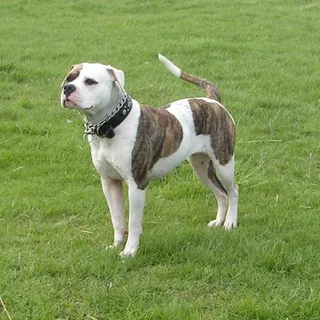
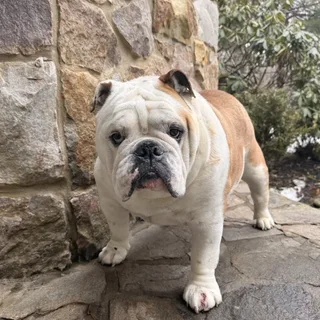
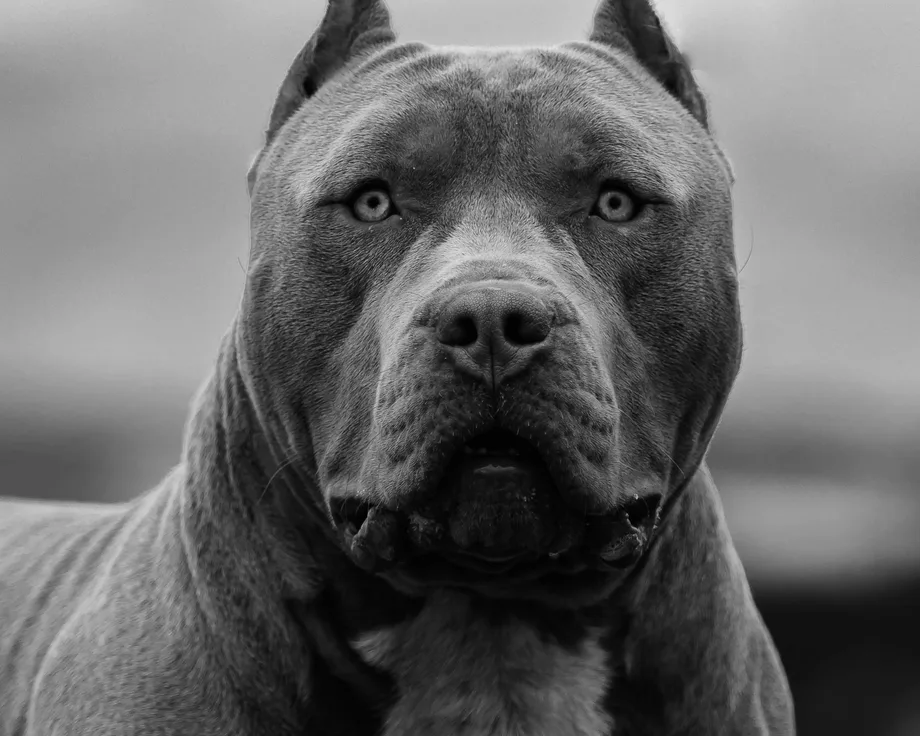
The American Bully has a compact, broad and strongly muscular silhouette, with solid bone structure and a deep chest. Its head is voluminous, its skull broad, its cheeks pronounced and its muzzle short to medium, without excess likely to hinder breathing. The eyes are well spaced and the ears, set high, can be natural and semi-erect. The powerful neck joins muscular shoulders, the back remains relatively short and the limbs must retain functional angulation despite the dog's mass. The coat is short, dense, smooth and firm to the touch. Many colors exist, but the search for particular colors must never take precedence over health, breathing, movement and morphological balance.
Temperament
Temperament and personality
Selected above all as a companion dog, the American Bully is generally affectionate, close to its humans and eager to take part in family life. It can be confident, playful and sociable when it benefits from serious selection and early socialization. Its physical power nevertheless requires never trivializing its education or its interactions. Some individuals may be reserved with strangers or less tolerant toward their congeners, depending on their lineage, their experiences and their supervision. A stable temperament, without excessive fear or sought-after aggressiveness, must be an essential criterion in the choice of a breeding kennel.
Living together
Living with children and other pets
At home, the American Bully appreciates being close to its family and can be calm after appropriate exercise. It enjoys walks, scent games, short training exercises and shared activities, without requiring the volume of training of a very enduring working dog. Apartment living is possible if outings are regular, if rules are consistent and if its size is properly managed. Its musculature, strength and sometimes its enthusiasm require close supervision with young children and during canine encounters. It tolerates prolonged isolation poorly and can develop frustration, destruction or agitation if its relational and mental needs are neglected.
Training
Training and socialization
Training begins as soon as the puppy arrives with simple, consistent rules applied by all members of the household. Rewards, play, cooperation and short sessions encourage learning, while harsh methods risk damaging trust and increasing defensive reactions. Recall, loose-leash walking, giving up, waiting, emotion management and acceptance of a muzzle must be worked on progressively. Socialization does not mean multiplying forced contacts, but offering positive and controlled experiences with people, well-balanced dogs, environments and varied noises. A dog trainer using respectful methods is strongly recommended for inexperienced owners.
Budget
Price and budget for the American Bully
The price of an American Bully depends on the format, the lineage, registration with a foreign registry, the reputation of the breeding kennel, health screenings, and the quality of socialization. Rare colors or extreme morphologies guarantee neither health nor temperament. The acquisition budget must be supplemented by any potential veterinary, food, training, and regulatory costs.
See cost breakdownHealth
Health at a glance
The health of the American Bully varies greatly depending on bloodlines, size and the degree of morphological exaggeration. A functionally built dog can lead an active life, but the breed requires particular vigilance regarding joints, breathing, the heart, the skin and weight management. The choice of screened breeding dogs able to move, breathe and reproduce without difficulty is an essential point.
Prevention and things to watch forNutrition
Feeding your pet well
The American Bully needs a complete, digestible diet adapted to its age, weight, size and activity. A sufficient content of quality proteins supports muscle maintenance, but an excess of energy quickly promotes fat gain and overloads the joints. Growth must remain steady, without seeking accelerated mass gain.
Our feeding adviceDid you know?
Fun facts and popularity
The name American Bully refers to a distinct breed from the American Staffordshire Terrier and the American Pit Bull Terrier in the registries that recognize it. Its appearance varies noticeably depending on the Pocket, Standard, Classic and XL classes, but the sought-after type remains that of a stable and functional companion. In France, the lack of recognition by the Société Centrale Canine means that it cannot have an LOF pedigree. Its regulatory situation depends on its morphology and its possible assimilation to a type defined by law, and not on the sole mention American Bully on a foreign document of origin.