Origins
Where does it come from?
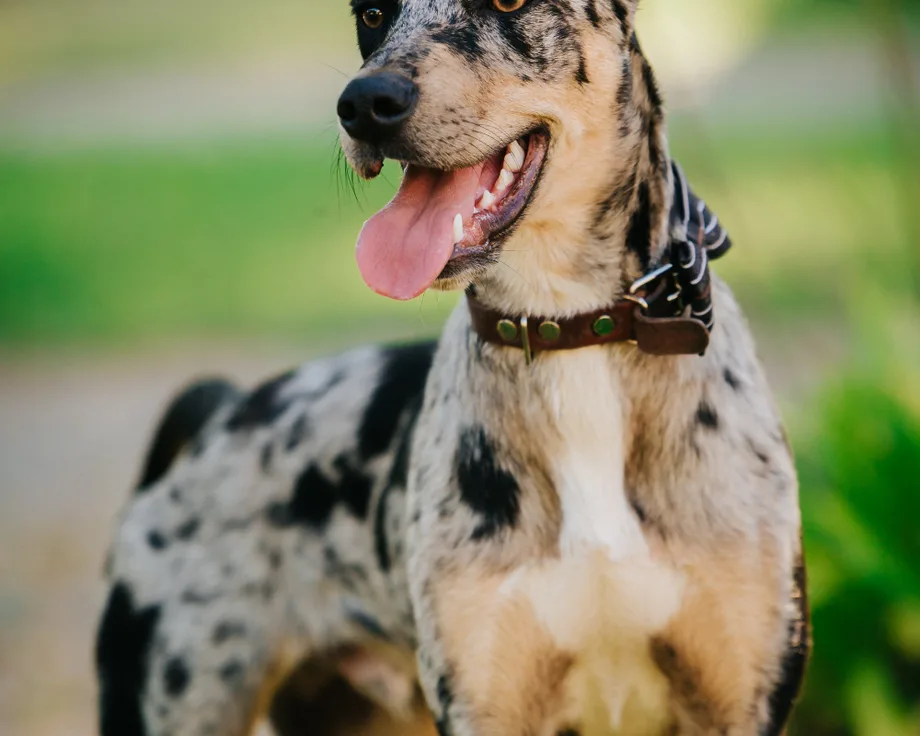
The Catahoula Leopard Dog, or simply Catahoula, originates from Louisiana, where it has been the state's emblematic dog since 1979. It owes its name to the parish and Lake Catahoula. Its origins likely combine Native American dogs and those brought by European settlers. It was selected to herd cattle and semi-wild pigs in forests and marshes, and to hunt. Recognized by the United Kennel Club in 1995, it is not recognized by the FCI.
Appearance
What does it look like?
It is a medium to large-sized dog, 51 to 66 cm for approximately 18 to 36 kg, muscular and hardy. The coat is short to medium-short, dense. Its most famous coat is merle, called “leopard”, but there are also solid, brindle or piebald coats. The eyes can be brown, blue, green, amber or odd-colored, what are called “glass eyes”. The feet are webbed, an asset in marshes.
Temperament
Temperament and personality
Intelligent, independent and protective, the Catahoula is a working dog with a strong character. Loyal to its family, it can be reserved, even wary, of strangers. It likes to have a mission and can be dominant with other dogs without early socialization.
Living together
Living with children and animals
He needs a lot of exercise and mental work every day: long outings, tracking, dog sports or herding work. Confined and idle, he quickly becomes destructive. He lives better in the countryside with a large enclosed area.
Training
Training and socialization
He requires firm, consistent and positive education, by an experienced master. His great intelligence helps him learn quickly, but his independence pushes him to test limits. Socialization must be encouraged from a very young age.
Budget
Catahoula price & budget
The Catahoula is rare in Europe; puppies often come from American bloodlines. The price depends on the health tests and working abilities of the parents.
View cost breakdownHealth
Health at a glance
The Catahoula is a robust dog, but matings between two merle subjects expose them to deafness and eye abnormalities. Hip dysplasia is also described.
Prevention & watch pointsDiet
Feed it well
Very active working dog, it needs a diet rich in protein and energy.
Our feeding adviceDid you know?
Anecdotes and popularity
Instead of barking to gather, the Catahoula traditionally works “in bay”: it surrounds and holds livestock or wild boars until its master arrives.