Origins
Where does it come from?
The Australian Cattle Dog was developed to drive cattle across the immense Australian territories, under conditions requiring endurance, courage and autonomy. Its creation most probably results from crosses between the dingo, several British Collies imported into Oceania, then contributions from the Dalmatian and the black and tan Kelpie. Selection gradually established a compact, intelligent, hardy dog, with the bite necessary for work on cattle. The Fédération Cynologique Internationale recognizes the breed under number 287, in group 1. The standard currently in force was established in October 2012.
Appearance
What does it look like?
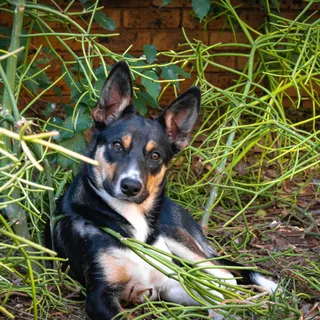
Of medium size, the Australian Cattle Dog has a compact, powerful and harmonious build. Its back is strong and level, its loin broad and muscular, its chest well let down and its croup long and sloping. The head, solid and well proportioned, carries erect ears, well set apart and very responsive. The oval, dark brown eyes express liveliness and intelligence. The topcoat is short, straight, harsh and lying flat over a dense undercoat, which makes the coat weather-resistant. The accepted colours are blue speckled or mottled and red speckled. The tail, set moderately low, reaches the hock and remains slightly curved at rest.
Temperament
Temperament and personality
Attentive, courageous and reliable, the Australian Cattle Dog has a strong protective instinct and great loyalty to its home. Docile with its owner, it remains naturally reserved and vigilant with strangers. Its intelligence, liveliness and taste for work make it a versatile partner for herding, guarding, dog sports and active family life. It can be gentle and playful with children, provided that interactions are respectful and supervised. Early socialization is important to channel its wariness and promote good relationships with other dogs.
Living together
Living with children and other pets
This active and hardy dog does not tolerate idleness well. Every day, it needs long outings, sustained physical activities and mental challenges, such as tracking, obedience, agility or search games. A house with a well-fenced yard suits it better than an apartment, but a garden never replaces walks or the work shared with its owner. It can accompany a sporty adult on hikes, jogs or suitable bike rides. Its herding instinct can result in a tendency to control movements or to nip at heels, a behavior to be prevented through training.
Training
Training and socialization
Training must start early, with consistent rules, great consistency and positive methods. The Australian Cattle Dog learns quickly and works willingly, but its independence and assertive temperament require an experienced, calm and fair owner. Short, varied and stimulating exercises maintain its motivation. Socialization with people, dogs, other animals and different environments must be continued from the youngest age. Recall, leash walking, giving up and control of the herding instinct are among the priority learnings. Any brutal confrontation must be avoided.
Budget
Price and budget for the Australian Cattle Dog
The purchase price depends on the pedigree, the quality of health screenings, the reputation of the breeding kennel, the puppy’s intended purpose and compliance with the standard. Beyond the initial price, the budget must include the feeding of a sporting dog, preventive care, training, possible insurance and activity equipment.
See cost breakdownHealth
Health at a glance
The Australian Cattle Dog benefits from an overall robust constitution and good resistance to climatic conditions. The breed nevertheless shows hereditary predispositions that justify rigorous selection and regular veterinary monitoring, notably for hearing, the eyes and the joints.
Prevention and things to watch forNutrition
Feeding your pet well
The diet must cover the high needs of an active dog while maintaining a lean and muscular silhouette. The ration varies greatly depending on the level of exercise, the season, the age and the individual size. A veterinarian can help adjust it for a working dog, a growing puppy or a neutered subject.
Our feeding adviceDid you know?
Fun facts and popularity
The Australian Cattle Dog is also known under the names Australian Drover and Australian Cattle Dog. Blue-coated dogs are often nicknamed Blue Heelers, while red ones are called Red Heelers, in reference to their traditional way of heeling cattle to make them move forward. Its selection for work over long distances explains its exceptional endurance and its ability to stay focused in difficult environments.