Origins
Where does it come from?
Very ancient breed originating from the cold regions of northern Russia and Siberia, the Samoyed owes its name to the Samoyedic peoples with whom it lived for a long time. Selected to pull sleds, guard camps and share the daily life of families, it distinguished itself by its endurance, its resistance to cold and its character close to humans. Individuals were introduced in England at the end of the 19th century, where the first modern standard was written before the definitive recognition of the breed by the FCI in 1959.
Appearance
What does it look like?
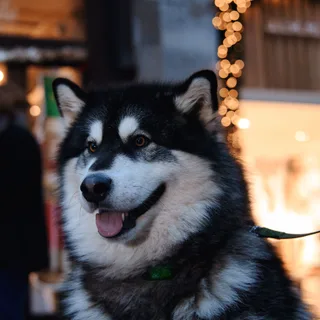
The Samoyed is a medium-sized Spitz-type dog, slightly longer than tall, with an elegant and robust appearance. It has a wedge-shaped head, erect triangular ears, dark almond-shaped eyes and a high-set tail that curls over the back when it is active. Its coat is long, abundant, thick and very dense, with a full undercoat and a pronounced ruff, especially in the male. The coat color is pure white, sometimes with a few cream markings, but never beige.
Temperament
Temperament and personality
Gentle, friendly and cheerful, the Samoyed is an excellent companion dog for available and active households. He greatly appreciates the presence of his family and is generally very sociable with children, strangers and other animals. His Nordic dog independence remains present, which sometimes gives him a strong-willed side and less demonstrative than a very clingy dog.
Living together
Living with children and other pets
The Samoyed needs to move every day and tolerates boredom or lack of activity poorly. He likes to run, play and take part in family life, but he is not suited to a very sedentary lifestyle or to a small space without long and regular outings. Not very wary, he does not have the profile of a guard dog and often prefers social contact to controlling the territory.
Training
Training and socialization
His training requires consistency, patience and a well-established relationship of trust. Intelligent but sometimes stubborn, the Samoyed responds better to a positive, consistent and motivating method than to coercion. Early socialization, recall, managing excitement and learning to be alone are particularly important to channel this energetic dog.
Budget
Price and budget for the Samoyed
The price of the Samoyed varies mainly according to the quality of the selection, the breeder’s seriousness, the screenings carried out and the puppy’s lineage. A consistent price normally comes with follow-up, identification, the required documents and good socialization work.
See cost breakdownHealth
Health at a glance
The Samoyed is an overall robust, hardy dog and well equipped for cold climates, but its health requires serious monitoring due to several ocular, orthopedic and metabolic conditions described in the breed. Its dense coat protects it very well from the cold, whereas it tolerates high heat much less well. Rigorous selection of breeding dogs and appropriate management of weight and activity are essential.
Prevention and things to watch forNutrition
Feeding your pet well
The Samoyed needs a quality diet adapted to its size, its high activity level and its tendency to be overweight. A well-formulated ration helps support muscle mass, skin, coat and endurance. Protein quality and control of energy intake are particularly important.
Our feeding adviceDid you know?
Fun facts and popularity
The Samoyed is famous for its facial expression called the Samoyed smile, linked to the shape of its lips and eyes. Historically used as a sled dog and life companion in extreme climates, it has retained a strong resistance to cold and a pronounced need for activity. Its abundant white coat is one of its most recognizable visual signatures.