Origins
Where does it come from?
The Greenland Dog is among the oldest canine breeds, with origins estimated at four or five millennia. Traditionally bred by the Inuit for pulling sleds and for life in the Arctic, it was also used by the first Vikings arriving in Greenland. Its strength, determination, confidence and endurance have shaped a hardy working breed. Also called Groënlandais, Greenland Eskimo Dog, Inuit Dog or Greenland Dog, it bears FCI number 274, belongs to group 5 of Spitz-type and primitive-type dogs and has been recognized by the FCI since 1967. It remains very rare in France today.
Appearance
What does it look like?
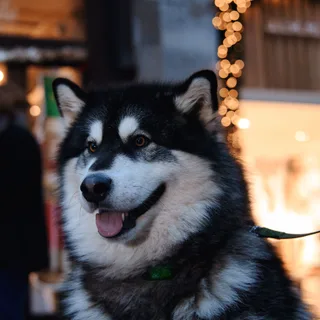
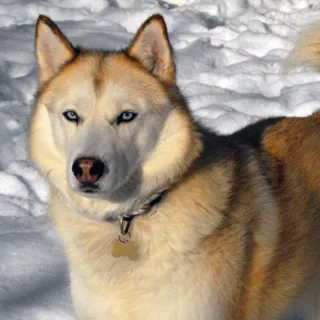
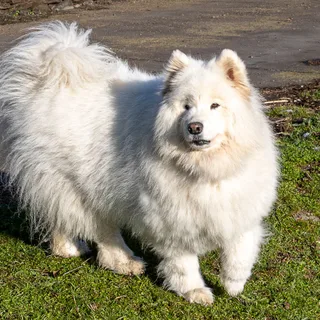
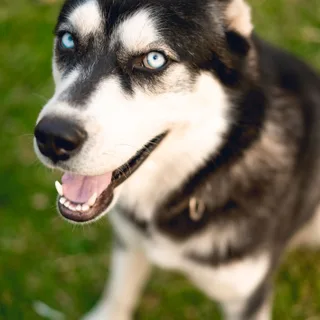
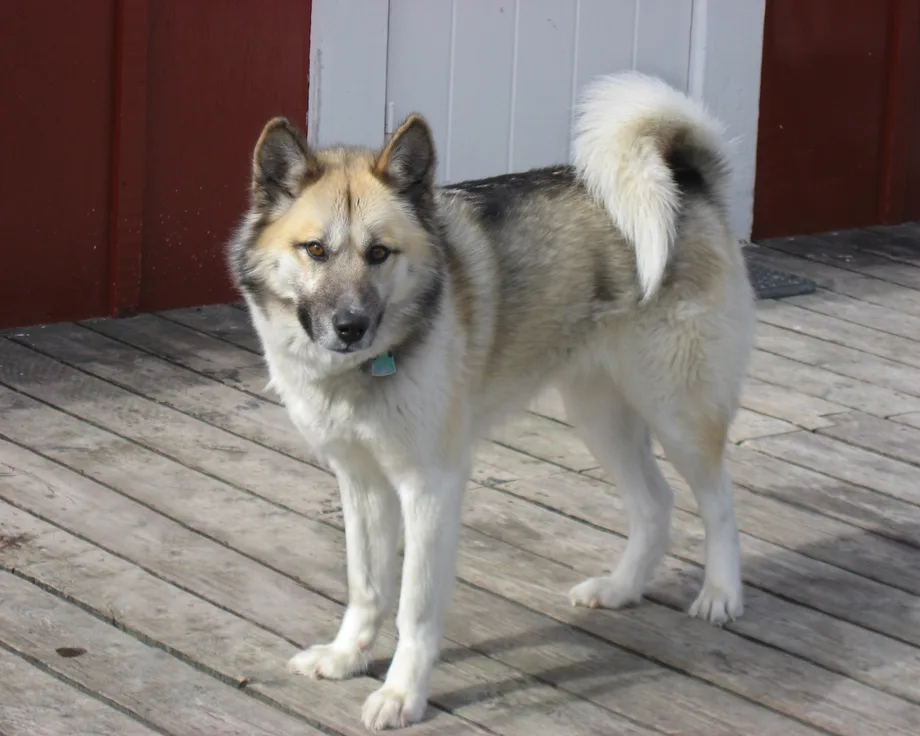
Large, vigorous polar Spitz, the Greenland Dog has a robust and compact body, slightly longer than tall, a straight back, a broad loin and a well let-down chest. Its long head has a broad, slightly domed skull and a pronounced stop without being abrupt. Its small triangular ears are erect, its dark, slanting eyes express determination, and its thick, bushy tail is carried in an arc or slightly curled over the back. Its outer coat is straight, harsh, never curly or wavy, shorter on the head and limbs, longer and denser on the body, with a soft, dense undercoat. All solid or combined colours are permitted, with the exception of albinism and merle markings.
Temperament
Temperament and personality
Energetic, bold and mentally strong, the Greenland Dog is above all an enthusiastic and enduring sled dog. Generally friendly towards humans, including strangers, it is not very inclined to guarding. Very independent, it retains a pronounced hunting instinct and can be competitive with its fellow dogs. Its attachment exists without taking the form of constant dependence, and its balance relies on sustained physical and mental activity.
Living together
Living with children and other pets
On a daily basis, this dog needs to run, to pull and to work regularly. It quickly gets bored when its needs are not met and is not suited to a sedentary life. It prefers a large, secure outdoor space and a cold climate. Relationships with children and other animals must be supervised, notably because of its power, its independence and its predatory instinct.
Training
Training and socialization
Its training is demanding due to its independence and its low propensity for repetitive obedience. Socialization must begin very early and include humans, other dogs, handling and varied environments. A constant, fair and consistent framework, based on motivation and short sessions, suits better than constraint. Its handler must respect its nature as a working dog and offer it suitable activities, in particular pulling and endurance sports.
Budget
Price and budget for the Greenland Dog
The price depends on the rarity of the breed in France, the quality of the selection, the pedigree, health screenings and the working abilities of the bloodlines.
See cost breakdownHealth
Health at a glance
A particularly robust and resilient primitive breed, the Greenland Dog does not present any reported specific congenital predisposition. Its selection for work in an arctic environment gives it excellent resistance to cold. Vigilance nevertheless remains recommended for the joints and the risk of gastric dilatation-volvulus. The breed is not considered hypoallergenic.
Prevention and things to watch forNutrition
Feeding your pet well
The diet must be rich in quality proteins and adapted to age, size, body condition and above all activity level. The needs of a working sled dog are clearly higher than those of an animal at rest.
Our feeding adviceDid you know?
Fun facts and popularity
The Chien du Groenland is also known under the names Groënlandais, Greenland Eskimo Dog, Inuit Dog and Greenland Dog. Its FCI standard bears the number 274. The breed, recognized by the FCI since 1967, is also recognized by the UKC, the CKC and the British Kennel Club. A litter generally has 4 to 6 puppies.