Origins
Where does it come from?
As its name indicates, the Siberian Husky originates from Siberia, where it was selected by the Chukchi to pull sleds over long distances in extreme climatic conditions. At the beginning of the 20th century, the breed was introduced to Alaska for racing and sled work. Its fame was notably built around its legendary endurance and famous episodes such as the 1925 serum run. The breed was officially recognized by the FCI in 1966.
Appearance
What does it look like?
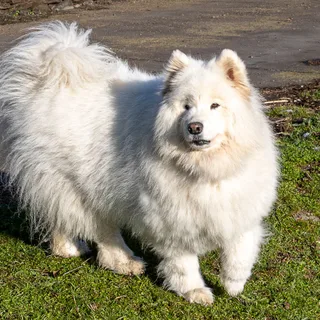
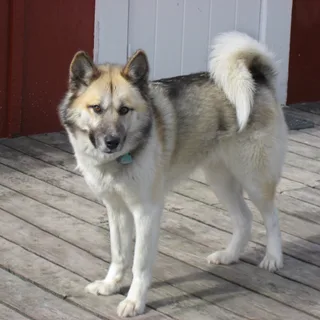
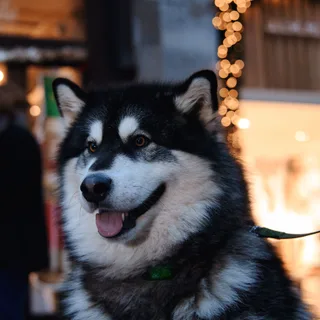
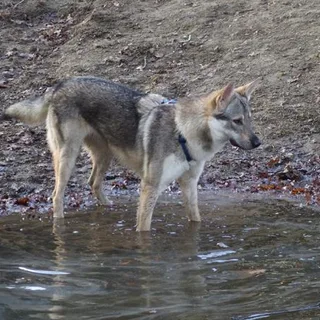
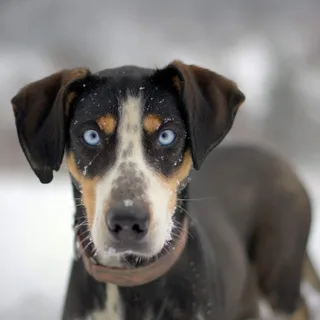
The Siberian Husky is a medium-sized dog, elegant, well proportioned and supple in its movements. Its moderately compact body is supported by a developed musculature without heaviness. Its head is rather round, its ears are erect and triangular, its almond-shaped eyes can be blue, brown or heterochromatic, and its well furnished tail curves slightly without curling over the back. Its medium-length, straight and dense coat forms a thick fur adapted to the cold.
Temperament
Temperament and personality
Lively, intelligent and very energetic, the Siberian Husky is also an independent dog that retains a strong decision-making ability. He is generally affectionate with his family, sociable with humans and not very inclined toward territorial guarding. Used to living in a group, he copes poorly with prolonged solitude and thrives more with regular contact with his owners.
Living together
Living with children and other pets
The Siberian Husky needs to move every day and can become destructive, prone to running away or noisy if he gets bored. He likes to run, explore and use his endurance, which makes him a very pleasant companion for sporty people. Indoors, he can be calm after exercise, but he is not made for a sedentary life nor for staying shut in for a long time without stimulation.
Training
Training and socialization
His training requires consistency, patience and real regularity from the earliest age. The Husky learns well, but his independence often pushes him to test limits and to obey only if he understands the meaning of the request. Positive methods, recall work in a secure environment and preventing running away are essential throughout his life.
Budget
Price and budget for the Siberian Husky
The purchase price of a Siberian Husky varies mainly depending on origin, the quality of the breeding, the health tests carried out and the bloodline. Beyond the initial cost, you should above all anticipate a regular budget related to food, veterinary follow-up and routine maintenance.
See cost breakdownHealth
Health at a glance
The Siberian Husky is generally a robust dog, selected for endurance and work in demanding environments. However, it remains exposed to certain hereditary or breed-related conditions, particularly affecting the eyes and joints, which justifies serious veterinary monitoring and a rigorous breeding choice.
Prevention and things to watch forNutrition
Feeding your pet well
The Siberian Husky needs a quality diet, nutritionally dense and adapted to its activity level. Its sporting dog profile suggests prioritizing sufficient protein intake and a stable ration, adjusted according to the season, exertion and body condition.
Our feeding adviceDid you know?
Fun facts and popularity
The Siberian Husky is closely linked to the history of sled dogs and to the famous 1925 serum run in Alaska, which made Balto and Togo world-famous. Its wolf-like appearance and its sometimes heterochromatic eyes strongly contribute to its popularity, but its real daily life is that of an endurance dog that needs suitable activities more than a simple decorative role.