Origins
Where does it come from?
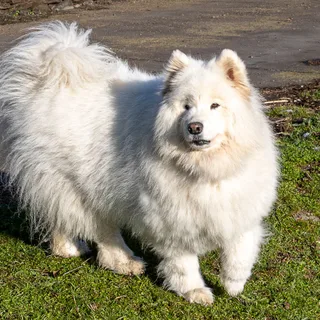
The Eurasier is a recent breed born in Germany in the 1960s. Its creator, Julius Wipfel, first crossed a Chow Chow with a Wolfspitz, then the type obtained was enriched by the contribution of the Samoyed. Konrad Lorenz accompanied this selection work. The Fédération Cynologique Internationale recognized the breed in 1973. Still relatively rare in France, it has mainly spread in Europe as a balanced companion dog and close to its family.
Appearance
What does it look like?
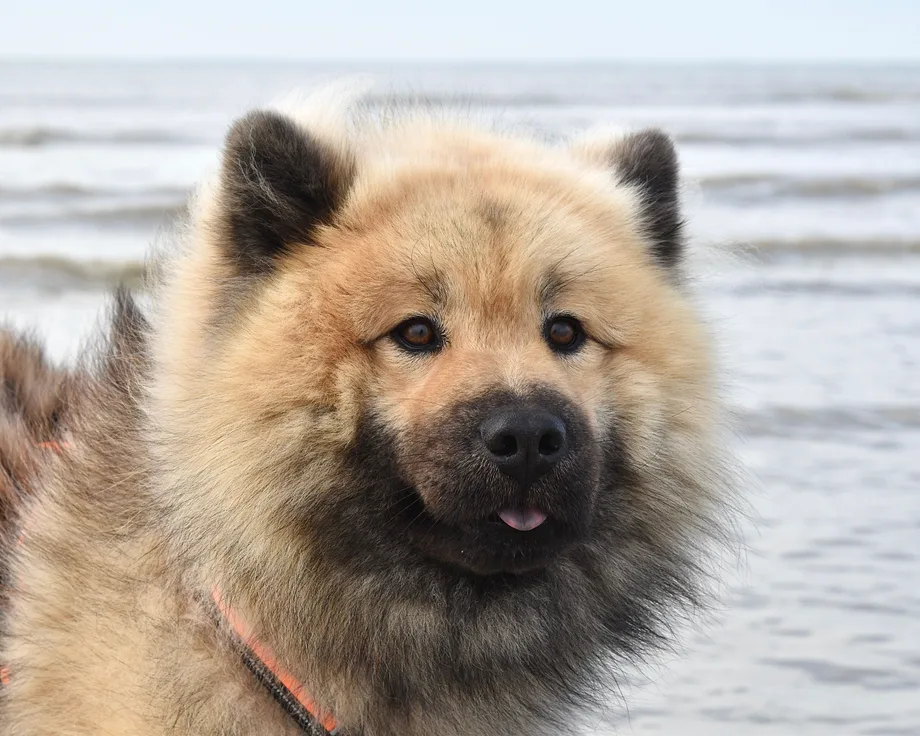
The Eurasier is a medium-sized dog, harmonious and solidly built. Its body is well proportioned, with a solid trunk, a marked withers, a chest descending to the elbows and a straight and broad croup. Its head is balanced, its ears are triangular and erect, its eyes are dark and slightly oblique, and its well-furnished tail can be carried curled. Its topcoat is medium-long with a dense undercoat, shorter on the head and more abundant on the tail and the back of the limbs.
Temperament
Temperament and personality
The Eurasier stands out for a calm, balanced and sensitive temperament. He is very attached to his owner and his family without being intrusive. Reserved with strangers, he generally remains non-aggressive and prefers to observe rather than provoke. Sociable with those close to him, a good companion for children and appreciating the presence of other dogs, he seeks a serene environment and stable relationships.
Living together
Living with children and other pets
On a daily basis, the Eurasier likes to live as close as possible to its family and does not cope well with prolonged solitude. It enjoys regular walks, calm games and a soothing environment. Not much of a barker, it is generally not turbulent, but it needs space, human presence and gentle stimulation to stay comfortable in its paws. A house with a garden often suits it better than an apartment, even if it can adapt to the city if its outings are sufficient.
Training
Training and socialization
The Eurasier’s training must be carried out with gentleness, consistency and positive reinforcement. It is a sensitive dog that responds poorly to harshness and needs a strong bond of trust to make progress. Intelligent but sometimes quickly bored, it benefits from short, varied and calm sessions. Early socialization is important to help it remain comfortable around strangers and new situations.
Budget
Price and budget for the Eurasier
The price of an Eurasier varies mainly according to the quality of the selection, the reputation of the breeding kennel, the health tests carried out on the breeding dogs, and the relative rarity of the breed in France. A well-socialized puppy from monitored lines deserves particular attention at the time of choosing.
See cost breakdownHealth
Health at a glance
The Eurasier is an overall well-balanced dog, but like many medium to large breeds, it requires rigorous health monitoring. Certain orthopedic, endocrine, neurological and ocular conditions are described in the breed. Its dense coat protects it well from the cold, but its lifestyle, growth and weight must be monitored carefully.
Prevention and things to watch forNutrition
Feeding your pet well
Feeding the Eurasier can be based on high-quality complete kibble suited to its age, weight and activity level. This dog has no exotic needs, but it benefits from a highly digestible and properly portioned ration to support its coat, muscle mass and overall condition.
Our feeding adviceDid you know?
Fun facts and popularity
The Eurasier is one of the rare modern breeds created in Europe under a clearly documented breeding project. Its name evokes its Eurasian origins through the foundation breeds used. It is also known as Eurasian, and its distribution remains limited in France compared to other Nordic companion dogs or spitz.