Origins
Where does it come from?
The Pumi was developed from the 17th century in Hungary with contributions from dogs coming from Germany and France, mainly of terrier type. Magyar breeders sought an agile, hardy and vigilant herding dog, capable of driving livestock while guarding farms. However, the breed was only considered distinct at the beginning of the 20th century, then recognized by the FCI in 1954.
Appearance
What does it look like?
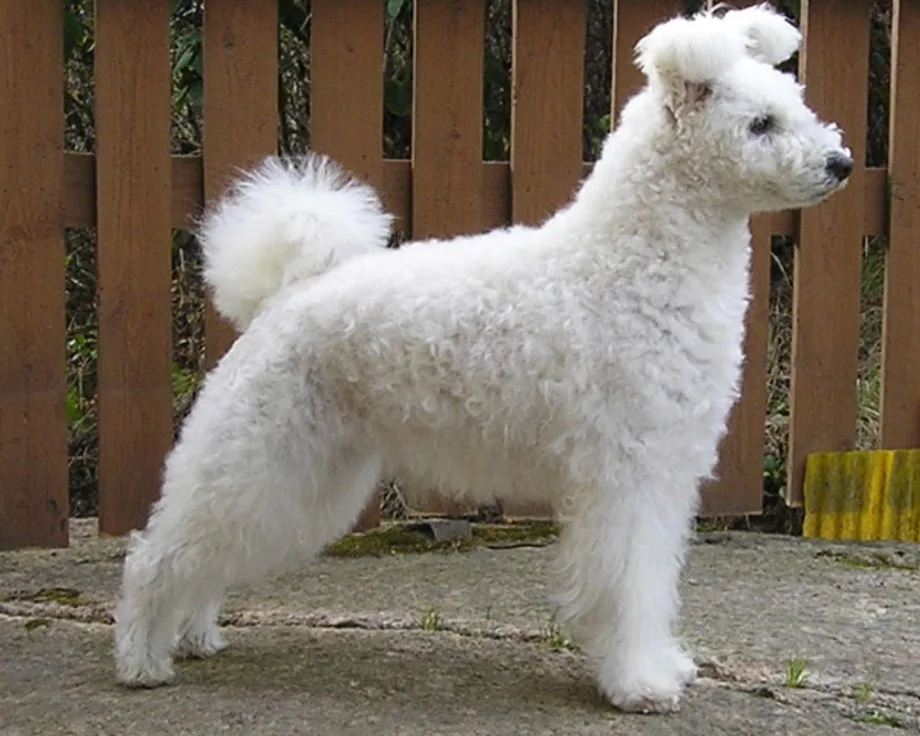
The Pumi is a medium-sized dog, fitting into a square, with a slender, harmonious and well-muscled silhouette. Its neck is carried high, its withers are pronounced, its back is short and straight, and its croup is slightly sloping. Its head is rather elongated, its dark brown eyes express a lot of liveliness, and its inverted V-shaped ears are very mobile. Its wavy, curly, medium-length coat forms tight tufts, with grey, black, fawn or white coats.
Temperament
Temperament and personality
The Pumi is a very active, lively, energetic and hardy dog, always inclined to work and to learn. Intelligent and demonstrative with its family, it retains an alert temperament that makes it a good watchdog. It is naturally wary of strangers, without losing its ability to be a close family companion to its humans.
Living together
Living with children and other pets
The Pumi needs to exercise every day and does not tolerate prolonged inactivity well. It can adapt to apartment living if its physical and mental needs are truly met, but it clearly prefers to have access to a fenced outdoor space. Its gaits are lively, dynamic and full of temperament, which makes it a dog that is very present on a daily basis.
Training
Training and socialization
The Pumi’s training must be firm, consistent and free of brutality. Its intelligence and enthusiasm for work respond well to positive reinforcement methods, especially if a clear framework is set early. It is important to channel its energy and vigilance without trying to break its personality.
Budget
Price and budget for the Pumi
The purchase price of the Pumi varies depending on the breeder, the lineage, the age of the dog and the availability of the breed. Its relative rarity can also influence the acquisition budget.
See cost breakdownHealth
Health at a glance
The Pumi is generally considered a robust, resilient dog with solid health. No major predisposition to any particular disease or abnormality has been identified for the breed, which does not rule out regular veterinary monitoring throughout its life.
Prevention and things to watch forNutrition
Feeding your pet well
The Pumi needs a protein-rich diet, adapted to its level of physical activity, its age and its size. The quality of the ration plays a central role in supporting its endurance, maintaining its muscle mass and preserving its overall condition.
Our feeding adviceDid you know?
Fun facts and popularity
The Pumi is often described as a herding dog with a very expressive style, halfway between the shepherd and the terrier in its appearance and liveliness. Long used for driving livestock in Hungary, it is now appreciated by active owners who are looking for a sporty, alert and original dog.