Origins
Where does it come from?
The origin of the Komondor is very ancient. Its ancestors already accompanied the Magyar nomadic shepherds in Hungary, where it was used to guard sheep flocks and defend property. The breed suffered greatly during the Second World War, to the point of becoming rare, before being preserved by passionate breeders. The Fédération Cynologique Internationale recognized it definitively on 9 August 1954.
Appearance
What does it look like?
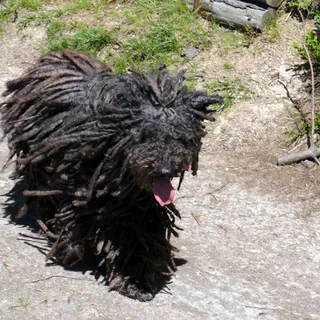
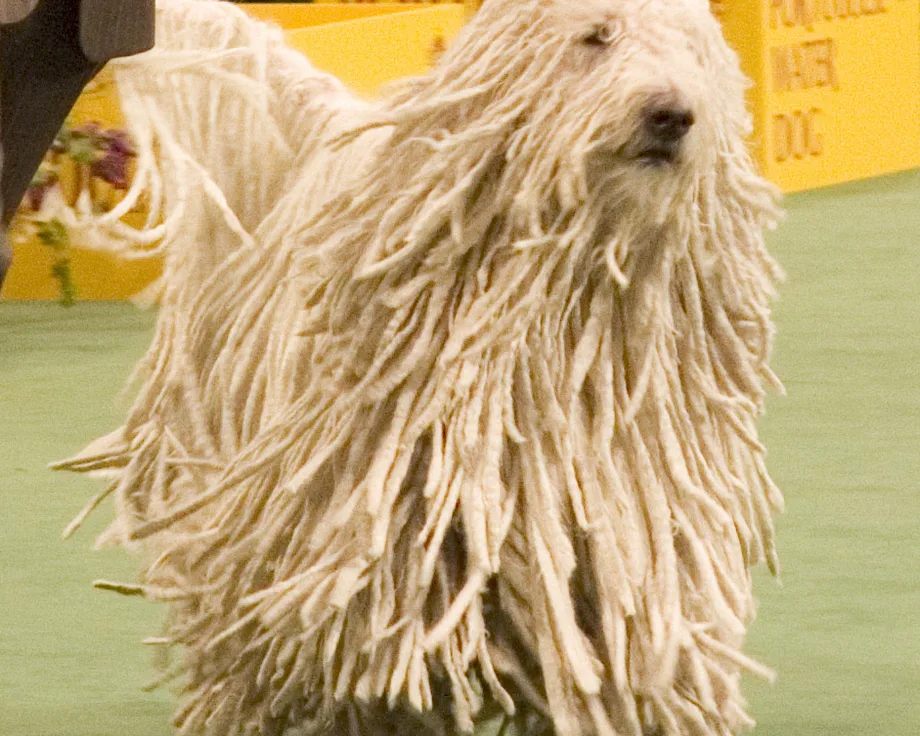
The Komondor is a giant dog, strongly built and solidly constructed. Its body fits into a rectangle, with a powerful chest, a rather short back and a broad, slightly sloping croup. Its head is broad and well proportioned, the eyes are dark brown, the ears are pendulous in a V or U shape, and the ivory coat only is one of its most distinctive signs. Its long, harsh, felted and flocculent hair gradually forms characteristic cords that protect the dog well against cold and humidity.
Temperament
Temperament and personality
The Komondor is above all a herding and guard dog. Very attached to its family, it is affectionate with its own while remaining naturally wary of strangers. Vigilant, observant and courageous, it protects its territory with seriousness and determination. Its temperament requires a clear framework, because its power and guarding instinct make it a companion poorly suited to hesitant handling.
Living together
Living with children and other pets
On a daily basis, the Komondor needs space, freedom of movement and a well-structured environment. He enjoys long walks and often maintains strong vigilance, including at night. Apartment living suits him poorly, unless his physical and mental needs are very well compensated. With careful socialization, he can live harmoniously with his family, but he often remains reserved with strangers and not very tolerant with other animals.
Training
Training and socialization
The Komondor’s training must be early, consistent and firm without brutality. Its intelligence and protective temperament require an experienced owner capable of setting stable boundaries and working on socialization from the youngest age. A regular, calm and structured approach helps to channel its independence and to obtain a reliable and balanced dog.
Budget
Price and budget for the Komondor
The Komondor is a rare breed whose price varies mainly depending on the quality of the breeding, the lineage, the health tests carried out on the breeding dogs, and the availability of puppies. The rarity of the breed can also significantly influence the acquisition budget.
See cost breakdownHealth
Health at a glance
Behind its robust appearance, the Komondor requires real health vigilance. Its large size, its very particular coat and certain breed predispositions justify careful monitoring throughout its life, notably on the joint, dermatological and ocular levels.
Prevention and things to watch forNutrition
Feeding your pet well
The Komondor needs a high-quality diet adapted to large to very large dogs. The goal is to support its muscle mass, body condition and joint health without promoting weight gain.
Our feeding adviceDid you know?
Fun facts and popularity
The Komondor is one of the most recognizable breeds in the world thanks to its corded coat, which gives it a unique silhouette sometimes reminiscent of that of a sheep. This appearance is not only spectacular: it also contributed to its camouflage among the herds it protected in Hungary. The breed remains rare today outside its country of origin.