Origins
Where does it come from?
Originally from Hungary, the Mudi developed from local herding dogs crossed with other droving dogs from Germany, notably prick-eared subjects, between the 18th and 19th centuries. It long accompanied Hungarian shepherds for driving and protecting flocks, while also being used during wild boar drives. The breed was definitively recognized by the FCI on 25 March 1963 and remains today relatively rare outside Hungary and Central Europe.
Appearance
What does it look like?
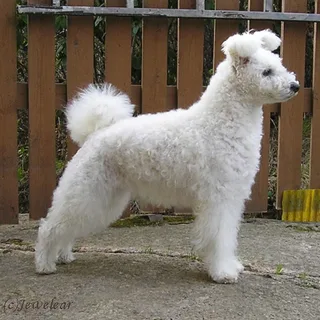
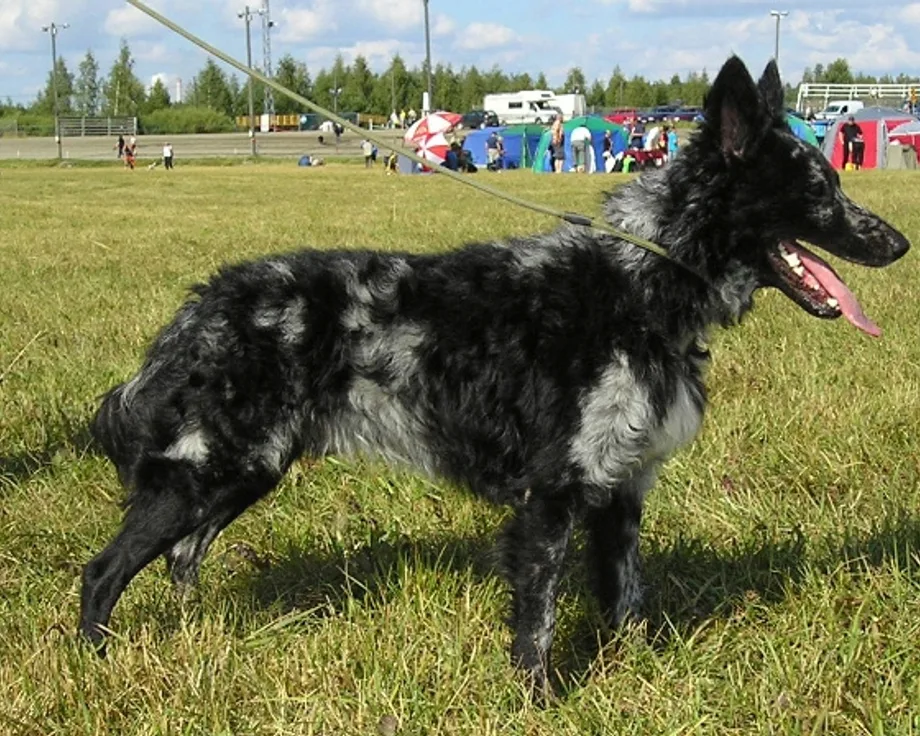
The Mudi is a medium-sized herding dog, harmonious, agile and built in an almost square format. Its coat is medium-length, dense, shiny, wavy to curly over a large part of the body, shorter and smooth on the head and the front of the limbs. Its wedge-shaped head, its erect ears in an inverted V, its dark eyes and its lively carriage give it an attentive and dynamic expression. The breed exists notably in fawn, black, blue merle, blue-grey, brown or white.
Temperament
Temperament and personality
The Mudi is a lively, courageous, determined and very alert dog. Naturally protective, it makes a good guard dog and proves versatile in many roles, from companion dog to working dog. Affectionate with its own, it retains a certain reserve and strong vigilance that require careful socialization.
Living together
Living with children and other pets
Very active, the Mudi needs space, freedom of movement and daily stimulation to stay balanced. He enjoys long walks, varied exercises and disciplines such as agility, canicross or obedience. Apartment living remains possible provided he is given enough outings and activities every day.
Training
Training and socialization
Active and intelligent, the Mudi responds well to training based on play, rewards and encouragement. Harsh methods should be avoided, as they may impair its motivation and its relationship with its owner. It needs to feel useful, understood and guided regularly to express its full potential.
Budget
Price and budget for the Mudi
The Mudi remains a rare breed, which can influence its availability and the level of selection of the breeders offering puppies. The acquisition budget must always be assessed in relation to the quality of the breeding, the health tests carried out and the support offered.
See cost breakdownHealth
Health at a glance
The Mudi is generally a hardy, robust and resilient dog, with overall sound health. Like many medium-sized working breeds, it nevertheless deserves careful monitoring of the musculoskeletal system and the eyes, as well as neurological monitoring in the event of suggestive symptoms.
Prevention and things to watch forNutrition
Feeding your pet well
The Mudi needs a high-quality diet, adapted to its age, its size and above all to its activity level. Its status as a lively and athletic dog justifies a well-calibrated ration, regular and monitored over time.
Our feeding adviceDid you know?
Fun facts and popularity
Rare outside Hungary and Central Europe, the Mudi is nevertheless an ancient and very well-rounded working dog. Historically valued for herding livestock, it has also distinguished itself in property guarding and even during wild boar drives, which attests to its courage and versatility.