Origins
Where does it come from?
The Polish Hound is a very ancient breed whose appearance would date back to the 13th century. It was used very early by the Polish nobility for hunting, notably that of big game. Some sources trace it back to crosses between the Saint Hubert Hound and local breeds. Rare outside Poland, it was definitively recognized by the Fédération Cynologique Internationale on 29 January 1965.
Appearance
What does it look like?
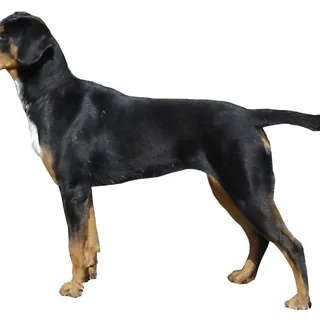
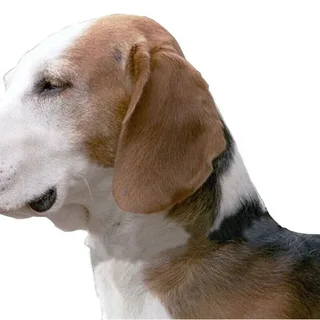
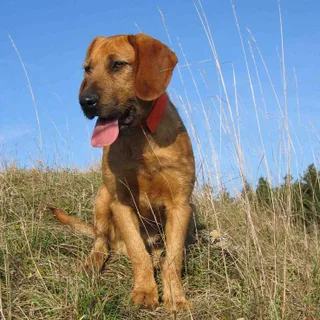
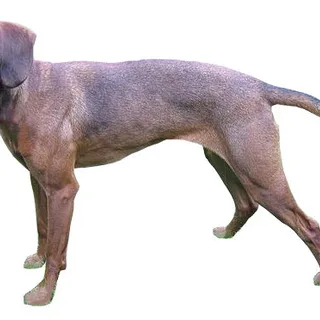
Large scenthound, the Brachet Polonais has a powerful, compact and well-proportioned build, built more for endurance than for speed. Its rather massive head fits into a rectangle, with a broad skull, a well-defined stop and a large, dark nose. Its dark brown almond-shaped eyes express gentleness. Its pendant ears are set rather low and slightly rounded at their tip. The back is long, broad and muscular, the chest well let down and the tail thick, set rather low and slightly curved. The coat is short and soft on the head, muzzle, ears and limbs, then longer, thick and harsh on the rest of the body. The coat is tan on the head, ears, limbs, the sternal region and the thighs, with black or dark grey on the rest of the body.
Temperament
Temperament and personality
Balanced, lively and passionate when hunting, the Polish Brachet stands out for its very keen sense of smell, its endurance and its determination on scent trails. With the family, it is affectionate, loyal and close to its owners. Vigilant and wary of strangers, it has a natural guarding instinct. Its clear and assertive voice is also a notable characteristic of the breed.
Living together
Living with children and animals
The Brachet Polonais thrives in wide open spaces and wooded areas where it can express its abilities as a scent hound. It prefers the countryside to the city, but can adapt to an urban environment if it benefits from long and frequent outings. Its need for activity is high and its walks must offer it real opportunities to expend energy and to engage its sense of smell.
Training
Training and socialization
Obedient and intelligent, the Polish Brachet is generally easier to train than many hunting dogs. Its training must start early and combine firmness, consistency and gentleness. Recall deserves priority attention in order to control its desire to follow a trail, especially in open spaces.
Budget
Polish Hound price & budget
The purchase price varies notably depending on the breeder, the lineage, the pedigree and the dog's intended use. As the breed is not very widespread outside Poland, availability can also influence the purchase conditions.
View cost breakdownHealth
Health at a glance
The Polish Hound is a solid and hardy dog that generally enjoys good health when it receives appropriate care. The reference source does not report any particular predisposition to a disease for this breed.
Prevention & watch pointsDiet
Feed it well
The diet must cover the high needs of an active scenthound while preventing weight gain. The ration is adjusted according to age, weight, body condition and the actual intensity of activity.
Our feeding adviceDid you know?
Anecdotes and popularity
The breed is also known under the names Polish Hound and Ogar Polski. Very old and closely linked to the hunting traditions of the Polish nobility, it remains today rare outside its country of origin.