Origins
Where does it come from?
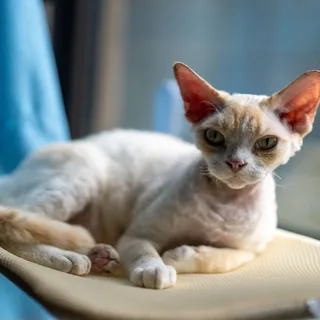
The Sphynx is a recent breed that appeared in Canada in the 1960s following a natural mutation responsible for the absence of hair. Breeding programs then consolidated the breed, notably with the contribution of the Devon Rex, before its spread to Europe and then to France where it enjoyed real success. Its atypical appearance often brings to mind an ancient exotic breed, but the modern Sphynx is indeed the result of a recent feline selection.
Appearance
What does it look like?
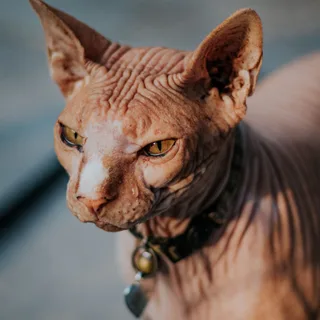
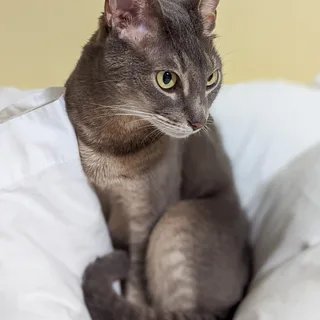
The Sphynx is a medium-sized cat with a finely muscled body, with wrinkled skin in places, notably on the head and hips. It is not completely hairless, as its body is covered with a very fine down that gives to the touch a peach-skin feel. Its head is longer than it is wide, its ears are very large and wide at the base, its eyes are open and expressive, and its long tail further accentuates its very distinctive silhouette.
Temperament
Temperament and personality
The Sphynx is a very affectionate companion cat, sociable and close to its home. It readily seeks contact, petting and human warmth, to the point of often following its owner in their movements. Calm without being passive, it combines gentleness, liveliness and curiosity, with a generally stable temperament and free of aggressiveness.
Living together
Living with children and animals
On a daily basis, the Sphynx adapts well to indoor life and copes fairly well with changes of environment if it keeps its emotional bearings. Playful, intelligent and present, it likes to take part in household life and generally gets along well with children and other animals. Its lack of fur, on the other hand, makes it sensitive to the cold, which often leads it to seek out warm and comfortable places.
Training
Training and socialization
The Sphynx responds well to gentle, consistent education based on routines. Its sociability and intelligence make it easier to learn household rules, care handling, and interactive games. It enjoys its human's attention and progresses better in a stable setting, without harshness or prolonged isolation.
Budget
Sphynx price & budget
The price of a Sphynx varies greatly depending on the lineage, the reputation of the cattery, compliance with the standard and the quality of health monitoring. This breed remains overall more expensive than many pet cats due to its relative rarity and the selection requirements.
View cost breakdownHealth
Health at a glance
The Sphynx generally has rather robust health, but its lack of coat requires particular vigilance regarding the skin, thermoregulation and certain hereditary risks. Like all cats, it must benefit from regular veterinary follow-up, the usual vaccinations and careful observation of its skin and cardiac condition.
Prevention & watch pointsDiet
Feed it well
The Sphynx's diet must cover energy needs that are often a little higher than in other cats, due to its increased caloric losses. The quality of the intake, digestibility and the regularity of meals matter as much as the quantity given.
Our feeding adviceDid you know?
Anecdotes and popularity
The Sphynx is often called a hairless cat, whereas in reality it has a very fine, almost imperceptible down. Its skin, warm to the touch, its folds and its large ears give it a unique appearance that never leaves anyone indifferent. In France, the breed has found a loyal following and is among the cats most recognizable at first glance.