Origins
Where does it come from?
The Devon Rex originates from Devonshire, in the south-west of England. The breed was born in the 1960s around a kitten named Kirlee, from a line carrying a curly coat gene distinct from that of the Cornish Rex. After several selections, the Devon Rex established itself as a breed in its own right and obtained its official recognition at the end of the 1970s.
Appearance
What does it look like?
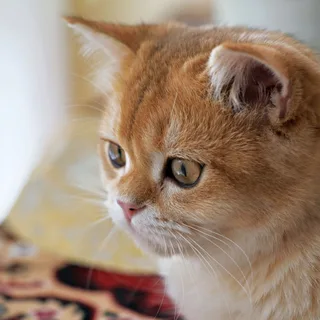
The Devon Rex is a medium-sized cat, supple and muscular, with a light silhouette and long legs. Its head seems small in relation to the body, its cheekbones are pronounced and its very large ears, wide at the base, give it a unique expression. Its coat is short, fine, soft and wavy, sometimes with sparser areas on the belly or chest.
Temperament
Temperament and personality
The Devon Rex is an expressive, cheerful cat and very attached to humans. It readily seeks the arms, shoulders or knees of its loved ones and enjoys family life. Sociable, curious and lively, it copes poorly with prolonged solitude and needs daily interaction.
Living together
Living with children and animals
Very playful, the Devon Rex likes to climb, jump and explore every room in the house. It often retains a kitten-like temperament into adulthood and actively takes part in household life. In an apartment, it needs an enriched environment with a cat tree, interactive games and high observation points.
Training
Training and socialization
The Devon Rex learns well thanks to its liveliness and its closeness to its human. A gentle, consistent education based on the repetition of simple routines suits it very well. Its energy can easily be channeled with play sessions, mental stimulation and handling habits established from a very young age.
Budget
Devon Rex price & budget
The price of a Devon Rex varies mainly depending on the quality of the lineage, conformity to the standard, the reputation of the cattery and the seriousness of health monitoring and socialization. An abnormally low price should always lead to checking the kitten's origin and the guarantees provided.
View cost breakdownHealth
Health at a glance
The Devon Rex has generally good health, but its selection requires vigilance regarding certain hereditary conditions and the care of the skin, eyes and especially the ears. Its very fine coat offers little protection from cold and bad weather, which makes it above all an indoor cat.
Prevention & watch pointsDiet
Feed it well
The Devon Rex's diet must support an active, energetic cat that is sensitive to weight variations. A complete food rich in quality animal proteins, given on a regular basis, suits its profile well.
Our feeding adviceDid you know?
Anecdotes and popularity
The Devon Rex is sometimes nicknamed the little monkey of the cat because of its agility, its taste for climbing and its way of perching on shoulders. Its sparse coat also makes it one of the breeds often sought after by people sensitive to allergens, even though no cat is totally hypoallergenic.