Origins
Where does it come from?
The Rhodesian Ridgeback originates from southern Africa. It descends from dogs of the Cape Colony crossed with ridge-backed hunting dogs bred by the Khoikhoi populations. Formerly used for guarding and to accompany hunters during lion hunting, it established itself as an enduring, courageous and balanced dog. Its first standard was established in 1922 in Rhodesia, then the breed was definitively recognized by the FCI in 1955.
Appearance
What does it look like?
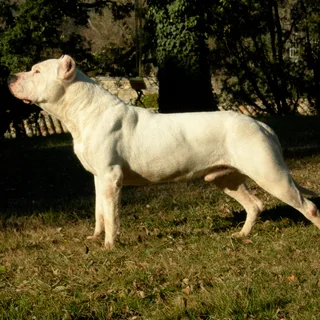
The Rhodesian Ridgeback is a large, powerful dog, harmonious and athletic, without heaviness. Its silhouette expresses speed, endurance and sturdiness. Its coat is short, dense, smooth and shiny, generally light wheaten to red fawn in color. Its emblematic distinctive feature is the dorsal ridge, formed by a strip of hair growing against the grain along the back. The head is rather long, the ears are medium-sized and drooping, the chest is deep and the tail is strong at the base then tapers toward the tip.
Temperament
Temperament and personality
The Rhodesian Ridgeback is a dog very attached to its family, loyal and affectionate without being constantly intrusive. It is generally calm at home, observant and reserved with strangers, without gratuitous aggression. Protective, self-assured and endowed with a real presence, it retains a certain independence that requires a consistent and steady owner.
Living together
Living with children and other pets
On a daily basis, the Rhodesian Ridgeback appreciates a stable family life, with long and regular outings. He needs exercise, mental stimulation and quality interactions to remain balanced. Well socialized, he can live with children and tolerate other animals, but his hunting instinct and assertive temperament require particular vigilance during encounters and when off-leash outdoors.
Training
Training and socialization
The education of the Rhodesian Ridgeback must start early, with firmness, gentleness and consistency. It is an intelligent dog, but also capable of testing limits if the framework lacks clarity. Positive reinforcement methods work well, provided you remain fair and consistent. Thorough socialization from the youngest age is essential, as is work on recall, leash walking and self-control.
Budget
Price and budget for the Rhodesian Ridgeback
The purchase price of a Rhodesian Ridgeback depends mainly on the quality of the breeding, the lineage, the screenings carried out and the puppy’s conformity to the standard. Beyond the initial cost, you must plan for the budget of a large active dog, notably for food, veterinary prevention and training.
See cost breakdownHealth
Health at a glance
The Rhodesian Ridgeback is overall a robust dog, capable of withstanding exertion well when it is properly cared for. Like many purebred dogs, it nevertheless has a few hereditary predispositions that justify careful veterinary monitoring and rigorous breeding selection.
Prevention and things to watch forNutrition
Feeding your pet well
The Rhodesian Ridgeback needs a complete, digestible and well-balanced diet, adapted to its size, age and activity level. Nutritional quality matters more than volume, especially during growth and in active dogs.
Our feeding adviceDid you know?
Fun facts and popularity
The Rhodesian Ridgeback is sometimes nicknamed the Ridgeback Dog of Rhodesia or African Lion Hound. Its famous ridge is a rare distinctive trait in the canine world and is one of the essential markers of the breed. Despite its impressive past as a hunting dog, it is often appreciated today for its calmness at home, its loyalty and its noble appearance.