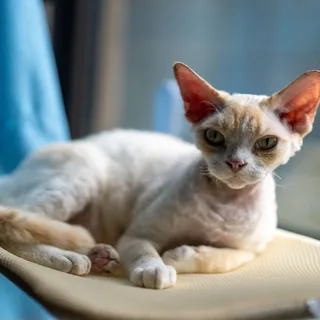
Longevity
Life expectancy
Its usual life expectancy is between 12 and 15 years. With robust health throughout its life, some individuals can approach twenty years.
Build
A robust breed?
The breed is described as robust, but the lack of coat requires careful protection against adverse weather conditions and preventive monitoring of the respiratory tract.
Watch points
What to watch for
Particular vigilance is necessary in winter in order to prevent respiratory conditions promoted by exposure to cold. Veterinary follow-up and the usual feline vaccinations must remain up to date.
Pulmonary infections : The breed is predisposed to them, especially in winter, and its exposure to cold should be limited as much as possible.
Climate
Cold and heat tolerance
Devoid of a protective coat, the Donskoy does not appreciate intense heat or harsh winters. A mainly indoor life makes it possible to better control its exposure to extreme temperatures.
Weight
Tendency to gain weight
Its high metabolism linked to thermoregulation does not protect it from becoming overweight if it is too sedentary. Monitor body condition and adjust the ration, especially after sterilization.
Daily life
Good habits to keep it healthy
- Limit exposure to cold as much as possible in winter.
- Keep recommended feline vaccinations up to date.
- Check and clean the eyes and ears every week.
- Maintain the skin regularly and plan a bath about twice a month.
Vaccination
Donskoy vaccines: vaccination schedule
Which vaccines for a Donskoy? Like all dogs, the Donskoy receives essential vaccines from 8 weeks old: CHPPi (core vaccine) and Leptospirosis. The puppy primary vaccination for Donskoy is given in several injections 4 weeks apart, followed by a first booster at 1 year. Depending on its lifestyle (hunting, hiking, boarding, travel, region), your veterinarian may complete the protocol with vaccines against Rabies, Kennel cough, Piroplasmosis, Lyme disease and Leishmaniasis.
| Vaccine | Primary series | First booster | Then | Who for? |
|---|---|---|---|---|
CHPPi (core vaccine)Core Distemper, Rubarth hepatitis, parvovirosis and parainfluenza | 8 weeks · 12 weeks · 3 months | 1 year | every year | All pets |
LeptospirosisCore Leptospirosis (bacterium transmitted by rodent urine and stagnant water) | 8 weeks · 12 weeks | 1 year | every year | All pets |
RabiesLifestyle-based Rabies | 12 weeks | 1 year | every year | Mandatory for travel abroad, categorized dogs, most boarding kennels and shows |
Kennel coughLifestyle-based Bordetella bronchiseptica and parainfluenza | 8 weeks | 1 year | every year | Dogs attending boarding kennels, daycares, dog clubs and shows |
PiroplasmosisLifestyle-based Tick-borne babesiosis | 5 months · 6 months | 1 year | every year | Hunting dogs, dogs living in rural or wooded areas, dogs highly exposed to ticks |
Lyme diseaseLifestyle-based Tick-borne borreliosis | 12 weeks · 3 months | 1 year | every year | Hiking dogs, hunting dogs, forest areas of the East and the Center |
LeishmaniasisLifestyle-based Leishmaniasis transmitted by sandflies | 6 months | 1 year and 6 months | every year | Dogs living or staying in the South of France, Corsica and the Mediterranean basin |
Adult Donskoy vaccine boosters are annual for leptospirosis and rabies; for distemper, hepatitis, and parvovirus, a booster every three years is often sufficient after the first booster. Your veterinarian will adjust the schedule to your dog’s actual risk.
Which boosters for your Donskoy?
Enter your companion’s age: we list the vaccines to do now and the next boosters.
Adopting well
Adopting a healthy Donskoy
An annual check-up with monitoring of the skin, teeth, weight and breathing is recommended. In breeding cats, cardiac monitoring and a complete clinical examination before mating are relevant.
This information is provided for guidance only and does not replace a veterinarian’s advice. If you have any concerns about your pet’s health, consult a professional.