Origins
Where does it come from?
The Whippet developed in England in the 19th century, even though dogs of the same type already existed earlier under the names of Levrette or Levron. It is generally considered to have resulted from crosses between the Greyhound and several terriers, probably with the contribution of the Italian Greyhound. First used for rabbit hunting and then for popular races in northern England, it was definitively recognized by the FCI in 1955.
Appearance
What does it look like?
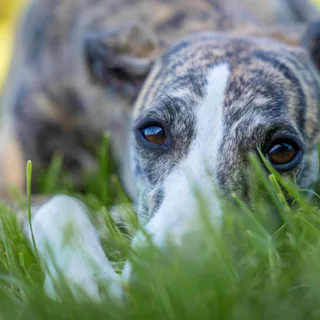
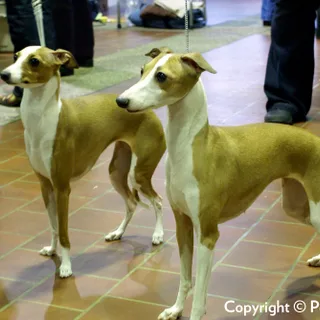
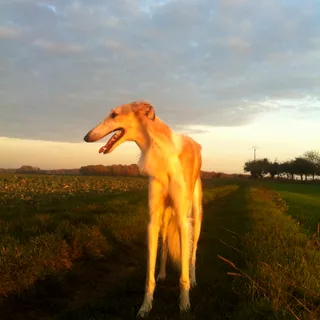
The Whippet is a medium-sized dog with a slender, muscular and very elegant silhouette. Its topline is slightly arched at the level of the loin, its chest is deep, its head long and lean, and its fine tail extends the whole with suppleness. Its coat is short, fine and close, and all colours or combinations of colours are permitted.
Temperament
Temperament and personality
The Whippet is a calm, discreet and sensitive dog, very attached to its owner and its family. It is generally easy to live with on a daily basis, not very barky and pleasant indoors, while retaining a sighthound temperament with a certain reserve and a strong taste for running.
Living together
Living with children and animals
At home, the Whippet appreciates calm and comfort and can be peaceful for long periods. Outdoors, on the other hand, it shows great speed and a real need for physical exercise. Its chasing instinct requires particular vigilance on walks, especially in the presence of small game.
Training
Training and socialization
The Whippet's training must be early, consistent and always gentle. This breed learns well when it is guided with calm, regularity and encouragement. Recall deserves particular work, because its hunting instinct can take over as soon as a moving animal attracts its attention.
Budget
Whippet price & budget
The purchase price of the Whippet varies depending on the quality of the bloodlines, the reputation of the breeder, the location and the follow-up offered. Beyond the acquisition cost, you must also anticipate food, preventive veterinary care and everyday equipment.
View cost breakdownHealth
Health at a glance
The Whippet is overall a robust breed, with health that is often solid when it is bred seriously and kept in good physical condition. Its short coat offers little protection against bad weather, and its natural practice of running requires regular attention to the musculoskeletal system.
Prevention & watch pointsDiet
Feed it well
The Whippet needs good-quality food, adapted to its size, its age and its activity level. Its athletic profile requires a well-balanced ration to support its muscle mass without promoting weight gain.
Our feeding adviceDid you know?
Anecdotes and popularity
The name Whippet is often linked to the English expression "Wip it", used in the north of England to set the dog off. Nicknamed the Dwarf Greyhound, it was for a long time the greyhound of the British working class, used in racing and rabbit hunting thanks to its remarkable speed.