Origins
Where does it come from?
The exact origins of the Scottish Deerhound remain ancient and partially unclear, but the breed is firmly associated with Scotland where it was traditionally used for hunting red deer. For a long time, this large sighthound was selected for its speed, endurance and its ability to pursue game over vast terrain. Its type has changed little over time and it is today mainly appreciated as a companion and show dog. The breed was definitively recognized by the FCI in 1955.
Appearance
What does it look like?
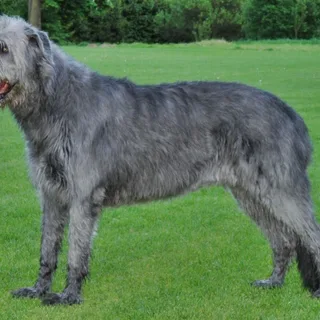
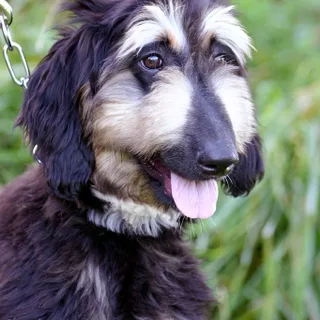
The Scottish Deerhound is reminiscent of the Greyhound, but in a larger, more powerful format and with a rough coat. Its body is harmoniously built, with a strong bone structure, a deep chest, a well-arched loin and a long tail carried low at rest. The head is elongated, the ears are small and folded back, and the expression of the dark eyes remains gentle when calm. The coat is thick, close, harsh and shaggy, with colors including dark blue-grey, brindle, sable or red fawn.
Temperament
Temperament and personality
The Scottish Deerhound is a gentle, friendly dog and very attached to its family. It combines a calm and docile nature with the qualities of a hunting and racing dog. Affectionate without being intrusive, it is attentive but not very inclined toward guarding. Its balanced temperament makes it a pleasant companion for present and active owners.
Living together
Living with children and animals
On a daily basis, the Scottish Deerhound needs space and regular exercise to stay balanced. It enjoys long outings and the opportunity to run in a secure place, which matches its sighthound heritage. In a house with a fenced garden, it generally feels comfortable, but it can also live in a more urban environment if its exercise needs are truly met.
Training
Training and socialization
The Scottish Deerhound is rather cooperative and readily seeks to please its owner. Its training benefits from being conducted with consistency, gentleness and positive motivation, without brutality. Calm firmness helps to lay good foundations, while early socialization helps to channel its chasing instinct and to develop good habits in all situations.
Budget
Scottish Deerhound price & budget
The Scottish Deerhound is a relatively rare breed, whose price depends mainly on the quality of the breeding, the lineage and the seriousness of health monitoring. The acquisition budget must be considered along with the maintenance costs of a large athletic dog and any preventive health expenses.
View cost breakdownHealth
Health at a glance
The Scottish Deerhound is overall a hardy and resilient dog, but the breed has several known sensitivities that justify serious veterinary monitoring. As with other large deep-chested dogs, particular vigilance is recommended on the digestive, cardiac and orthopedic levels.
Prevention & watch pointsDiet
Feed it well
The Scottish Deerhound needs a high-quality diet, adapted to its age, its size and its activity level. The ration must support lean musculature and regular effort, while remaining highly digestible to limit digestive discomfort.
Our feeding adviceDid you know?
Anecdotes and popularity
Also known as the Deerhound and Scottish Deerhound, the Scottish Deerhound is one of the most emblematic large sighthounds of the British Isles. Its noble and rugged silhouette is historically linked to deer hunting, which explains both its power, its great stride length and its need for movement.