Origins
Where does it come from?
The Italian Greyhound descends from very ancient small sighthounds whose traces go back to Ancient Egypt. Having passed through Greece before reaching the Italian peninsula, it particularly distinguished itself during the Renaissance, a period during which it was highly appreciated by the aristocracy and often depicted in painting. The breed was then established and definitively recognized by the FCI in 1956.
Appearance
What does it look like?
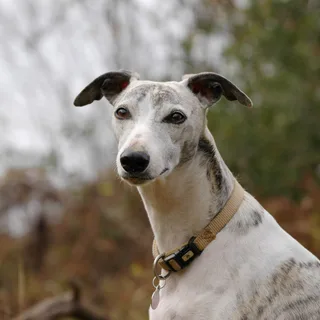
The Italian Greyhound is a very small-sized dog with a fine, lean and harmonious body, almost fitting into a square. Its head is elongated and narrow, its eyes are dark and expressive, its fine ears are set high, and its tail is low and tapering. Its coat is very short, fine and silky, with coats in shades of black, grey or isabella, white being tolerated on the chest and feet.
Temperament
Temperament and personality
Lively, affectionate and docile, the Italian Greyhound is a very sensitive dog that forms a close bond with its loved ones. It is generally reserved with strangers without being aggressive, and retains the fineness of expression and delicacy typical of sighthounds.
Living together
Living with children and animals
On a daily basis, he likes to alternate playtime, walks and phases of rest in the warmth near his family. Despite his small size, he needs regular exercise to stay balanced and appreciates being able to run in perfectly secure places. His emotional sensitivity leads him to cope poorly with harsh methods and noisy environments.
Training
Training and socialization
Its training must be early, consistent and exclusively based on gentleness. Encouragement and rewards give much better results than constraint, especially for working on recall and socialization. A calm and regular environment helps this sensitive dog gain confidence and behave well in the city as well as at home.
Budget
Italian Greyhound price & budget
The purchase price varies depending on the quality of the lineage, the seriousness of the breeding, the screenings carried out and compliance with the standard. You must also anticipate the ongoing costs related to food, veterinary prevention and equipment, notably for comfort in cold weather.
View cost breakdownHealth
Health at a glance
Despite its very slender appearance, the Italian Greyhound is not a particularly fragile dog, but it has certain predispositions that justify serious veterinary monitoring and rigorous breeding selection.
Prevention & watch pointsDiet
Feed it well
The Italian Greyhound needs a quality diet, digestible and suited to its small size, its age and its activity level. Well-measured meals help support its fine musculature without promoting excess weight.
Our feeding adviceDid you know?
Anecdotes and popularity
The Petit Italian Greyhound is also known as the Italian Greyhound. Its refined silhouette made it a favorite of European courts, notably during the Renaissance, and many ancient works show this small greyhound alongside noble figures.