Origins
Where does it come from?
The Poitevin originates from Poitou. It descends from ancient scenthounds, notably the Ceris hound and the Montemboeuf hound, developed by Marquis Francois de Larrye at the end of the 17e century. The breed declined sharply before finding a new resurgence in the middle of the 19e century, notably for wolf hunting. Long called Chien du Haut Poitou, it has a first standard established in 1922.
Appearance
What does it look like?
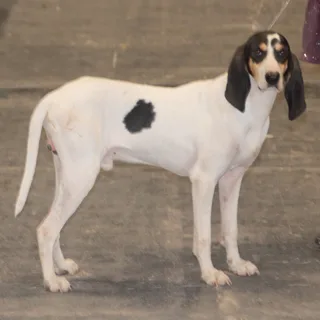
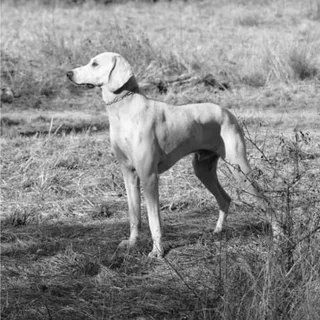
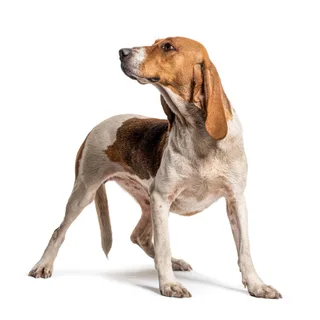
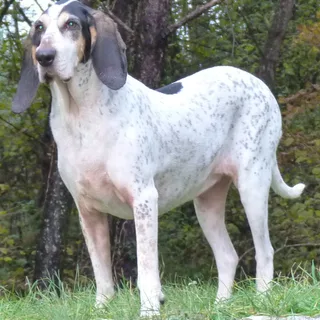
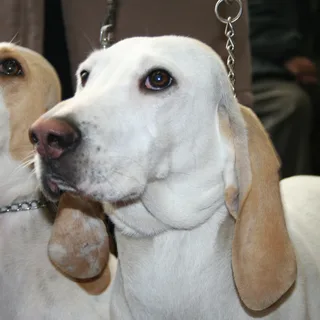
The Poitevin is a large scenthound with a distinguished, powerful and supple gait. Its build is athletic and light, with a long and slender neck, a well-muscled back, a deep and high chest and slightly tucked-up flanks. The head is long without excess, relatively narrow, the ears are of medium length and set rather low, the eyes brown and expressive. The coat is short and shiny, most often black with large orange or tan and white patches.
Temperament
Temperament and personality
The Poitevin is a determined, hardy and energetic hunting dog. It works with a fine nose, a powerful voice and great perseverance. Attached to its social group, it remains more oriented toward action and pack life than toward the constant search for contact. Its hunting instinct is very pronounced.
Living together
Living with children and animals
The Poitevin needs space, movement and an active life to remain balanced. Apartment living suits him poorly and he thrives much better in a rural environment or with a large well-fenced garden, provided he can run and expend energy every day. He enjoys long outings and activities that engage his sense of smell.
Training
Training and socialization
Like many scent hounds, the Poitevin must be trained early, particularly on recall. Its training requires consistency, firmness without brutality and good motivation through reward. Its pursuit instinct and natural independence require regular work to obtain reliable obedience on a daily basis.
Budget
Poitevin price & budget
The Poitevin remains a relatively little-known breed, which makes its price variable depending on the origin of the line, the seriousness of the breeding and the dog's intended use. It is essential to favor a transparent origin and properly socialized puppies.
View cost breakdownHealth
Health at a glance
The Poitevin is overall a robust and resilient dog. The breed does not show any major clearly highlighted predisposition, but its active lifestyle requires careful monitoring of physical condition, paws, ears, and recovery after exertion.
Prevention & watch pointsDiet
Feed it well
The Poitevin needs a quality diet, formulated for a large active dog and adjusted to its age, size and level of exercise. The ration must support endurance without promoting excess weight.
Our feeding adviceDid you know?
Anecdotes and popularity
The Poitevin was long known under the name Chien du Haut Poitou. It distinguished itself historically in wolf hunting and remains today appreciated for its qualities as a great French scenthound, capable of moving with ease and lightness at the gallop.