Origins
Where does it come from?
The Porcelaine is a very old French breed of scenthound, formerly known as the Briquet Franc-comtois. It descends from the old Chiens Blancs du Roy and almost disappeared during the French Revolution. The breed was then revived thanks to the work of passionate breeders, with contributions from Billy and Grand Gascon saintongeois, before regaining wider distribution from the 19th century.
Appearance
What does it look like?
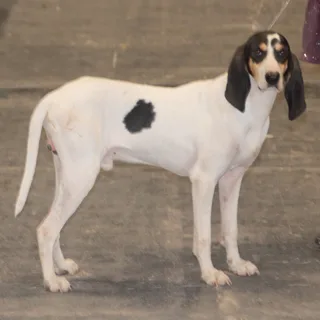
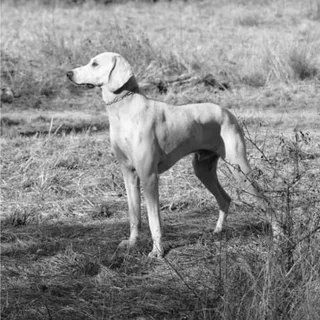
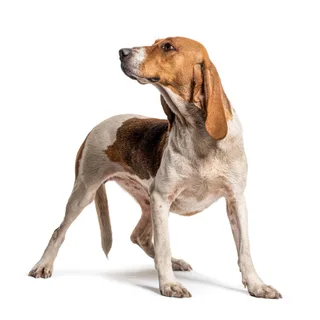
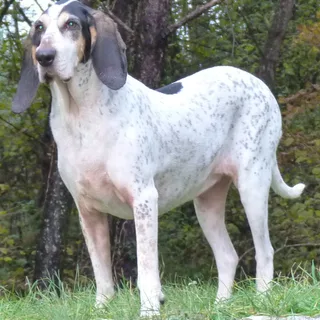
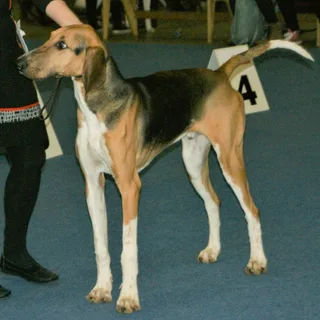
The Porcelaine is a medium-sized scenthound, harmonious, lean and well proportioned. Its body is built for endurance, with a straight back, a muscular loin, a deep chest and limbs suited to covering long distances. Its head is elongated and finely shaped, its ears are thin and pointed towards the tip, and its very short, close and glossy coat highlights its white coat marked with rounded orange spots.
Temperament
Temperament and personality
The Porcelaine is a gentle dog, affectionate with its owner and generally well-balanced on a daily basis. It is above all a hunting dog, courageous, hardy and passionate about tracking work. It enjoys life in a pack, has a good nose and a pleasant voice, while retaining a certain independence typical of scenthounds.
Living together
Living with children and animals
Active and lively, the Porcelaine needs long regular outings and an environment that allows it to fully expend its energy. It copes poorly with prolonged inactivity and thrives above all in a house with space, ideally in the countryside. Its chasing instinct remains pronounced, which calls for caution in open places rich in scents.
Training
Training and socialization
The Porcelaine’s training must be started early, with consistency, calm and firmness, without brutality. Recall is a priority learning, because its hunting instinct can quickly take over. Positive reinforcement, repetition and motivating exercises work better than coercive methods, especially with this willing but sometimes independent dog.
Budget
Porcelaine price & budget
The Porcelaine remains a relatively rare breed. Its purchase price varies mainly depending on the quality of the lineage, the reputation of the breeder and the puppy’s intended use, companionship or hunting.
View cost breakdownHealth
Health at a glance
The Porcelaine is overall a robust dog, with solid health when it benefits from an active lifestyle, a suitable diet and regular veterinary follow-up. Like many scent hounds, however, certain points related to its morphology, its activity and its drooping ears must be monitored.
Prevention & watch pointsDiet
Feed it well
The Porcelaine needs a balanced, digestible diet adapted to its level of activity. A sporting dog by nature, it requires a ration consistent with its energy expenditure, while maintaining good control of quantities to preserve its figure and its digestive comfort.
Our feeding adviceDid you know?
Anecdotes and popularity
The Porcelaine owes its name to the very smooth, fine and shiny appearance of its coat, which evokes porcelain. It is part of the historic French breeds of scenthounds and remains particularly appreciated for small game hunting, notably for hare and roe deer. Its natural elegance contrasts with its real endurance in the field.