Origins
Where does it come from?
The Berger du massif du Karst is an ancient breed mentioned as early as the 17th century by Baron Janez Vajkart Valvasor in his work "The Glory of the Duchy of Carniola", published in 1689. It is said to have accompanied the Illyrians throughout their migrations across Istria and Dalmatia before settling in the Karst massif region, now located in Slovenia. The Fédération Cynologique Internationale first recognized it on 2 June 1939 under the name Illyrian Shepherd Dog, then definitively thirty years later under that of Karst Shepherd Dog.
Appearance
What does it look like?
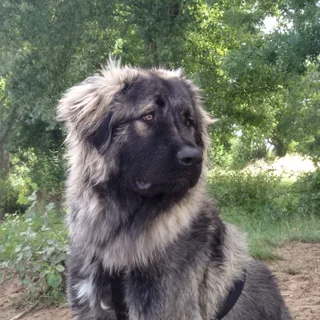
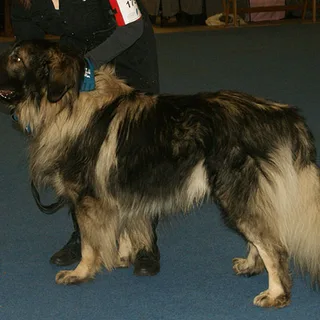
The Berger du massif du Karst is a powerful, robust and harmoniously built molossoid dog, with a strong bone structure and well-developed musculature. Its rather large head tapers towards the nose, with a moderate stop, thick lips and a dark mask. Its almond-shaped eyes range from chestnut to dark brown and its V-shaped ears hang flat against the cheeks. Its medium-length body has a straight, broad and muscular back, a well-developed chest and a slightly sloping croup. Its tail, thick at the base, sabre-shaped and furnished with long hair, stays low at rest. Its iron-grey coat, about 10 cm long, flat and very dense, lies on an abundant undercoat and forms a marked mane around the neck; the belly and limbs are lighter.
Temperament
Temperament and personality
Courageous, vigilant and self-confident, the Karst Shepherd is a natural guardian that is wary of strangers without being unnecessarily biting. Very attached to its owner and its family circle, it is pleasant, rather docile and retains real autonomy as well as strong herding dog instincts. Its assertive temperament requires a consistent and respectful relationship.
Living together
Living with children and animals
This dog thrives in large open spaces where it can remain active and watch over its territory. It needs long daily outings, useful activities and a securely fenced garden. Apartment living suits it poorly, even if regular walks are offered. Early socialization promotes good relationships with children, other dogs and other animals.
Training
Training and socialization
Intelligent, relatively obedient and eager to please its owner, the Karst Shepherd learns quickly. Its independent and assertive temperament nevertheless requires early training that is firm, consistent and without brutality. Recall, leash walking, territory management and welcoming visitors must be worked on from a young age, alongside rich and gradual socialization.
Budget
Karst Shepherd Dog price & budget
Rare in France, the Karst Shepherd can have a purchase cost that varies depending on the availability of litters, the pedigree, the parents' health tests and the costs related to a possible import from Slovenia or a neighboring country.
View cost breakdownHealth
Health at a glance
Rustic, robust and resilient, the Berger du massif du Karst generally enjoys good health. Its double coat provides good protection against bad weather and no major pathological predisposition is particularly reported for the breed. As with any large dog, growth, joints and weight nevertheless deserve regular monitoring.
Prevention & watch pointsDiet
Feed it well
Its diet must support its musculature and activity level while avoiding weight gain. Needs vary greatly depending on age, sex, season, exercise and lifestyle; the ration must therefore be adjusted to body condition rather than to size alone.
Our feeding adviceDid you know?
Anecdotes and popularity
The breed is also known under the names Karst Shepherd, Kraski Ovcar and Karst Shepherd. An ancient sheepdog from the Slovenian karst region, it is today appreciated for its dual aptitude for herding and protecting flocks. Its abundant ruff and its iron-grey coat contribute strongly to its characteristic appearance.