Origins
Where does it come from?
Although the Yugoslav Shepherd has been bred for a very long time in a region that once belonged to Yugoslavia, its older origins go back to Antiquity. It would seem that it descends from the Molossus of Epirus. The shepherds of the mountainous regions of the south-east of the former Yugoslavia, today shared between Serbia and Macedonia, bred the Charplanina for its remarkable guarding and herding abilities with sheep flocks. The breed then spread throughout the whole Yugoslav territory and joined the FCI registers in 1939 under the name Illyrian Shepherd Dog. In 1957, the name Yugoslav Shepherd Dog of Charplanina was officially adopted by the FCI. The official standard cited by the source was published on 24 November 1970.
Appearance
What does it look like?
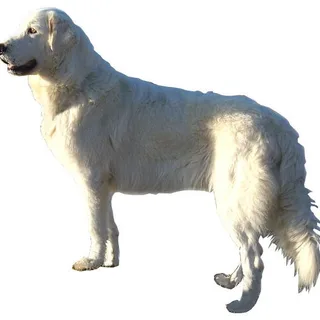
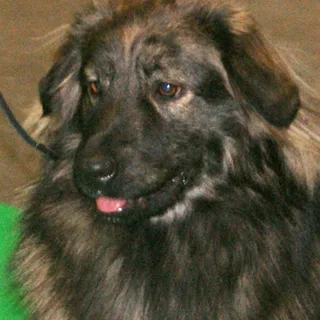
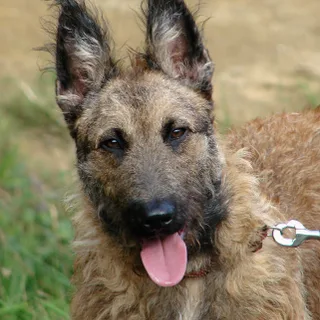
The Yugoslav Shepherd is a large, robust dog, solidly built and well proportioned. Its head, long and proportionate to the body, has a broad and slightly convex skull, a little pronounced stop, a broad and deep muzzle as well as a broad, black nose. Its almond-shaped eyes range from dark chestnut to light chestnut and express calmness. Its medium ears, V-shaped, are pendant and close to the cheeks. The neck is broad and muscular, the back straight and broad, the croup sloping and well muscled, the chest deep and the belly tucked up. The long tail, strong at its base and saber-shaped, reaches the tip of the hock and is raised in action. The coat measures about 7 to 12 cm on the body, where it is relatively flat and rather coarse, with a short, fine and dense undercoat. It is shorter on the head and the front of the limbs. The coat color is solid, from white to very dark brown almost black, with a preference for iron gray and dark gray. Small white markings on the chest or toes are permitted in pigmented subjects, and the shades are darker on the top of the head, the neck and the trunk.
Temperament
Temperament and personality
The Yugoslav Shepherd stands out for its great calm and unwavering loyalty to its owner. Its protective instinct is pronounced and it shows a natural wariness toward strangers, without being excessively aggressive or fearful. Sensitive, rather proud and relatively independent, it builds its obedience on a relationship of trust and good rapport with its owner.
Living together
Living with children and animals
The Yugoslav Shepherd clearly prefers the countryside and the fresh air to urban life. Its size and its herding dog heritage make it happier in wide open spaces. Its sporting needs remain moderate: a long daily walk and calm activities alongside its owner suit it.
Training
Training and socialization
Its training is not particularly difficult if it starts early. It must be firm, consistent and free of any power struggle. This sensitive and proud dog responds better to a relationship based on trust, respect and closeness with its owner.
Budget
Yugoslavian Shepherd Dog price & budget
The purchase price varies depending on the breeder and the dog's profile.
View cost breakdownHealth
Health at a glance
Rustic, robust and resilient, the Yugoslav Shepherd generally enjoys good health. As with other large dogs, the risk of hip dysplasia must nevertheless be taken into consideration.
Prevention & watch pointsDiet
Feed it well
Large mountain dog, the Yugoslav Shepherd needs a complete diet, not too energy-rich if it lives in the lowlands. Growth must remain slow to protect the joints.
Our feeding adviceDid you know?
Anecdotes and popularity
The breed is also known under the names Yugoslav Shepherd Dog of Charplanina, Charplanina and Sarplaninac. Its former official name with the FCI was Illyrian Shepherd Dog.