Origins
Where does it come from?
Also called the South Russian Shepherd Dog or Youjak, the Russian Shepherd Dog was developed in the 19th century in Crimea to protect flocks against wolves and bears. Its origins are said to be linked to crosses between the Asturian Shepherd Dog and local shepherd dogs, notably the Tatarian Shepherd Dog, with a possible contribution from the Borzoi. The breed declined sharply after the Russian Revolution and the destruction of Askania Nova, then the biologist A. Brauner contributed to its preservation from 1923 thanks to a breeding program established in Dzhankoi. The Second World War again reduced its numbers. The Fédération Cynologique Internationale recognized it definitively on 30 September 1983.
Appearance
What does it look like?
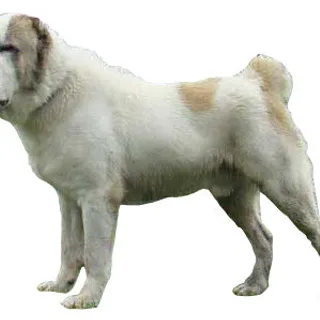
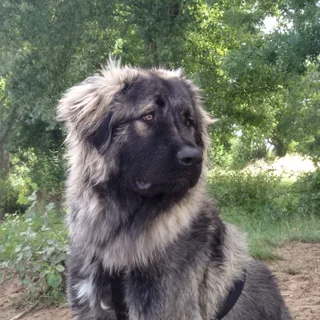
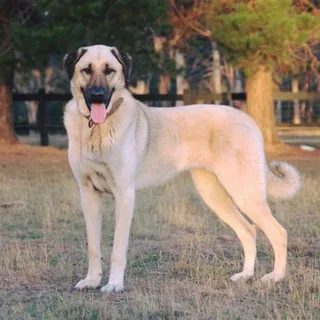
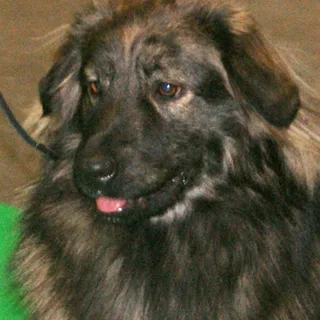
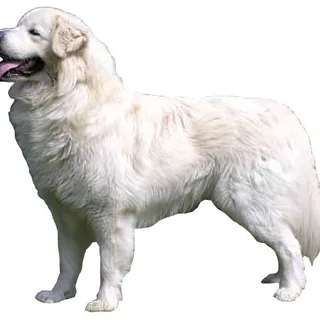
The Berger de Russie is a giant dog, robust and muscular, whose males are generally more imposing than females. Its head is rather elongated, with a moderately broad forehead, a slightly pronounced stop, a large black nose and dark oval-shaped eyes. Its small triangular ears are pendant. The body has a lean and muscular neck, a straight and strong back, a broad loin, a deep chest and a slightly tucked-up belly. Its coat of 10 to 15 cm, slightly wavy, thick and bushy, is doubled with a dense undercoat. The coat is mainly white, sometimes white and yellow, grayish or in different shades of gray. The tail is covered with long, coarse and very abundant hair.
Temperament
Temperament and personality
Very active, lively, dominant and independent, the Berger de Russie has a particularly developed guarding instinct. Alert and wary of strangers, it defends its territory and its family with determination and can be prone to biting if its socialization and control are insufficient. With its owner, it reveals on the contrary great sensitivity, gentleness and real attachment. It enjoys being petted and can be close to children, but its power requires supervision and clear rules.
Living together
Living with children and animals
This hardy dog needs space, activity and a stable environment. Apartment living does not suit him: a house with a large, securely fenced garden is preferable, without replacing outings. He needs at least two long daily walks and activities suited to his guarding abilities. His cohabitation with other animals must be prepared early, and his reserve towards strangers requires ongoing socialization. He is suited to a calm, available and experienced person, capable of managing a powerful and independent dog.
Training
Training and socialization
Education must begin from the youngest age with firmness, consistency, patience and gentleness. Violence must be avoided, as it can reinforce distrust and complicate the control of this dominant and stubborn dog. Recall, walking on a leash, frustration management and acceptance of handling must be worked on early. Progressive socialization with people, animals and varied environments is essential to reduce its natural wariness of strangers.
Budget
Russian Shepherd Dog price & budget
The purchase price varies depending on the lineage, the pedigree, the reputation of the breeding kennel, the health tests carried out on the breeding dogs and the dog's destination. The annual maintenance budget communicated for the breed is estimated between 1 750 and 1 900 euros.
View cost breakdownHealth
Health at a glance
The Berger de Russie is generally robust and resilient. Its double, very dense coat protects it effectively from bad weather, but its drooping ears require regular monitoring. As with many large dogs, hip dysplasia is an important point of vigilance.
Prevention & watch pointsDiet
Feed it well
Powerful and active dog, the Berger de Russie needs a rich, balanced diet adapted to its size, age and level of exercise. Protein quality and control of energy intake are particularly important during growth.
Our feeding adviceDid you know?
Anecdotes and popularity
The Berger de Russie is also known under the names South Russian Shepherd and Youjak. Historically selected to guard flocks, it was reputed to be able to stand up to wolves and bears. Its abundant light-colored coat allowed it to blend visually among the sheep while withstanding harsh climatic conditions.