Origins
Where does it come from?
As part of the white mountain dogs, the Slovak Cuvac descends from ancient lines of protection dogs established in the mountain ranges of Central Europe. In Slovakia, it was selected by the shepherds and farmers of the Tatras to defend herds and farms against wolves, bears and intruders. Its entirely white coat was preserved in order to distinguish it easily from predators at dusk or in bad weather. The breed is recognized by the FCI under number 142 since 1966.
Appearance
What does it look like?
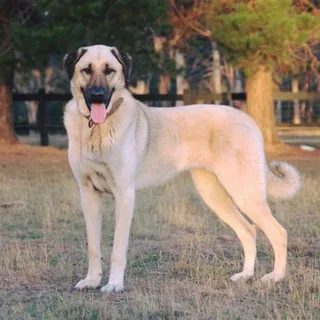
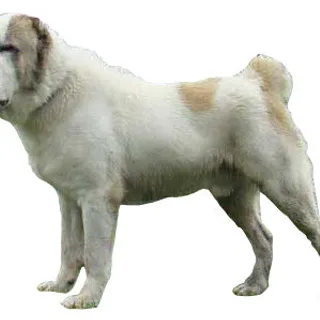
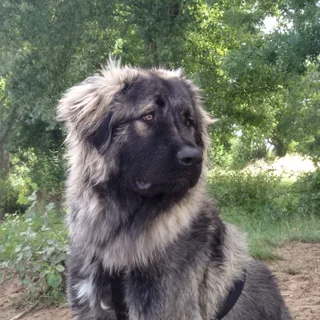
The Slovak Cuvac is a large shepherd and mountain dog with a powerful, massive and well-built appearance. Its body is slightly longer than it is tall, with a robust bone structure, a broad chest and a straight back. The head is rather long and well proportioned, the eyes are dark brown and expressive, the ears are pendant of moderate length. Its coat is medium-length, wavy and very dense, with a thick undercoat that protects it effectively from the cold. The coat is exclusively white.
Temperament
Temperament and personality
Loyal, courageous and very vigilant, the Slovak Tchouvatch has retained a strong protective instinct. He shows himself attached to his family and serious in his role as a guardian, while remaining balanced when he is properly socialized. He is not hyperactive, but he observes a lot and readily reacts in the presence of something unusual. With strangers, he generally remains reserved without being unnecessarily aggressive.
Living together
Living with children and animals
This dog needs space, a stable setting and regular outings to remain calm. He clearly prefers life in a house with a fenced yard to life in an apartment. On a daily basis, he enjoys long, calm walks more than very intense exercises, which helps to spare his joints. In the family, he can be close and protective, but he remains a dog with an independent temperament who likes to keep an eye on his surroundings.
Training
Training and socialization
The Slovak Cuvac requires a firm, consistent and early education, without brutality. Its intelligence and willingness to please help learning, but its independence requires a clear and constant framework from the youngest age. Socialization must be careful to channel its natural wariness and make it a reliable adult. Methods based on reward, repetition and calm give the best results.
Budget
Slovak Cuvac price & budget
The Slovak Cuvac remains a relatively confidential breed, which can influence the available supply depending on the kennels and the litters. The acquisition cost depends mainly on the quality of selection, the breeding follow-up and the availability of the puppies.
View cost breakdownHealth
Health at a glance
The Slovak Tchouvatch is generally considered a robust and hardy dog. The breed does not present a long list of frequently reported hereditary conditions, but its large size requires particular attention to the musculoskeletal system, especially during growth and in adulthood.
Prevention & watch pointsDiet
Feed it well
The Slovak Cuvac needs a quality diet adapted to its size, age and physical activity. Its diet must support its muscle mass, preserve its joints and avoid energy excesses that would promote overweight.
Our feeding adviceDid you know?
Anecdotes and popularity
The Slovak Tchouvatch is also known under the names Slovak Shepherd, Slovak Cuvac and Slovensky Cuvac. Its coat, exclusively white, is not an aesthetic coincidence, but the result of a functional selection intended to visually distinguish it from predators. Despite its strong build, it retains agile gaits and a light trot typical of protection dogs capable of patrolling for a long time in the mountains.