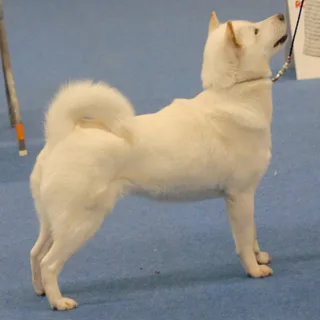
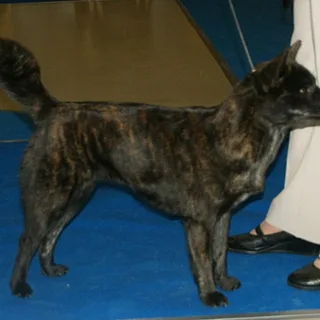
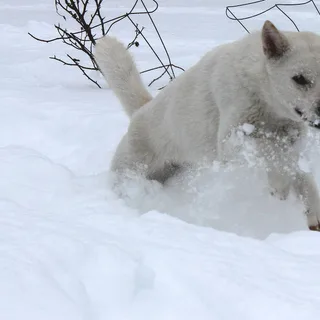
Longevity
Life expectancy
It generally lives between 10 and 12 years. A balanced diet, regular activity without excess during growth, preventive care and appropriate monitoring of risks specific to the breed promote a long and comfortable life.
Build
A robust breed?
Its powerful build, solid bone structure and dense undercoat give it good overall resistance, notably to cold and humidity. This robustness does not eliminate the need for particular vigilance regarding the joints, skin, thyroid, eyes and the risk of gastric dilatation-volvulus.
Watch points
What to watch for
Monitoring should focus primarily on locomotion, skin condition, coat quality, thyroid function, vision and acute digestive signs. A decrease in activity, lameness, persistent itching, unusual hair loss or a suddenly swollen abdomen require veterinary advice.
Hip dysplasia : Joint malformation that can lead to pain, lameness and osteoarthritis; screening breeding dogs and controlling weight reduce the risks.
Elbow dysplasia : Developmental abnormality of the elbow responsible for forelimb lameness and early osteoarthritis.
Progressive retinal atrophy : Hereditary retinal disorder causing a gradual and irreversible loss of vision.
Hypothyroidism : Hormonal insufficiency that can cause fatigue, weight gain, skin disorders and coat deterioration.
Sebaceous adenitis : Inflammatory disease of the sebaceous glands likely to cause scaling, hair loss and secondary infections.
Pemphigus : Autoimmune skin disease that can cause crusts, pustules and lesions requiring veterinary care.
Pyoderma : Bacterial skin infections promoting redness, itching, pustules and hair loss.
Gastric dilatation-volvulus : Life-threatening emergency in large dogs combining swelling and rotation of the stomach; restlessness, unproductive retching and a distended abdomen require immediate consultation.
Climate
Cold and heat tolerance
Its double coat protects it very effectively from cold and humidity. It tolerates high heat less well: outings must then be scheduled during cool hours, with shade, water and no intense effort. It must never be shaved, because its undercoat contributes to thermal insulation.
Weight
Tendency to gain weight
The breed shows a tendency to gain weight, especially if its daily routine lacks activity. The ration must be weighed, treats counted and body condition checked regularly. A healthy silhouette keeps a noticeable waist and ribs that are easily palpable without being visible.
Daily life
Good habits to keep it healthy
- Monitor weight and body condition each month.
- Have any persistent lameness or stiffness examined promptly.
- Inspect the skin and coat during each brushing.
- Check the eyes and ears each week.
- Know the signs of gastric dilatation-volvulus.
- Keep vaccinations and antiparasitic treatments up to date.
Vaccination
American Akita vaccines: vaccination schedule
Which vaccines for a American Akita? Like all cats, the American Akita receives essential vaccines from 8 weeks old: Typhus (panleukopenia) and Coryza. The kitten primary vaccination for American Akita is given in several injections 4 weeks apart, followed by a first booster at 1 year, even if it lives in an apartment. Depending on its lifestyle (outdoor access, multi-cat household, shows, travel), your veterinarian may complete the protocol with vaccines against Feline leukemia (FeLV), Rabies and Chlamydiosis.
| Vaccine | Primary series | First booster | Then | Who for? |
|---|---|---|---|---|
Typhus (panleukopenia)Core Feline panleukopenia (cat parvovirus) | 8 weeks · 12 weeks · 3 months | 1 year | every year | All pets |
CoryzaCore Feline herpesvirus and calicivirus | 8 weeks · 12 weeks · 3 months | 1 year | every year | All pets |
Feline leukemia (FeLV)Lifestyle-based Feline leukemia virus | 8 weeks · 12 weeks | 1 year | every year | Outdoor cats, cats living in a group or in a cattery |
RabiesLifestyle-based Rabies | 12 weeks | 1 year | every year | Mandatory for travel abroad, cat shows and most boarding kennels |
ChlamydiosisLifestyle-based Chlamydia felis (contagious conjunctivitis) | 8 weeks · 12 weeks | 1 year | every year | Cats living in groups, catteries, show cats |
Adult American Akita vaccine boosters are annual for cat flu and leukemia if it goes outdoors; for panleukopenia, a booster every three years is often sufficient after the first booster. Your veterinarian will adjust the schedule to your cat’s lifestyle.
Which boosters for your American Akita?
Enter your companion’s age: we list the vaccines to do now and the next boosters.
Adopting well
Adopting a healthy American Akita
Before breeding, it is recommended to have the hips and elbows evaluated, to carry out an ophthalmological examination and to discuss with the veterinarian a thyroid check-up. Choosing a breeder that is transparent about the parents' health results reduces the risk of passing on certain hereditary conditions.
This information is provided for guidance only and does not replace a veterinarian’s advice. If you have any concerns about your pet’s health, consult a professional.