Origins
Where does it come from?
The Hokkaïdo Ken descends from ancient lineages of medium-sized Japanese dogs that accompanied migrants from the island of Honshu to Hokkaïdo during the Kamakura period, between the 12th and the 14th century. Long called Aïnou Ken in reference to the Aïnou people, it was used for hunting, notably on powerful game such as the bear. The breed was definitively recognized by the FCI in 1964 and remains today one of the most distinctive Japanese breeds.
Appearance
What does it look like?
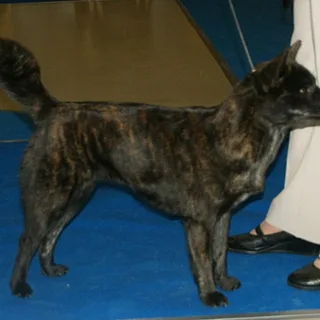
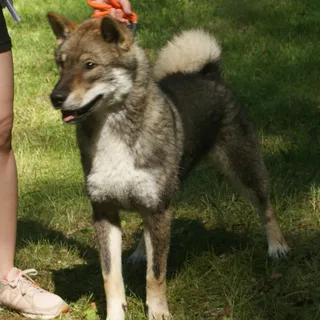
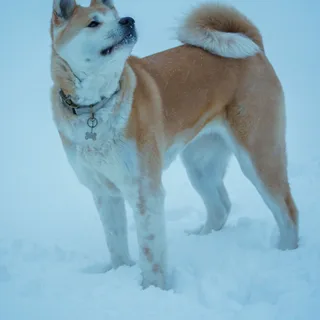
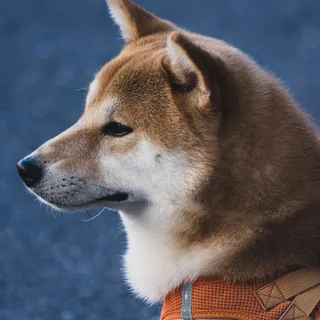
The Hokkaïdo Ken is a medium-sized dog, well proportioned, robust and harmoniously built, with a solid bone structure and firm musculature. Its primitive head is triangular, with a fairly broad skull, a wedge-shaped muzzle, small erect ears slightly inclined forward and dark brown eyes of an almost triangular shape. Its topcoat is straight and fairly harsh, combined with a dense and soft undercoat, more abundant on the tail carried curled or well curved over the back. Accepted coat colors include in particular sesame, brindle, red, black, black and tan and white.
Temperament
Temperament and personality
The Hokkaïdo Ken is a loyal, dignified, courageous and very determined dog. He is attached to his owner and his family, while keeping a certain reserve and a true autonomy of a primitive dog. His temperament is balanced, alert and protective, which makes him a good guard dog without constant excess. He is affectionate with his own, but often more measured with strangers and less sociable with other animals.
Living together
Living with children and animals
Active and hardy, the Hokkaïdo Ken needs real daily exercise, with long outings, games and a stimulating environment. It thrives clearly better in a house with a garden and easy access to nature than in an apartment. Its resistance to cold is excellent thanks to its double coat, whereas it tolerates high heat less well. Without sufficient activity, it can become frustrated, stubborn or harder to manage.
Training
Training and socialization
Training the Hokkaïdo Ken requires consistency, calm and real coherence. It responds better to firm but fair handling, without brutality or a power struggle, because it does not accept harsh methods well. Positive reinforcement, encouragement and regularity give good results, provided that socialization and learning begin early. It is not the easiest dog for a beginner, but it progresses well with a clear framework.
Budget
Hokkaido price & budget
The price of a Hokkaïdo Ken varies depending on the lineage, the seriousness of the breeding, the screenings and the socialization. The maintenance budget (food, veterinary care, training) often exceeds the purchase price over time.
View cost breakdownHealth
Health at a glance
The Hokkaïdo Ken is overall a solid, hardy and rather rustic dog. Its robust build generally allows it to cope well with an active life, provided it receives regular veterinary follow-up, a suitable diet and enough exercise. As with many breeds, certain hereditary or orthopedic conditions must nevertheless remain under surveillance.
Prevention & watch pointsDiet
Feed it well
The diet of the Hokkaïdo Ken must take into account its age, its size and above all its activity level, often sustained in this hardy breed. A good-quality ration, well measured and consistent over time, helps preserve its musculature, its coat and its digestive balance.
Our feeding adviceDid you know?
Anecdotes and popularity
The Hokkaïdo Ken is also known under the names Aïnou Ken, Ainu Ken or Hokkaïdo Dog. This ancient Japanese breed is historically linked to the Ainu people, who used it for hunting in difficult climatic conditions. Its appearance, its courage and its hardiness make it one of the most typical representatives of Japanese primitive dogs.