Origins
Where does it come from?
The Kai descends from ancient Japanese lineages used for hunting in the mountainous regions of the archipelago. It was developed in the former province of Kai, corresponding today to Yamanashi Prefecture, on the island of Honshu. Historically used for hunting wild boar and deer, it has retained a great purity of type, notably thanks to its geographical isolation and its tendency to evolve in a pack. The Kai has been part of Japan's natural heritage since 1934 and was definitively recognized by the FCI in 1982.
Appearance
What does it look like?
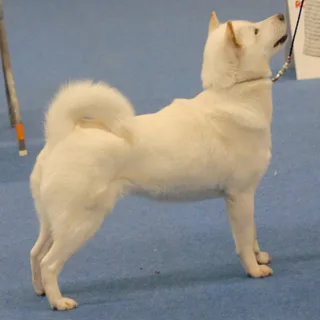
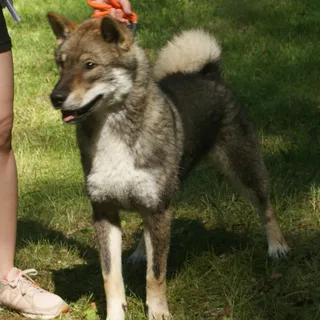
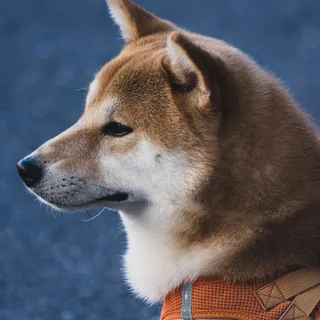
The Kai is a medium-sized dog, robust and harmoniously proportioned, with developed musculature and a silhouette made to move on difficult terrain. Its head is well proportioned with a broad forehead, a pronounced stop, a pointed muzzle and well erect triangular ears. Its dark eyes have an almost triangular shape, its tail is thick and carried curled or vigorously curved over the back. Its coat is straight, fairly harsh, with a dense undercoat, and comes in black brindle, red brindle or brindle.
Temperament
Temperament and personality
The Kai is a lively, alert and observant dog, very attached to its owner. It retains a strong hunting instinct, real determination and a natural wariness toward strangers, which also makes it an attentive guard dog. Its temperament remains balanced, but it requires a consistent relationship and serious socialization to fully express its qualities as a companion.
Living together
Living with children and animals
On a daily basis, the Kai likes to stay active and mentally occupied. He enjoys long outings, exploration and environments where he can move freely in safety. Reserved with strangers and sometimes not very demonstrative, he generally forms a strong bond with his family, while keeping a certain independence typical of primitive breeds.
Training
Training and socialization
The Kai’s training must be firm, consistent and respectful, without brutality. Positive reinforcement, varied exercises and early socialization are particularly important to channel its vigilance, hunting instinct and reserve toward strangers. It is not the easiest breed for a beginner, but a clear and fair framework makes it possible to obtain a reliable and pleasant dog.
Budget
Kai price & budget
The purchase price of the Kai varies mainly depending on the quality of the breeding, the rarity of the bloodline, the pedigree and the socialization work carried out beforehand. A breed that is still uncommon, it can be more difficult to find than a more widespread companion dog.
View cost breakdownHealth
Health at a glance
The Kai is an overall robust dog, with generally solid health when it comes from serious selection and is kept in good conditions. The breed is not associated with a large number of specific hereditary diseases, but certain orthopedic and ocular conditions deserve regular vigilance.
Prevention & watch pointsDiet
Feed it well
The Kai needs a complete and highly digestible diet, adapted to its age, its size and above all to its activity level. The quality of the ration plays an important role in maintaining its muscle mass, its ideal weight and the quality of its coat.
Our feeding adviceDid you know?
Anecdotes and popularity
The Kai is also known under the names Kai Ken, Kai Toraken or Tora Inu. Its name is linked to its cradle of origin in Japan, and its brindle coat is one of its most sought-after distinctive signs. It is among the most emblematic primitive Japanese breeds and remains relatively rare outside its country of origin.