Origins
Where does it come from?
The Shiba Inu is a very ancient Japanese breed, present for thousands of years. Formerly used in the mountains of Japan for hunting small game and birds, it almost lost its purity at the end of the 19th century and the beginning of the 20th century because of crossbreeding with imported dogs. A breed standard was established in 1934 by enthusiasts who searched for specimens that had remained typical in remote areas. In 1936, the Japanese government classified it as a natural monument and indigenous animal of Japan. Today, it is mainly appreciated as a companion dog, while retaining its primitive dog temperament.
Appearance
What does it look like?
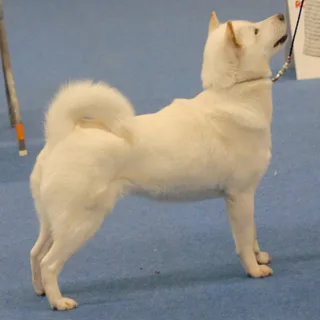
The Shiba Inu is a small, well-proportioned dog, sturdy without being heavy, with a straight back and well-developed musculature. Its head has a broad forehead and a fairly thick muzzle that tapers toward the front, with a black nose. The ears are small, triangular, well erect and inclined forward. The tail is thick, carried high and curled over itself. The outer coat is short, hard and harsh, with a soft and very dense undercoat. Accepted coat colors include notably red, sesame, and black and tan.
Temperament
Temperament and personality
The Shiba Inu is a lively, curious, very intelligent dog with a strong personality. It is loyal and protective toward its loved ones, while keeping a certain reserve and true independence. Very alert and attentive, it is not always demonstrative, but its attachment to its owner is real. Its assertive and sometimes dominant temperament requires a good understanding of the breed.
Living together
Living with children and animals
The Shiba Inu needs daily activity and regular outings to stay balanced. It can live in an apartment if its physical needs are met, but it thrives more in a house with a garden or in an environment where it can exercise freely. Playful and attentive, it appreciates the presence of its owner while also knowing how to seek moments of solitude. With other animals, especially other males, cohabitation may require vigilance.
Training
Training and socialization
Training a Shiba Inu requires patience, consistency and calm authority, without brutality. As a primitive dog, it is naturally not very obedient and its instincts remain strong. Learning must be carried out early, with a positive method and rewards to reinforce motivation and confidence. Socialization from the youngest age with children, strangers and other animals is particularly important.
Budget
Shiba Inu price & budget
The Shiba Inu is generally in a mid-range price bracket to purchase, with an annual maintenance budget to plan for food, routine veterinary care and everyday needs. The actual cost varies depending on the breeder, the lineage and the quality of follow-up provided for the dog.
View cost breakdownHealth
Health at a glance
The Shiba Inu is generally considered a hardy and rather robust breed, which rarely becomes seriously ill when it benefits from regular veterinary follow-up. It generally ages well, but monitoring remains necessary for certain ocular, orthopedic, digestive or allergic problems reported in the breed.
Prevention & watch pointsDiet
Feed it well
The Shiba Inu’s diet must be of good quality and adjusted to its age, its weight and its activity level. A complete and well-balanced food helps support its physical condition, its coat and its longevity, while limiting the risks of being overweight.
Our feeding adviceDid you know?
Anecdotes and popularity
The name Shiba refers to the idea of something small, which explains one of its other names as a small Japanese dog. Despite its compact size, it retains real hunting dog abilities and a very strong personality. Its self-cleaning coat is often cited among its practical everyday assets, even if its seasonal shedding can be impressive.