Origins
Where does it come from?
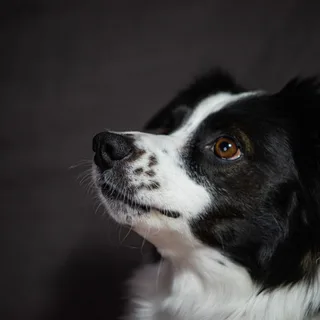
The Wäller is a recent breed created in Germany in the 1990s, in the Westerwald region, from which it takes its name. The aim was to obtain a versatile, healthy herding dog with a stable temperament, for both family life and work. It originated from the crossbreeding of the Briard and the Australian Shepherd, continued over several generations with closed breeding and strict rules. The breed is managed by a German breeders' association and is not recognised by the FCI or the VDH.
Appearance
What does it look like?
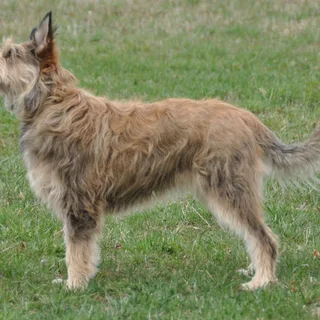
Medium to large-sized dog, the Wäller measures about 60 cm at the withers for 30 kg in the male, and 55 cm for 25 kg in the female, with a tolerance of 5 cm. The body is harmonious and muscular, the head often bears a beard and a moustache. The coat, medium-long to long, straight to wavy, has little undercoat. All colours and their merle variants are accepted, without a predominance of white.
Temperament
Temperament and personality
Intelligent, friendly and open, the Wäller is a companion very attached to its family, gentle with children and sociable with other animals. It may be reserved at first contact with a stranger, without being fearful or aggressive. It raises the alarm but is not a guard dog.
Living together
Living with children and animals
Active herding dog, he needs one to two hours of daily activity and occupations that engage his intelligence: obedience, agility, tracking or herding. He thrives in a house with a garden and a present family.
Training
Training and socialization
Very receptive and eager to cooperate, he learns easily with positive methods. Sensitive, he does not appreciate harshness. Early socialization and learning calmness are important to channel his energy.
Budget
Wäller price & budget
The Wäller is mainly bred in Germany, Switzerland and Austria, by breeders affiliated with the breed association. The price generally includes the parents' health tests.
View cost breakdownHealth
Health at a glance
The Wäller is generally in good health thanks to supervised selection. It can inherit certain conditions from the Australian Shepherd and the Briard, particularly joint and eye conditions, as well as sensitivity to medications (MDR1).
Prevention & watch pointsDiet
Feed it well
Active herding dog, he needs a complete and balanced diet, suited to his level of exercise.
Our feeding adviceDid you know?
Anecdotes and popularity
Wäller breeders prohibit merle × merle matings and apply a strict health program, with screening for dysplasia and genetic diseases known in both of its original breeds.