Origins
Where does it come from?
Formerly called Chien de Berger français de Plaine, the Berger de Brie took its current name at the end of the 18th century, notably with its mention in the "Cours complet d'agriculture" by Abbé Rozier. Probably resulting from crosses between old shepherd dogs and the Barbet, it distinguished itself in driving, guarding and protecting flocks. It also served in the French army during the interwar period. Even today, it works alongside shepherds while being appreciated as a companion dog. The Fédération Cynologique Internationale definitively recognized the breed on 14 December 1954, under number 113, and the standard currently in force was published on 4 November 2008.
Appearance
What does it look like?
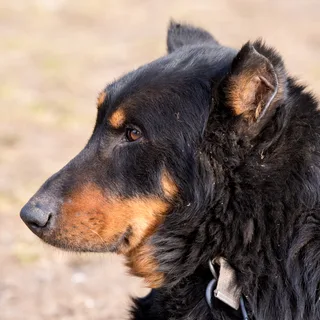
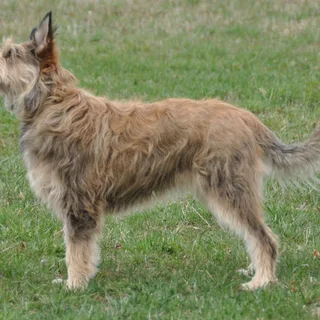
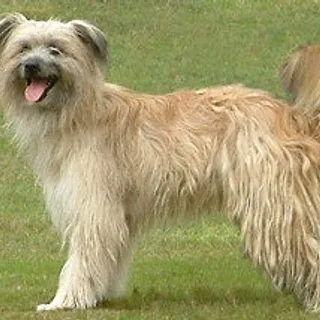
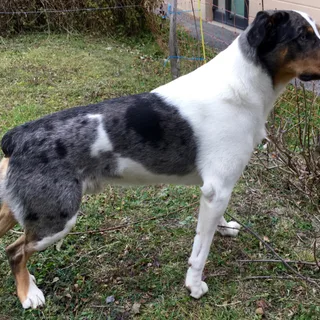
The Berger de Brie is a large dog solidly built, muscular and powerful, but supple and harmoniously proportioned. Its back is straight, its loin short and firm, its croup slightly rounded and its chest broad and long. Its strong and elongated head bears a beard, a moustache and hair partially covering the eyes. Its oval eyes are large and dark, while its ears, set high, are relatively short and furnished with long fringes. Its long, supple and dry coat recalls goat hair and is accompanied by a light undercoat. The accepted colours include black, fawn, charcoal fawn, grey and blue. Its long tail, carried low at rest, forms a slight hook at its tip.
Temperament
Temperament and personality
The Berger de Brie has a balanced temperament, calm and gentle, combined with a strong personality. Loyal to his own and naturally wary of strangers, he is protective without being aggressive or fearful. His past as a herding dog explains his sense of guarding and his vigilance. He can be an attentive companion with children when interactions are respectful and supervised, but early socialization is essential, especially with other animals.
Living together
Living with children and other pets
At home, the Berger de Brie is generally calm if it benefits from sufficient activity. It needs long daily outings, regular contact with its family and occupations that engage its intelligence. Playful and athletic, it enjoys shared activities, but its large size requires avoiding excessive effort, especially during growth. Its protective instinct and its tendency to signal events can make it quite vocal. A large fenced outdoor space suits it better than a cramped home, without replacing walks.
Training
Training and socialization
Intelligent and loyal, the Berger de Brie learns well, but its strong-willed and sometimes stubborn temperament requires consistent training, firm without harshness and based on positive reinforcement. Rules must be set early and applied consistently. Careful socialization from a young age helps prevent excessive wariness toward strangers and undesirable reactions toward other dogs or other animals. Recall, leash walking, barking management and calmness must be worked on progressively.
Budget
Price and budget for the Briard
The purchase price varies according to the quality of the breeding, the pedigree, the health screenings carried out on the breeding dogs, the line and the puppy’s intended purpose. The initial cost must be supplemented by a regular budget suited to a large dog.
See cost breakdownHealth
Health at a glance
Rustic and generally robust, the Berger de Brie tolerates cold and bad weather well. However, it does have predispositions to certain conditions, notably gastric dilatation-volvulus, hip dysplasia and hemeralopia. Careful breeding attentive to screening, controlled growth, an appropriate diet and regular veterinary follow-up help to preserve its health.
Prevention and things to watch forNutrition
Feeding your pet well
The diet of the Berger de Brie must support its large size, its activity and its muscle mass without promoting overly rapid growth or weight gain. A complete, digestible ration adapted to its life stage is essential.
Our feeding adviceDid you know?
Fun facts and popularity
The Berger de Brie is also known as the Briard. Its former name of French Plain Shepherd Dog recalls its historical vocation as a herding and flock-guarding dog. The breed was also used by the French army in the interwar period. Its silhouette is immediately recognizable by its long dry coat, its beard, its moustache and the locks that partially cover its eyes.