Origins
Where does it come from?
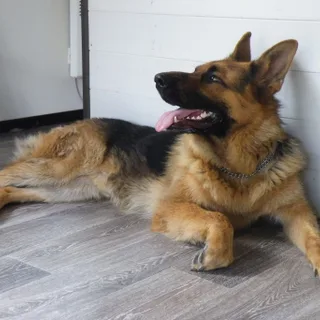
The Tamaskan is a recent breed, resulting from a breeding program launched in the United Kingdom in the 1980s using husky-type dogs, Malamutes and German Shepherds, in order to obtain a dog with an appearance very close to that of a wolf but with the temperament of a family dog. In the early 2000s, crossbred sled dogs imported from Finland were added to broaden the genetic base, and the breed registry was founded in 2006. The Tamaskan is not recognized by the FCI.
Appearance
What does it look like?
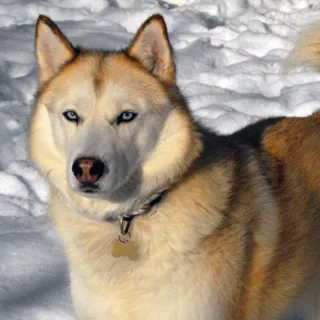
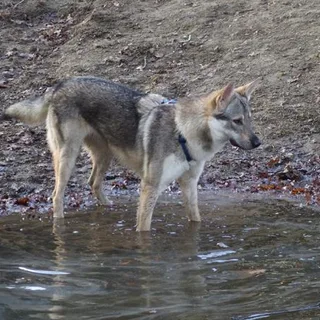
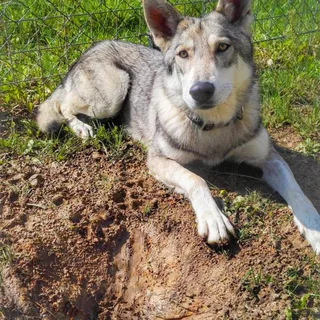
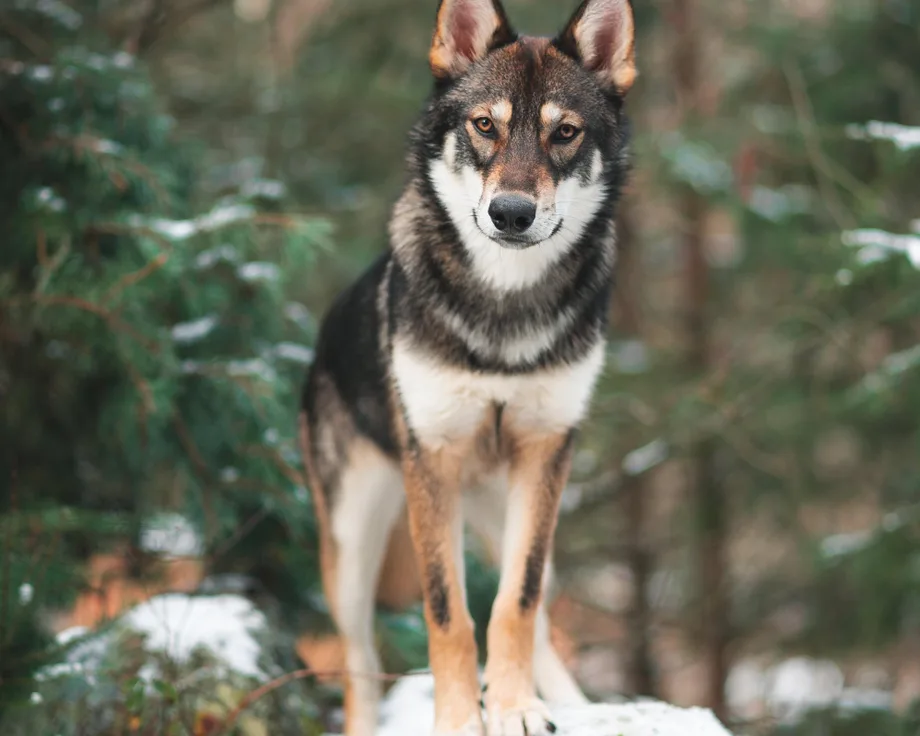
It is a large athletic dog, about 61 to 76 cm for 25 to 43 kg, the female being smaller. Its silhouette strongly resembles that of the wolf: wedge-shaped head, erect ears, yellow to amber eyes, long straight tail. The coat is double and thick. The accepted coats are wolf gray, red-gray and black-gray, with a characteristic facial mask.
Temperament
Temperament and personality
Sociable, gentle and very attached to its family, the Tamaskan is a pack dog that enjoys human and canine company. It is generally good with children and not very wary of strangers, which makes it a poor guard dog. Intelligent and sometimes stubborn, it can also be clever at escaping.
Living together
Living with children and animals
Very energetic, he needs several hours of activity per day: running, hiking, cani-cross or sledding. He copes poorly with solitude and inactivity, which can lead to howling, destruction and running away.
Training
Training and socialization
Intelligent, he learns quickly but gets bored with repetition. Positive, varied and consistent training is necessary, with early work on recall. Living in a group with another dog often suits him.
Budget
Tamaskan price & budget
The breed is rare and managed by an international registry: puppies are few in number and often reserved in advance.
View cost breakdownHealth
Health at a glance
The Tamaskan is generally in good health, thanks to the management of genetic diversity through its registry. A few conditions are monitored, notably epilepsy, hip dysplasia and degenerative myelopathy.
Prevention & watch pointsDid you know?
Anecdotes and popularity
The name Tamaskan is often presented as meaning « powerful wolf ». The breed is close to the Northern Inuit and the Utonagan, two other wolf-like dogs resulting from similar British breeding programs in the 1980s.