Origins
Where does it come from?
The Swiss Hound is a very ancient breed whose ancestors were already depicted in Roman times in Helvetia. Later appreciated by Italian then French hunters, it once existed in five varieties, four of which survive today: the Bernese, the Bruno du Jura, the Lucerne, and the Schwyz Hound. The first standards were established in 1882 then revised in 1909, before the official recognition of the breed by the FCI.
Appearance
What does it look like?
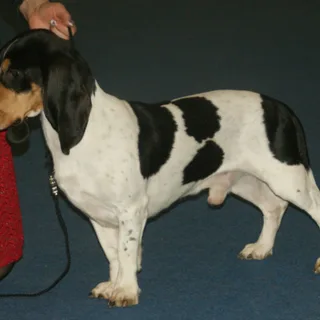
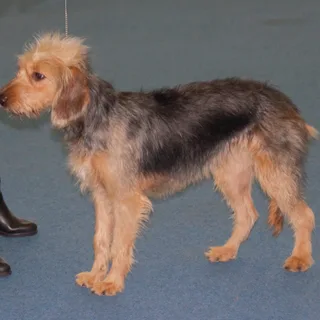
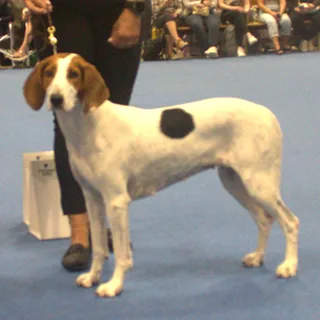
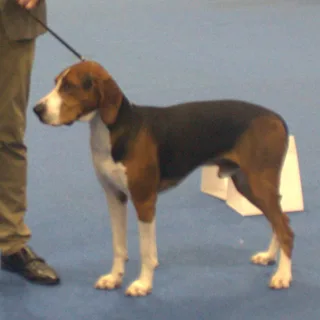
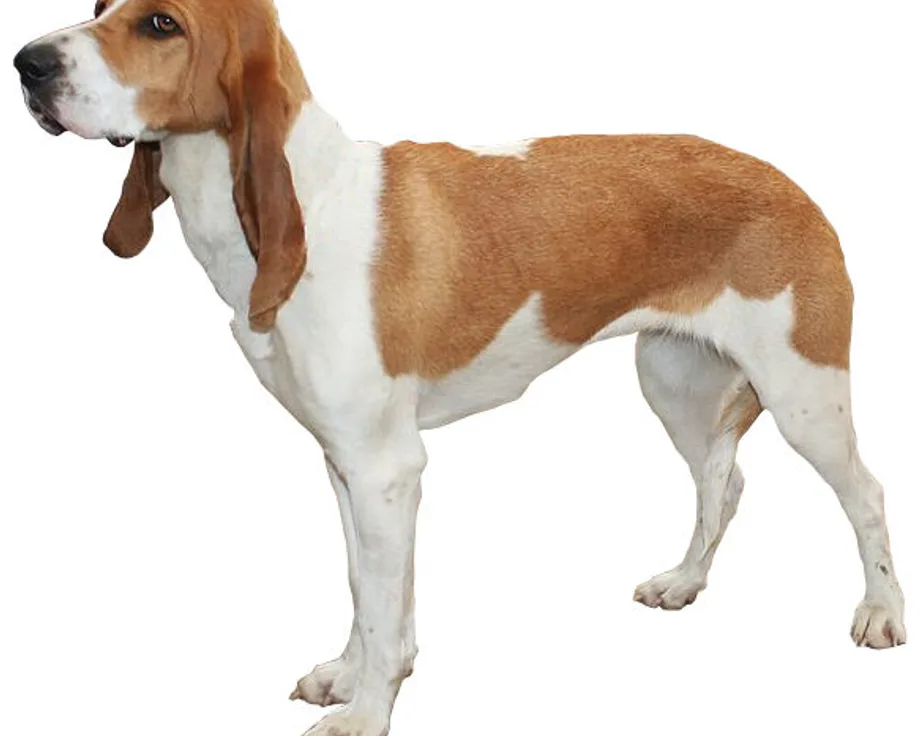
The Swiss Hound is a medium-sized dog, vigorous and elegant, built for endurance. Its body is harmonious, with a compact and straight back, a well let-down chest, an elongated and muscular neck and a moderately long tail carried naturally. Its head is lean and elongated, its ears are long and drooping, and its coat is short, dense and smooth. The coat color varies depending on the variety, with combinations of white, black, fawn or blue mottled.
Temperament
Temperament and personality
Lively, gentle and attached to its owner, the Swiss Hound combines fine sensitivity with a true passion for hunting. It proves determined, hardy and focused at work, while remaining pleasant to live with with consistent handling. Its temperament can be quite independent, but it maintains a good bond with its family.
Living together
Living with children and other pets
On a daily basis, the Swiss Hound needs long outings and regular stimulation to stay balanced. Bred to follow a trail over difficult terrain, it likes to use its sense of smell and to expend energy outdoors. It can live in an urban setting only if its exercise needs are well respected, ideally with access to a fenced garden.
Training
Training and socialization
His training must begin early with a clear, patient and consistent approach. Brutality must be avoided in favor of positive reinforcement and good work on recall, essential in this hunting dog. He is not particularly difficult to train, but his chasing instinct and a certain independence require regularity.
Budget
Price and budget for the Swiss Hound
The acquisition cost varies depending on the lineage, availability and the breeding kennel’s selection work. Beyond the purchase price, you must above all anticipate the maintenance costs related to food, veterinary follow-up and the equipment of an active dog.
See cost breakdownHealth
Health at a glance
The Swiss Hound generally enjoys fairly robust health and does not show any major predisposition widely reported across the breed. As with any active dog with drooping ears, regular monitoring nevertheless remains important to limit minor problems related to the environment, outdoor activity and ear hygiene.
Prevention and things to watch forNutrition
Feeding your pet well
The Swiss Hound needs a balanced, rich diet adapted to its age, size and above all its activity level. The ration must support endurance without promoting weight gain.
Our feeding adviceDid you know?
Fun facts and popularity
The breed includes four recognized varieties that are distinguished mainly by their coat: the Bernese Hound, the Bruno du Jura, the Lucerne Hound and the Schwyz Hound. Its voice, its endurance and its ability to work on difficult terrain have long made its reputation among hunters of hare, roe deer and fox.