Origins
Where does it come from?
Also called the Tatra Sheepdog or Polski Owczarek Podhalanski, the Polish Podhale Sheepdog is an ancient livestock guardian breed developed in the Tatra Mountains, between present-day Poland and Slovakia. Its ancestors are said to have been selected as early as the 14th century from large white mountain dogs, with a lineage traditionally mentioned with the Kuvasz and other Asian molossoid-type dogs. Courageous in the face of predators, it gradually left the alpine pastures alone to also become a property guardian and family dog. World War II greatly reduced its numbers, but passionate breeders preserved the breed. The Fédération Cynologique Internationale definitively recognized it on 5 October 1963 under standard no. 252, in group 1.
Appearance
What does it look like?
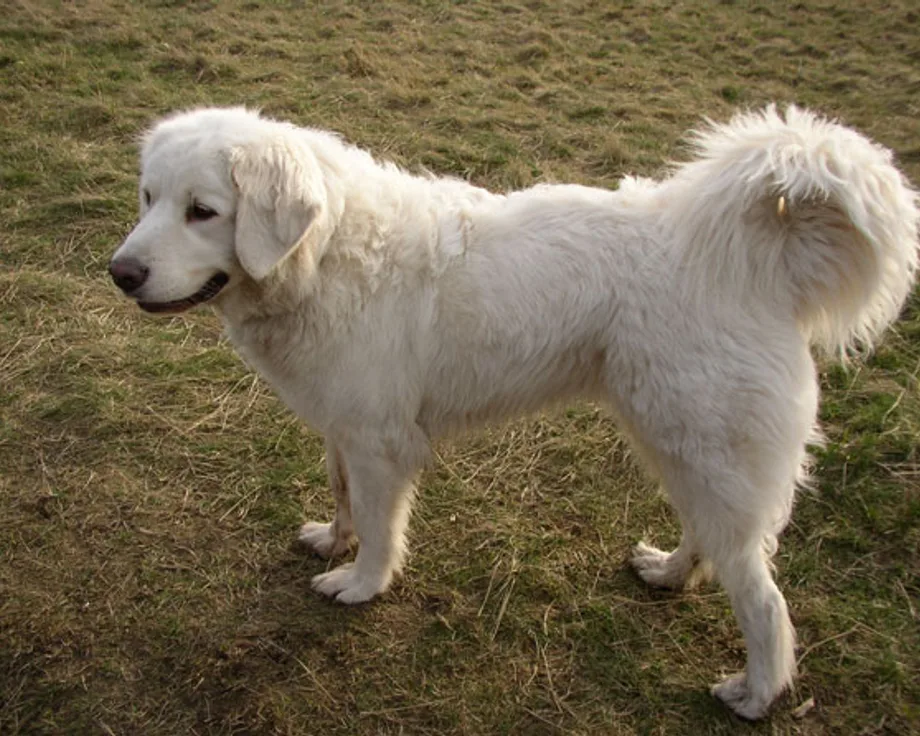
The Berger Polonais de Podhale is a large dog, powerful, compact and mobile, whose massive body fits into a rectangle and generally appears more elongated in the female. The dry and well-proportioned head has dark brown eyes, slightly oblique and very expressive, as well as triangular ears, thick and drooping. The back is straight, the loin broad, the chest deep and the croup slightly sloping. Its tail, set moderately high, is abundantly furnished and may be carried above the back in action. The coat is always uniformly white. The hair is long, straight and of firm texture on the neck, body and tail, shorter on the head and the lower parts of the limbs, with a very abundant undercoat.
Temperament
Temperament and personality
Calm, vigilant and intelligent, the Berger Polonais de Podhale has a very strong protective instinct. He is loyal and attached to his family, while retaining the independence and capacity for initiative typical of livestock guardian dogs. Naturally reserved with strangers, he observes before granting his trust and does not need to be made wary through training. Well socialized, he can be a pleasant and patient companion with respectful children, under the usual supervision related to his large size.
Living together
Living with children and other pets
On a daily basis, this dog willingly alternates calm periods with attentive monitoring of its environment. It needs space, long outings and a mission that engages its body as well as its mind. Its territorial instinct and autonomy make it particularly comfortable in a house with a large, well-fenced plot of land. Cohabitation with other animals is generally possible when it is prepared early, but its socialization must be monitored and introductions should remain gradual.
Training
Training and socialization
Training must begin as soon as the puppy arrives and combine consistency, calm firmness and positive reinforcement. An overly permissive attitude can make the adult difficult to control, while a power struggle may damage the trust of an independent and powerful dog. Recall, leash walking, acceptance of handling and the controlled welcoming of visitors are priorities. Short and varied sessions, complemented by early socialization to people, animals, places and noises, make the best use of its intelligence and its desire to cooperate with its owner.
Budget
Price and budget for the Polish Tatra Sheepdog
The purchase price varies according to the quality of the lineage, the parents’ health results, the reputation of the kennel, compliance with the standard and the puppy’s intended purpose. The relative rarity of the breed in France can also influence availability and travel costs.
See cost breakdownHealth
Health at a glance
The Berger Polonais de Podhale is generally robust and resilient when it benefits from an appropriate diet, regular exercise and preventive veterinary follow-up. As with other large dogs, growth must be controlled and the joints monitored. Its drooping ears also require regular attention in order to limit moisture and inflammation.
Prevention and things to watch forNutrition
Feeding your pet well
This large active dog needs a complete, digestible diet adapted to its life stage. In the puppy, a formula intended for large breeds helps support steady growth without excess energy. In the adult, the intake must preserve muscle mass while avoiding overweight.
Our feeding adviceDid you know?
Fun facts and popularity
Its other French name, Tatra Sheepdog, directly recalls the mountain range where it protected the herds. Its white coat allowed shepherds to quickly distinguish it from predators in the dim light. The FCI standard bears number 252 and the definitive recognition of the breed dates from 1963.