Origins
Where does it come from?
The Berger Polonais de Plaine is said to descend from small Asian herding dogs. As early as the 16th century, its working abilities attracted the attention of shepherds, notably in Scotland, where individuals that arrived through commercial exchanges took part in the history of local herding dogs. The Second World War greatly reduced the breed’s numbers. The Polish veterinarian Danuta Hryniewicz then played a decisive role in its reconstruction, notably thanks to her dog Spok, which served as the basis for the modern standard. The Fédération Cynologique Internationale definitively recognized the breed on 5 October 1963 under number 251.
Appearance
What does it look like?
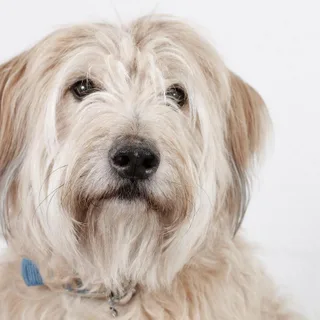
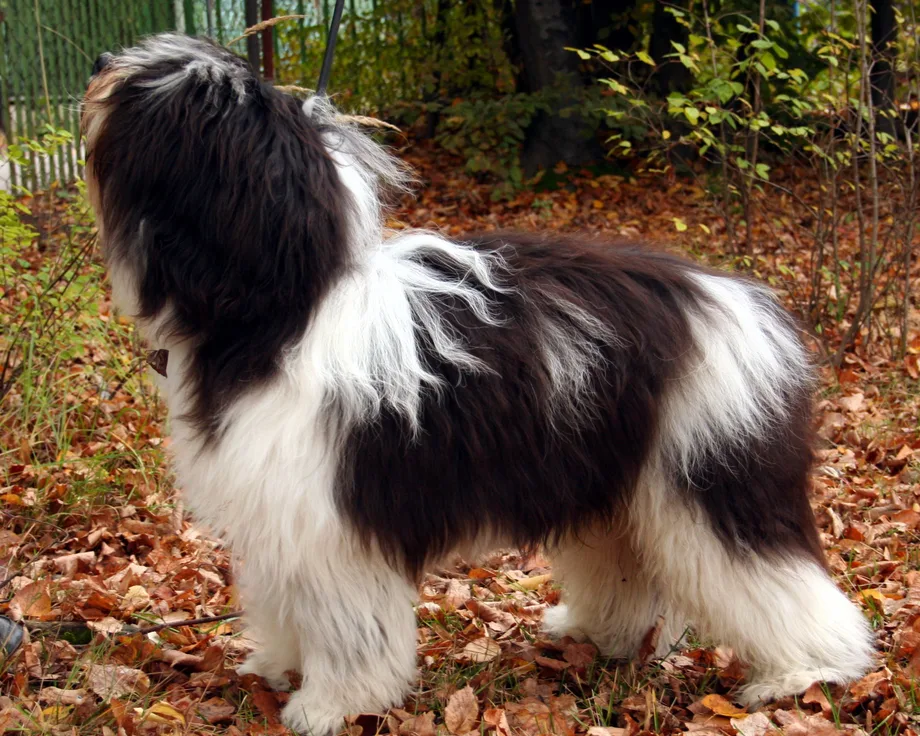
Medium-sized dog, the Berger Polonais de Plaine has a robust, muscular and vigorous build, inscribed in a rectangle. Its withers are marked, its back flat and well muscled. Its moderately large head carries a bushy coat on the forehead, cheeks and chin. The oval eyes, hazel in color, express liveliness and attentiveness, while the medium ears are set rather high and hang down. The long, thick, dense and abundant coat covers a soft undercoat and often falls in front of the eyes. All colors, shades and markings are permitted. The tail, very bushy, hangs at rest and rises cheerfully when the dog is alert, without curling.
Temperament
Temperament and personality
Balanced, vigilant and receptive, the Polish Lowland Sheepdog brings together the qualities of a herding, guard and companion dog. He is lively without being constantly agitated, has an excellent memory and remains attentive to his environment. Attached to his home, he is naturally wary of strangers. His independent and sometimes stubborn temperament requires a consistent framework, but he readily responds to a relationship based on trust, play and work.
Living together
Living with children and other pets
On a daily basis, this dog needs to take part in the life of its household and to stay active. It enjoys long walks, thinking exercises and activities that make use of its sheepdog abilities. It can live in an apartment if its outings are sufficient, but a well-fenced garden offers it more freedom. Its vigilance makes it a good alert dog without being known to be excessively vocal. Early socialization makes its relationships with visitors and other animals easier.
Training
Training and socialization
Receptive and endowed with a remarkable capacity for memorization, the Berger Polonais de Plaine learns well when sessions are short, varied and motivating. Its sometimes stubborn temperament requires starting early, with stable rules and a positive method. Play, rewards and useful exercises are particularly effective. Socialization must be carried out from the youngest age in order to channel its reserve towards strangers and to encourage calm interactions with other animals.
Budget
Price and budget for the Polish Lowland Sheepdog
The purchase price varies depending on the reputation of the breeding kennel, the quality of the bloodline, the results of health screenings, the pedigree and the puppy’s intended purpose. The breed’s relative rarity in France can also influence availability and travel costs.
See cost breakdownHealth
Health at a glance
Rustic and resilient, the Polish Lowland Sheepdog generally enjoys robust health. Its dense double coat protects it effectively from bad weather. Particular vigilance is nonetheless required regarding the eyes and weight management, as the breed may be predisposed to progressive retinal atrophy and often has a hearty appetite.
Prevention and things to watch forNutrition
Feeding your pet well
The Polish Lowland Sheepdog needs a complete diet adapted to its age, its weight, its activity level and its body condition. Its strong appetite makes portion control particularly important in order to prevent overweight.
Our feeding adviceDid you know?
Fun facts and popularity
The Polish name of the breed is Polski Owczarek Nizinny, often abbreviated as PON. The dog Spok, belonging to the veterinarian Danuta Hryniewicz, played a major role in drafting the standard after the Second World War. The breed bears number 251 in the nomenclature of the Fédération Cynologique Internationale.