Origins
Where does it come from?
Most historical sources agree that the Japanese Spitz descends from the large white German Spitz, introduced into Japan from 1920, notably via Siberia and north-eastern China. Presented for the first time in Tokyo in 1921, the breed then benefited from contributions from North American, Australian and Chinese Spitz during the interwar period. The Japanese Kennel Club set a unified standard in 1948, then the FCI definitively recognized the breed on 22 April 1964.
Appearance
What does it look like?
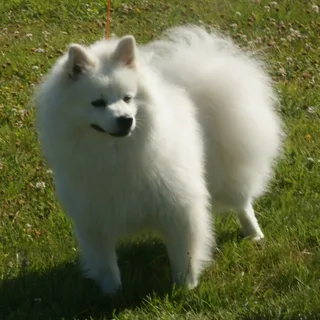
The Japanese Spitz is a small dog harmoniously built, well proportioned and solidly framed. It is recognized by its pure white coat, long, abundant and straight, supported by a short, dense and soft undercoat. Its head is moderately broad and rounded, its dark almond-shaped eyes, its well erect triangular ears and its tail, richly furnished with hair, is carried over the back.
Temperament
Temperament and personality
Lively, alert, cheerful and intelligent, the Japanese Spitz is above all an excellent companion dog. He is affectionate with his household, enjoys being close to his humans and often remains more reserved with strangers. His temperament combines good humor, presence and a degree of independence typical of Spitz.
Living together
Living with children and other pets
The Japanese Spitz likes to play, take part in family life and enjoy daily outings. It adapts well to indoor living provided it has enough interaction and exercise. An attentive alert dog, it can signal an unusual presence, but the ideal subject remains measured in its vocalizations and pleasant on a daily basis.
Training
Training and socialization
The training of the Japanese Spitz benefits from being consistent, patient and regular. He may try to assert his character and is not the dog that is naturally the most obedient, which requires clear foundations from the youngest age. His intelligence, his taste for play and positive reinforcement are good levers to obtain a companion that is attentive and comfortable in his paws.
Budget
Price and budget for the Japanese Spitz
The purchase price of the Japanese Spitz varies mainly depending on the quality of the breeding, conformity to the standard, origins and the puppy’s level of socialization. A breed that is still relatively uncommon can also show high prices among the most reputable breeders.
See cost breakdownHealth
Health at a glance
The Japanese Spitz generally has rather robust health overall. It tolerates the cold well thanks to its undercoat, while particularly enjoying a warm life close to its family. Regular veterinary follow-up, careful hygiene and an appropriate diet help to keep it in good condition.
Prevention and things to watch forNutrition
Feeding your pet well
The Japanese Spitz needs a complete, good-quality diet, adapted to its size, age and activity level. A balanced food supports its muscle mass, daily energy and the quality of its abundant white coat.
Our feeding adviceDid you know?
Fun facts and popularity
The Japanese Spitz is also known under the names Nihon Suppitsu and Japanese Spitz. Its standard values a cheerful, elegant and alert dog, and an excessively noisy temperament is considered undesirable. Its white silhouette and lively expression explain part of its success as a companion dog.