Origins
Where does it come from?
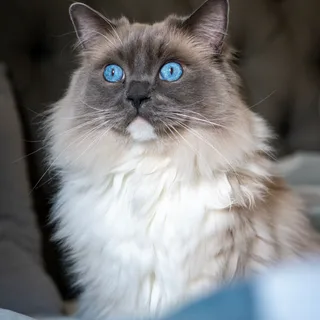
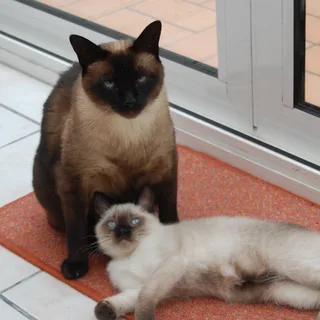
The Himalayan was born from the deliberate crossing between the Persian and the Siamese, to fix the colourpoint pattern on a Persian body. Developed mainly in the United States and the United Kingdom in the middle of the 20th century, it was first registered separately, then often attached to the Persian by several associations. In France, it is still found under its own name. It must not be confused with the Birman, more slender and gloved.
Appearance
What does it look like?
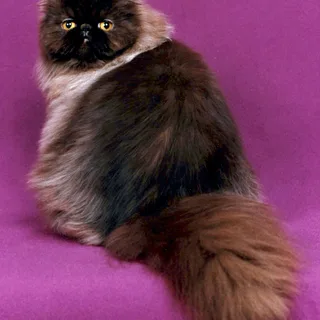
Same build as the Persian: cobby body, round head, large eyes (blue in the colourpoint), short nose. The coat is long, silky, with a ruff. The body is light, the extremities (mask, ears, legs, tail) darker: seal, blue, chocolate, lilac, red, cream, tortie, lynx point. Lines that are too extreme have a very flattened muzzle.
Temperament
Temperament and personality
Calm, affectionate, not very noisy, more laid-back than the Siamese. He likes routine and gentle company. With respectful children and other cats, he generally gets along well. He is not a cat for outdoor adventures.
Living together
Living with children and animals
An indoor cat par excellence. He rests a lot, observes, asks for cuddles. Daily or almost daily brushing is essential. Heat and stress tire him, especially if he breathes poorly.
Training
Training and socialization
Gentleness, impeccable litter box, getting used to brushing and cleaning the eyes. Measured rewards help. Avoid constraint: he shuts down.
Budget
Himalayan price & budget
A pet Himalayan from a monitored breeding program is often between 1,000 and 2,000 euros. Show lines and rare colors exceed this range.
View cost breakdownHealth
Health at a glance
Same points of vigilance as the Persian: breathing, eyes, teeth, kidneys (PKD), plus sometimes a skin sensitivity under the long coat. Choosing less extreme lines improves comfort. PKD screening remains important.
Prevention & watch pointsDiet
Feed it well
The Himalayan needs a complete, digestible diet adjusted to its age, its activity and its body condition. Protein quality and control of energy intake matter as much as the amount of the ration.
Our feeding adviceDid you know?
Anecdotes and popularity
The name Himalayan comes from the resemblance of the pattern to that of the Himalayan rabbit, not from a Nepalese origin. Some shows judge it with Persians, others separately. Its blue eyes on a Persian body make its success.