Origins
Where does it come from?
The Exotic, often called Exotic Shorthair, was developed in the United States in the middle of the 20th century from crossbreeding involving in particular the Persian and short-haired cats. Breeders sought to preserve the round silhouette, gentle expression and calm temperament of the Persian while obtaining a shorter coat that is easier to maintain. The breed was then established through selection and became recognized as a more practical version of the Persian, without losing its characteristic look.
Appearance
What does it look like?
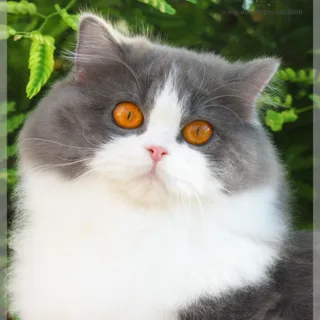
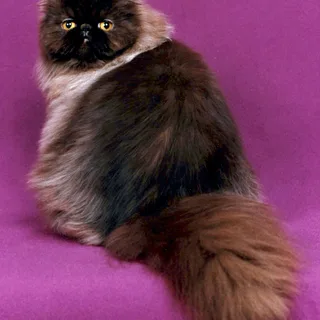
The Exotic is a cobby-type cat, compact, massive and well-muscled. Its body is round, with a broad chest, short and sturdy legs and a rather short and thick tail. Its head is broad and very round, with full cheeks, a short nose marked by a distinct stop and large round eyes that give it a gentle expression. Its coat is short to slightly fuller than that of many short-haired cats, dense, soft and supported by a thick undercoat.
Temperament
Temperament and personality
The Exotic is an affectionate, calm and patient cat, very attached to its family. It likes the company of its human, seeks comfort and generally copes well with household life. More playful and a little more lively than the Persian, it nevertheless remains discreet, not very vocal and easy to live with. It generally cohabits well with respectful children, other cats and other household pets.
Living together
Living with children and animals
On a daily basis, the Exotic willingly alternates long phases of rest and moments of indoor play. He appreciates a stable routine, cozy places and the calm presence of those close to him. He can follow his owner around the house without being intrusive and copes fairly well with being left alone if his environment is enriched. His moderate activity must nevertheless be stimulated to limit weight gain.
Training
Training and socialization
The Exotic responds well to gentle, consistent education based on habits. With this sensitive and calm cat, positive reinforcement, games and routines work better than any constraint. It is advisable to get it used from a young age to brushing, eye cleaning, the transport carrier and basic handling in order to make care easier throughout its life.
Budget
Exotic price & budget
The price of an Exotic varies mainly depending on the quality of the lineage, the seriousness of the breeding, the type sought and compliance with the standard. The purchase cost must never make one forget health monitoring, particularly important in this breed.
View cost breakdownHealth
Health at a glance
The Exotic is an endearing cat but its health requires real attention, notably due to its brachycephalic morphology and its Persian heritage. Its flattened face can promote certain respiratory, dental and ocular difficulties. Regular hygiene, attentive veterinary follow-up and weight control contribute greatly to preserving its comfort of life.
Prevention & watch pointsDiet
Feed it well
The Exotic needs a good-quality diet, complete and suited to its age, its size and its moderate activity level. As it has a predisposition to being overweight, the ration must be monitored rigorously and adjusted over time.
Our feeding adviceDid you know?
Anecdotes and popularity
The Exotic is often presented as the Persian in a short-haired version. This comparison illustrates well its round appearance, its typical face and its peaceful temperament, while recalling that it generally requires less demanding coat maintenance than that of a classic Persian. Its very expressive little face and its large round eyes explain a large part of its success among lovers of companion cats.