Origins
Where does it come from?
The Ragdoll is a relatively recent created breed that originated in the United States in the early 1960s under the impetus of Ann Baker, a breeder based in California. Developed from cats with a particularly gentle temperament, it owes its name to its tendency to go limp when carried, evoking a rag doll. The breed then spread in North America and then to the United Kingdom and Europe, before gaining strong popularity in France from the 1980s.
Appearance
What does it look like?
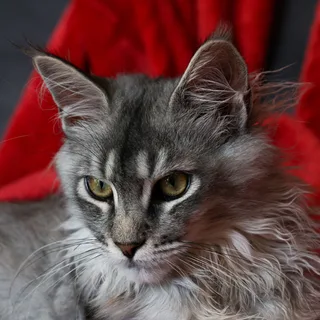
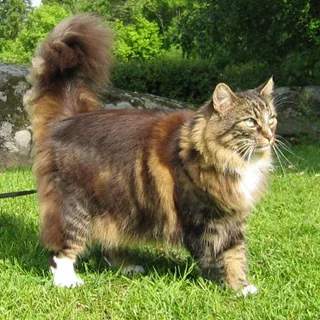
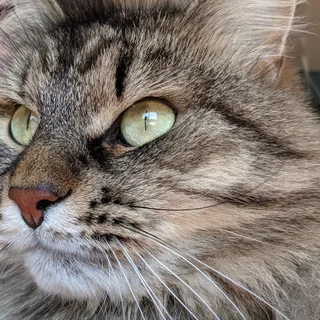
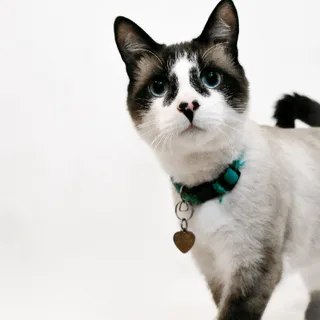
The Ragdoll is a large cat, long, powerful and solidly built, inscribed in a rectangular format. Its head forms a triangle with rounded contours, its oval eyes are an intense blue and its tail is long and well furnished. Its semi-long, silky coat, more abundant on the hindquarters, is often accompanied by a beautiful ruff and comes notably in colourpoint, mitted, bicolour and van patterns.
Temperament
Temperament and personality
The Ragdoll is famous for its gentleness, calmness and patience. Not very aggressive, very close to its humans and readily cuddly, it readily seeks company and appreciates peaceful environments. Its docile and stable temperament makes it a cat highly appreciated by families, provided that interactions remain respectful and without excessive agitation.
Living together
Living with children and animals
Essentially oriented toward family life, the Ragdoll prefers the comfort, safety and tranquility of the home to intensive exploration of the outdoors. It is generally discreet, moderately talkative and less active than many other breeds. It tolerates apartment living fairly well, but remains sensitive to prolonged solitude and needs daily interactions, calm games and stable routines.
Training
Training and socialization
The Ragdoll responds well to a gentle, consistent education based on routine. It easily learns the rules of the house, the use of the scratching post and care handling if these are introduced gradually and associated with rewards. As with all cats, early socialization, respect for its pace and the absence of brutality are essential to preserve its trust.
Budget
Ragdoll price & budget
The price of a Ragdoll varies greatly depending on the quality of the lineage, the seriousness of the breeder, the health tests carried out, compliance with the standard and the kitten’s intended purpose. A higher price is often explained by more rigorous selection, socialization and health monitoring work.
View cost breakdownHealth
Health at a glance
The Ragdoll generally has fairly robust health, but like many selected breeds, it deserves careful monitoring. Its imposing morphology, its lifestyle often very indoor, and certain hereditary predispositions justify regular prevention, well-controlled weight, and a serious breeding choice with appropriate screenings.
Prevention & watch pointsDiet
Feed it well
The Ragdoll needs a complete and balanced diet adapted to its age, its size and its rather moderate activity level. As it can be prone to overweight, the quality of proteins, a reasonable energy density and the precision of portions matter more than the volume given.
Our feeding adviceDid you know?
Anecdotes and popularity
The name Ragdoll literally means rag doll, in reference to the muscular relaxation that some individuals display when they are carried. Despite this reputation as a very placid cat, each individual retains its personality and must not be handled excessively. In France as in other European countries, the breed has established itself among the most appreciated large companion cats for its gentleness and its elegant appearance.