Origins
Where does it come from?
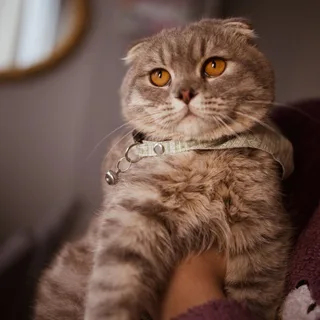
The Highland Fold is the long-haired variety of the Scottish Fold. The folded-ear gene appeared in Scotland in the 1960s, then the breed developed with contributions from British and Persian. The long coat gave rise to the Highland Fold, sometimes called Longhair Fold. The breed remains controversial because of osteochondrodysplasia linked to the Fold gene. Responsible breeding never mates two folds and clearly informs about the risks.
Appearance
What does it look like?
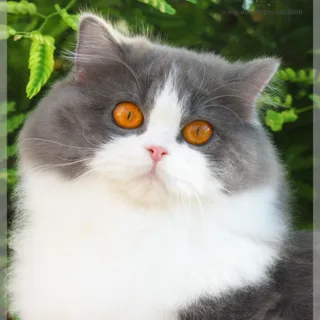
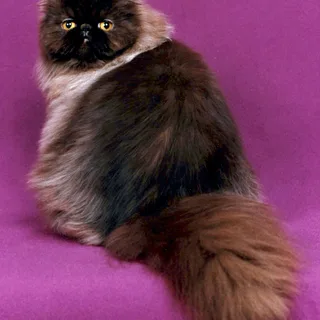
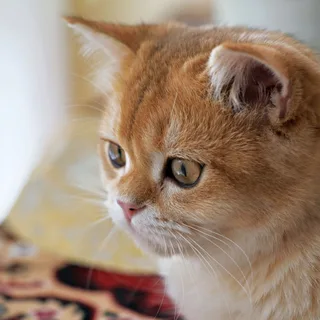
Medium-sized cat, compact, with a round head, large eyes and a short nose without excess. The ears are small, folded forward, which gives the “owl” expression. The coat is long, dense, with a ruff. All colors are accepted. Straight subjects, with straight ears, are born in the same litters but are not Highland Fold.
Temperament
Temperament and personality
Calm, affectionate, not very boisterous, very well suited to indoor life. He likes closeness without being as intrusive as a Siamese. With calm children and other cats, he generally gets along well. He likes neither constant noise nor rough handling of the ears.
Living together
Living with children and animals
Perfect in an apartment if it is brushed and stimulated without excess. It plays at times, then rests for a long time. Low cat trees and soft bedding suit it better than repeated jumping. Joint pain can reduce activity: you must then consult, not “wait”.
Training
Training and socialization
Gentle education: litter box, scratching posts, getting used to care. Brushing must be associated with rewards from the youngest age. Avoid forcing the ears open. A stable environment suits it better than permanent changes.
Budget
Highland Fold price & budget
A pet Highland Fold often costs between 1,000 and 2,200 euros. A low price for a fold should make you run away. The joint-related veterinary budget may be added over the long term.
View cost breakdownHealth
Health at a glance
The Fold gene affects cartilage: folded ears, but also a risk of osteochondrodysplasia (stiff tail, painful joints). This is the central point of the breed. Added to this are the precautions for round-faced cats: eyes, breathing, kidneys depending on the lines. A Highland Fold is never a trivial purchase.
Prevention & watch pointsDiet
Feed it well
The Highland Fold needs a complete, digestible diet adjusted to its age, activity and body condition. Protein quality and control of energy intake matter as much as the portion size.
Our feeding adviceDid you know?
Anecdotes and popularity
The name Highland simply refers to the long coat, not a distinct mountain origin. In several countries, associations refuse to register folds because of the cartilage gene. In France, caution and transparency in breeding matter more than the aesthetics of the ears.