Origins
Where does it come from?
The British Longhair comes from the British Shorthair, an emblematic breed of the United Kingdom, some individuals of which carried the longhair gene introduced over the course of reconstruction crossbreeding carried out after the wars. Long considered as a separate variety rather than a distinct breed, it today retains the round silhouette, solid bone structure and calm temperament of its ancestor, with a more abundant coat.
Appearance
What does it look like?
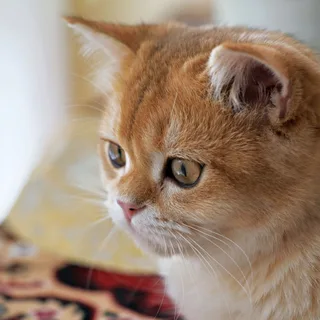
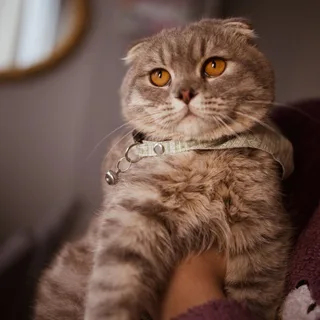
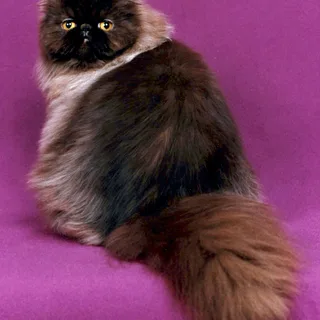
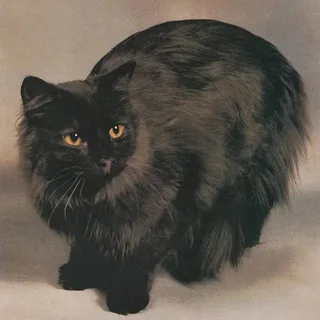
The British Longhair is a medium to large cat, compact, powerful and well-built. Its head is broad and round, with full cheeks, large and expressive eyes, medium ears well spaced apart and an open chest. Its semi-long to long coat is dense, supple and well furnished, with an often pronounced ruff and a thick, plumed tail.
Temperament
Temperament and personality
The British Longhair is generally gentle, balanced and calm. It appreciates the presence of its humans, but keeps a certain elegant reserve and is not the most demonstrative of cats. Sociable without being clingy, it likes stable routines, calm interactions and reassuring environments.
Living together
Living with children and animals
On a daily basis, it is a rather calm cat that alternates long periods of rest with moderate playtime. It adapts well to indoor life if its space is enriched with scratching posts, hiding places and a few play sessions. It generally tolerates reasonable solitude well and seeks comfort and observation more than intense activity.
Training
Training and socialization
His education is based mainly on gentleness, consistency and clear habits. The British Longhair understands routines well, readily accepts house rules and can easily learn to use a scratching post, cat tree and carrier if habituation starts early. Grooming handling should be introduced gradually and associated with positive experiences.
Budget
British Longhair price & budget
The price of a British Longhair depends mainly on the quality of the lineage, the seriousness of the breeding, compliance with the standard, the coat, and the socialization work carried out before departure. The purchase cost is only part of the overall budget to anticipate.
View cost breakdownHealth
Health at a glance
The British Longhair is generally a fairly robust cat, but its selection and morphology require careful monitoring of weight, the heart and certain lines predisposed to hereditary diseases. Responsible breeding, an appropriate diet and regular veterinary check-ups contribute greatly to preserving its quality of life.
Prevention & watch pointsDiet
Feed it well
The British Longhair needs a complete, digestible diet that is well balanced in energy to support its muscle mass without promoting overweight. Protein quality, caloric density and regularity of portions matter more than the volume served.
Our feeding adviceDid you know?
Anecdotes and popularity
The British Longhair shares a large part of its type with the British Shorthair, to the point of sometimes being perceived as its long-haired version. Its round expression and abundant coat give it a very sought-after plush-like appearance, but its temperament generally remains measured, calm and more discreet than spectacular.