Origins
Where does it come from?
The British Shorthair descends from cats long established in the British Isles, selected over time for their robustness and their dense coat suited to the climate. The breed was highlighted by Harrison Weir, a major figure in English felinophilia, then presented as early as the first major cat show held in London in 1871. Weakened by the two world wars, it was reconstituted thanks to rigorous breeding programs involving in particular the Persian, before regaining stable lines and becoming one of the most popular cat breeds in the United Kingdom.
Appearance
What does it look like?
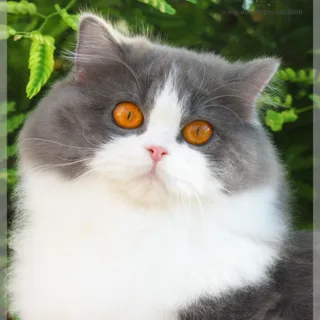
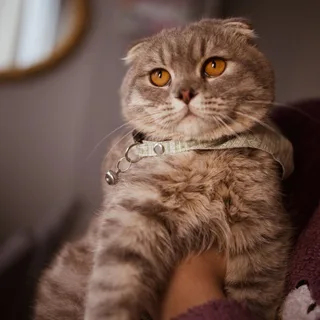
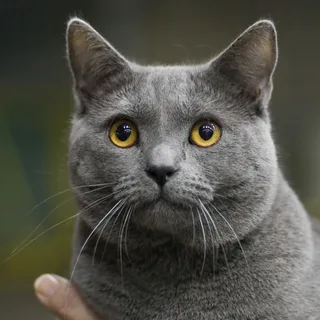
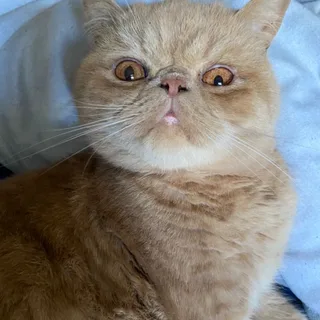
The British Shorthair is a powerful, compact and very harmonious cat, built entirely of roundness. Its semi-cobby body is short and muscular, with a strong neck, a broad chest and sturdy limbs. The head is large and round, the cheeks very full, the ears small to medium and the eyes wide and expressive. Its coat is short, very dense, standing off and endowed with a thick undercoat that gives it a characteristic plush appearance.
Temperament
Temperament and personality
The British Shorthair is renowned for its balanced, calm and endearing temperament. It enjoys the company of its family, shows its affection with restraint and retains real independence. Neither intrusive nor nervous, it is composed, sociable and generally at ease with children as well as with visitors.
Living together
Living with children and animals
On a daily basis, this cat readily alternates between periods of comfortable rest and moderate play sessions. It likes to observe its environment, explore calmly and take part in household life without being its permanent center. Rather discreet in its vocalization, it keeps a stable temperament and copes well with a peaceful routine provided it benefits from regular interactions and an enriched environment.
Training
Training and socialization
The education of the British Shorthair is based mainly on gentleness, consistency and environmental enrichment. It understands the habits of the home well and easily assimilates simple rules when they are put in place early and without brusqueness. Play sessions, rewards and stable reference points are preferable to any constraint, because this cat cooperates better when it feels confident.
Budget
British Shorthair price & budget
The pedigree British Shorthair registered with the LOOF is often priced between €800 and €1,600 depending on the color, type and tests. The maintenance budget remains that of a calm indoor cat, sometimes prone to being overweight.
View cost breakdownHealth
Health at a glance
The British Shorthair generally has robust health and good longevity, provided it benefits from regular veterinary follow-up, an appropriate diet and a lifestyle limiting overweight. Like other selected breeds, it nevertheless remains predisposed to certain hereditary conditions that justify the vigilance of both the breeder and the owner.
Prevention & watch pointsDiet
Feed it well
The British Shorthair needs a complete, digestible and well-balanced diet in energy in order to support its muscle mass without promoting overweight. The quality of proteins and the control of fat intake are particularly important in this breed with a compact build and often very greedy.
Our feeding adviceDid you know?
Anecdotes and popularity
The British Shorthair is often compared to a teddy bear because of its round silhouette and dense coat. Its blue variety, combined with copper eyes, has greatly contributed to the breed’s fame, but many other colors are accepted. Historical crossbreeding with the Persian also contributed to the emergence of the British Longhair, the long-haired version stemming from the same breed heritage.