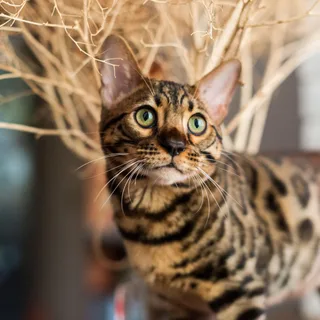
A menu for every age
Needs change over time
Kitten : Choose a complete diet rich in proteins, suited to growth and introduced gradually.
Adult : Adjust the ration to its weight and high activity while monitoring its digestive tolerance.
Senior : Have the diet reassessed by the veterinarian according to body condition, digestion and general health.
Which food?
Kibble, wet food, or home-cooked diet?
A complete diet, rich in protein and gluten-free when the cat is sensitive to it is recommended. The choice of food must take into account its age, its activity and the veterinarian's advice.
Amounts
How much should you give?
The ration must be adapted to the weight, age, activity and body condition of each individual. The source does not provide a quantified daily amount.
| Weight | Daily amount | Meals/day |
|---|---|---|
| 5 - 7 kg | 84 - 118 g | 2 |
| 7 - 10 kg | 112 - 156 g | 2 |
| 10 - 12 kg | 140 - 193 g | 2 |
Change
Managing the food transition
Any change in diet must be gradual in order to limit digestive disorders and to check tolerance of the new food.
Hydration
Water: do not overlook it
Fresh, clean water must remain available at all times in order to ensure good hydration.
Little extras
Treats, in moderation
Treats should remain occasional and be chosen for their good digestive tolerance, without unbalancing the main ration.
Good habits
For a top-notch bowl
- Favor a complete, protein-rich diet.
- Avoid gluten when a sensitivity is identified.
- Introduce any new food gradually.
- Keep fresh water available at all times.
Never give
Avoid foods containing gluten in sensitive individuals as well as foods that are toxic to cats, including chocolate, onion, garlic, grapes, alcohol and products containing xylitol, which can cause serious disorders.