Origins
Where does it come from?
The Bolonka, or Bolonka Zwetna (Russkaya Tsvetnaya Bolonka, « small colored Russian bichon »), was developed in Russia from the 1950s and 1960s. Enthusiasts from Leningrad and Moscow crossed small bichon-type dogs, notably the Bichon Frisé, the Bolognese and the Shih Tzu, to obtain a small companion dog with colored coats. The breed then spread to Germany after the fall of the Iron Curtain. It is recognized in Russia and by the VDH in Germany, but not by the FCI.
Appearance
What does it look like?
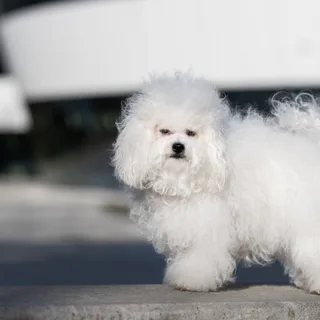
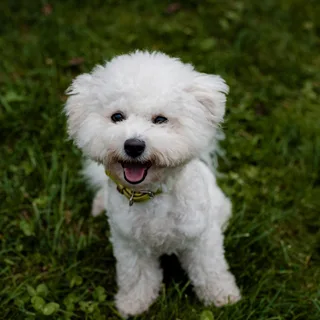
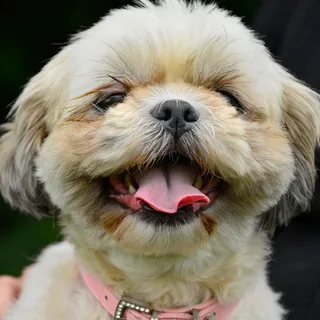
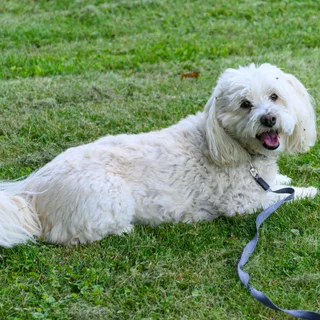
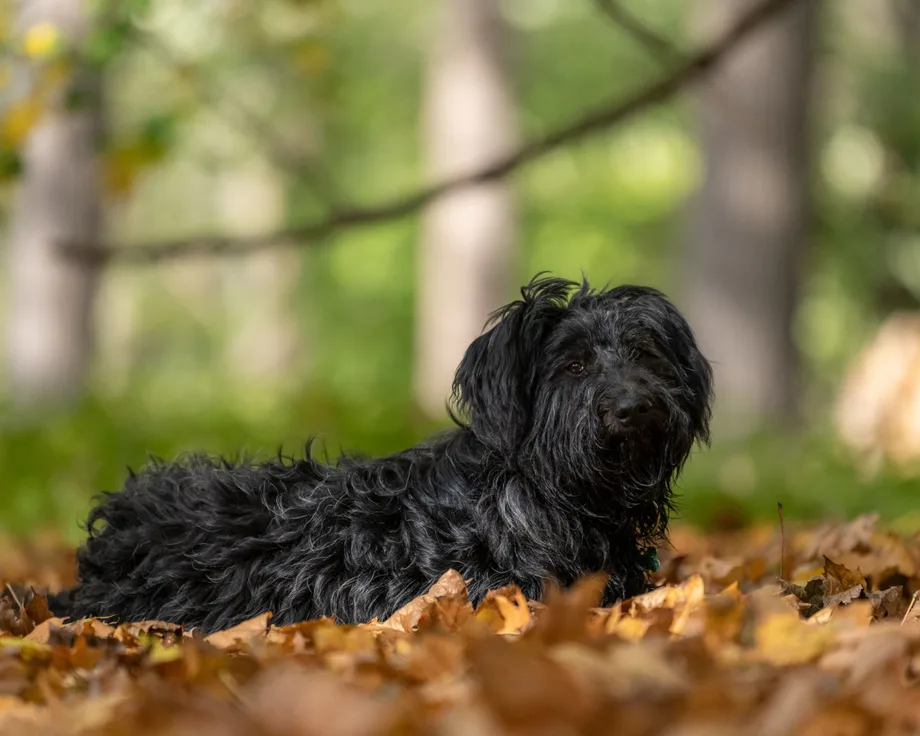
The Bolonka is a small compact dog, slightly longer than tall, about 20 to 26 cm for 2 to 5 kg. Its round head has dark, wide-open eyes, often partially hidden by the coat, and drooping ears. The coat is long, soft, wavy to curly, with an undercoat. All colors are accepted except pure white: black, brown, fawn, gray, cream, red, bicolor or parti-colored.
Temperament
Temperament and personality
Cheerful, gentle and very sociable, the Bolonka is a true companion dog. She seeks the presence of her owners, loves to play and gets along well with respectful children, other dogs and cats. She is neither fearful nor aggressive and readily welcomes visitors after a brief alert.
Living together
Living with children and animals
The Bolonka adapts perfectly to apartment living. She needs daily walks and play, but not intense exertion. Very attached to her human, she likes to follow them everywhere and does not cope well with long hours of solitude.
Training
Training and socialization
Intelligent and eager to do well, the Bolonka learns easily with gentle and positive methods. House training may require a little patience, as with many small dogs. Early socialization and gradual learning to be alone are recommended.
Budget
Bolonka price & budget
The price of a Bolonka depends on the breeder, registration with a national studbook (VDH, RKF), color, and health tests. The breed is still rare in France, and many puppies come from Germany.
View cost breakdownHealth
Health at a glance
The Bolonka is an overall robust breed, with no major breed-specific problems. Like other small dogs, it may be affected by conditions involving the kneecaps, teeth and eyes.
Prevention & watch pointsDiet
Feed it well
The Bolonka has modest energy needs. A complete food for small dogs, in small portions, suits it.
Our feeding adviceDid you know?
Anecdotes and popularity
During the Soviet period, small companion dogs were rare and difficult to obtain, which made the Bolonka a dog highly prized by urban families. In Germany, it was long confused with the Bolognese, whereas the latter is always white.