Origins
Where does it come from?
The Havanese Bichon belongs to the bichon family, alongside the Maltese Bichon, the Bolognese Bichon and the curly-haired Bichon. Its Mediterranean ancestors are said to have been introduced to Cuba by Italian and Spanish sailors at the beginning of the 18th century. The breed then developed on the island and took the name of its capital, Havana. The Fédération Cynologique Internationale recognized it definitively in September 1963, under standard number 250.
Appearance
What does it look like?
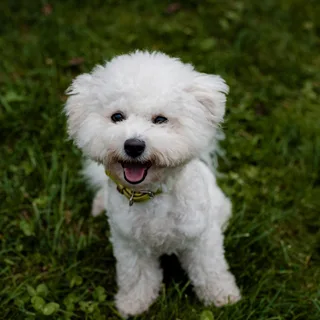
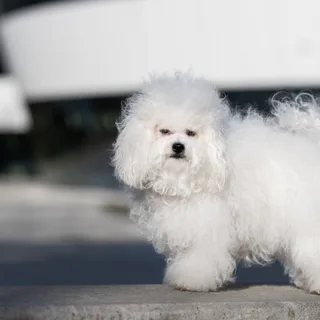
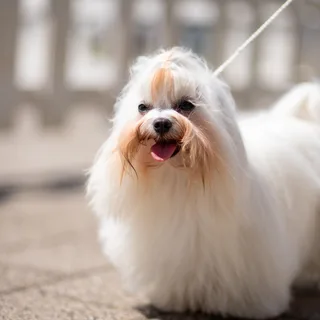
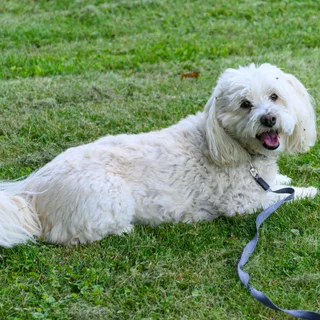
The Bichon Havanais is a small vigorous dog, low on legs, whose body is slightly longer than it is tall. Its topline is straight, its croup sloping and its ribs well sprung. Its head of medium length bears large dark brown almond-shaped eyes and high-set ears, drooping and fringed. Its tail, abundantly furnished, is carried raised in a crook or curled over the back. Its outer coat is long, abundant, soft and preferably wavy, while the undercoat is little developed or absent. The coat can be white, fawn, black, brown or reddish brown, solid or marked with patches accepted by the standard.
Temperament
Temperament and personality
Affectionate, cheerful and very sociable, the Havanese Bichon is above all an excellent companion dog. Alert and attentive, it can signal a presence without showing a strong guarding instinct. Its playful temperament and clownish side make it a partner appreciated by children. It closely seeks the presence of its family and copes poorly with prolonged solitude.
Living together
Living with children and other pets
At home, he likes to stay close to his owners and adapts well to apartment living. Daily walks, games and attention are generally enough to meet his needs, even if he also appreciates a secure outdoor space. Not very athletic but very playful, he needs regular interactions and an involved family life to stay balanced.
Training
Training and socialization
Intelligent, alert and readily playful, the Havanese learns fairly easily when sessions are short, consistent and positive. Play, measured rewards and gentleness give better results than punishments. Early socialization and a gradual learning of being alone are important, as is consistency to prevent its charm from leading to too much permissiveness.
Budget
Price and budget for the Havanese
The purchase price varies depending on the reputation of the kennel, the quality of the lineage, the parents' health tests, registration with the LOF and the puppy's intended purpose. The budget must also include care, food and regular coat maintenance.
See cost breakdownHealth
Health at a glance
The Bichon Havanais is generally robust and benefits from good longevity. As with many small dogs, particular attention must be paid to the kneecaps and to oral and dental hygiene. A balanced diet, a stable weight, preventive care and regular veterinary follow-up help to preserve its health.
Prevention and things to watch forNutrition
Feeding your pet well
A complete, balanced diet adapted to a small-sized dog meets its needs while maintaining its weight. The ration must take into account age, activity, body condition and the energy density of the food.
Our feeding adviceDid you know?
Fun facts and popularity
The name of the breed evokes Havana, but its oldest roots are located on the Spanish and Italian coastlines of the Mediterranean. It is also called the Havana Silk Dog, in reference to its long, soft and light coat. Despite its refined appearance, it is reputed to be sturdy and able to adapt to varied environments.