A menu for every age
Their needs change as they grow
Kitten: A rich and highly digestible growth diet supports the development of the skeleton, musculature and immune system, with several small meals per day.
Adult: In adulthood, the ration must cover muscle maintenance and daily activity without promoting weight gain, being adjusted to an indoor or mixed lifestyle.
Senior: In seniors, the goal is to preserve muscle mass, appetite, hydration and overall comfort thanks to a highly palatable and well-tolerated diet.
Which food?
Kibble, wet food, or homemade meals?
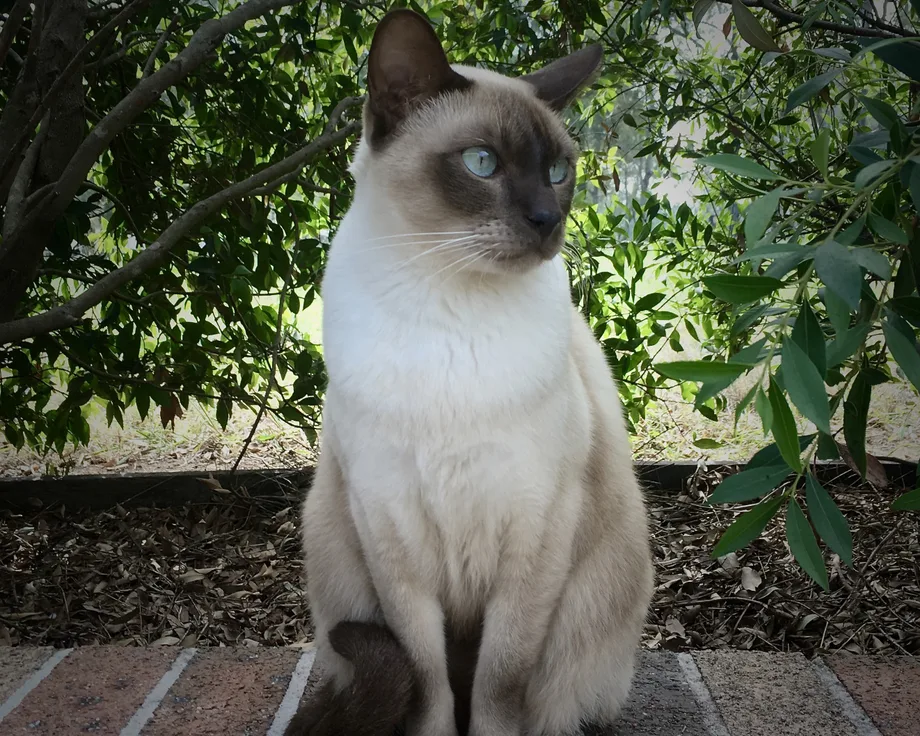
A complete and balanced diet, rich in good-quality animal proteins and formulated for the cat’s life stage, generally suits the Tonkinese very well. The choice between kibble, wet food or a mixed diet is made with the veterinarian, taking into account hydration, appetite and lifestyle.
Portion sizes
How much should you feed?
Daily quantities must be determined according to the weight, age, neutering, activity and energy density of the chosen food. It is preferable to follow the manufacturer's guidelines and then adjust them with the veterinarian according to the cat's actual body condition.
| Weight | Daily amount | Meals per day |
|---|---|---|
| 2 - 3 kg | 40 - 60 g | 2 |
| 3 - 4 kg | 52 - 76 g | 2 |
| 4 - 5 kg | 64 - 92 g | 2 |
Changing food
How to switch foods successfully
Any dietary transition must be gradual over several days in order to limit digestive upsets and promote good acceptance. A change that is too abrupt can cause a refusal to eat or poor-quality stools, even in a healthy cat.
Hydration
Don't overlook water
Good hydration is essential, especially for an indoor cat. The Tonkinese must always have access to several sources of clean water, ideally supplemented by a portion of wet food if that suits him.
A little extra
Treats in moderation
Treats can be useful to enrich the relationship and support training, but they must remain occasional and represent a small share of the total energy intake. It is better to favor simple rewards adapted to the species rather than products that are too fatty or too salty.
Good habits
Make mealtimes count
- Weigh the ration regularly to avoid excess.
- Split meals if the cat often begs or eats too quickly.
- Combine wet food and fresh water to support hydration.
- Check body condition every month at home.
Never feed these foods
Chocolate, onion, garlic, grapes, alcohol, raw dough, cooked bones, xylitol and many table scraps are dangerous for the cat and can cause digestive, neurological, hematological or renal disorders that are sometimes serious. In case of suspected ingestion, a veterinarian must be contacted without delay.