Origins
Where does it come from?
Originally from Southeast Asia, and more precisely from Thailand, the Burmese recalls copper-colored cats described as early as the Ayudhya period. The modern breed appeared in 1930 from Wong Mau, a dark-coated female cat imported to the United States by Doctor Thomson, then crossed with a Siamese. Selection then brought out two distinct varieties through their morphology: the American Burmese and the English Burmese, developed by British breeders with a wider color palette. This breed must not be confused with the Birman.
Appearance
What does it look like?
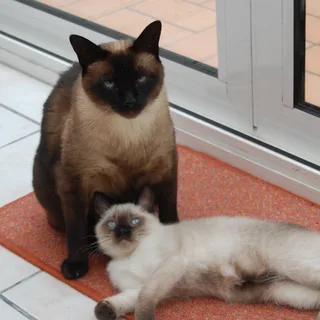
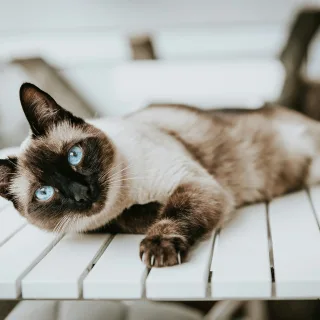
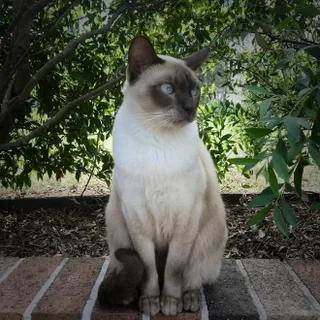
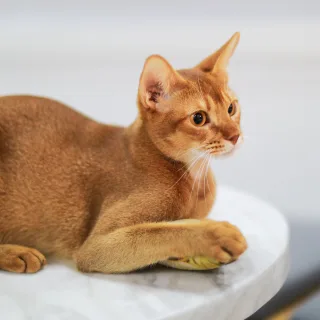
The Burmese is a medium-sized cat, muscular, with a fairly broad chest and hind legs slightly higher than the front ones. The American variety is more robust, with a very rounded head, a bulging forehead, a pronounced stop as well as rounded hips and shoulders. The English variety is lighter and has a more triangular head. In both cases, the ears are medium, slightly rounded and tilted forward, the eyes are large, set wide apart and yellow, and the medium tail ends in a rounded tip. The coat is short, glossy, lying close to the body and almost devoid of undercoat. The traditional coat, called seal sepia or sable, ranges from dark hazelnut to warm brown, with the belly and neck lighter. Blue, chocolate and lilac are also accepted; in the English Burmese, red and tortoiseshell are also tolerated.
Temperament
Temperament and personality
Demonstrative, very affectionate and sensitive, the Burmese seeks the company of its household and does not tolerate prolonged solitude well. Curious, mischievous and very intelligent, it is sociable with its fellow cats and other animals. It also enjoys playing with children, provided that interactions remain respectful.
Living together
Living with children and other pets
Lively and playful, the Burmese likes to explore, climb, hunt and take part in family life. It can live in an apartment if its environment includes accessories for climbing, play and stimulation. A house with a secure garden offers it more opportunities for exploration. It demands attention, affection and a regular presence, human or feline.
Training
Training and socialization
Its intelligence, curiosity and docile temperament generally make its training simple. Consistent rules, a gentle approach and play sessions help channel its liveliness. It is advisable to teach it early the limits of the home while enriching its environment in order to satisfy its need for activity.
Budget
Price and budget for the Burmese
The purchase price varies depending on the cattery, the lineage, compliance with the standard, the age and the cat's intended purpose. The annual maintenance budget must also be anticipated for food, preventive care and accessories.
See cost breakdownHealth
Health at a glance
The English Burmese, like the American Burmese, is described as a sturdy cat, with no hereditary disease reported. It must nevertheless benefit from veterinary follow-up and the usual preventive measures in cats.
Prevention and things to watch forNutrition
Feeding your pet well
The Burmese is greedy and accepts both dry and wet food. The quality of the food and portion control are essential to limit the risk of overweight.
Our feeding adviceDid you know?
Fun facts and popularity
The Burmese is also called Malayen. Its two main varieties, American and English, differ mainly in their morphology: the American is rounder and more robust, while the English is lighter and more angular. Their temperament and sturdiness are comparable.